





Introduction
Proper storage helps protect your GLP-1 medication, but the rules now vary not only by brand but also by presentation. A single-dose pen, prefilled syringe, multi-dose pen, vial, and tablet may have different limits even when they contain the same medicine. Use the current prescribing information and package label for the exact product in your possession.
Refrigeration rules before first use
Many unopened injectable semaglutide and tirzepatide presentations are stored in a refrigerator between 36°F and 46°F (2°C to 8°C). The labels also describe product-specific periods when an unopened device may remain at room temperature. Tablets have different storage instructions. Keep the medicine in its original packaging, protect it from heat and light as directed, and do not use an injectable product that has been frozen.
Place pens toward the middle of the refrigerator, not against the back wall. Temperatures near the cooling element can drop below freezing and damage the medication without you realizing it.
Room temperature storage after first use
Current U.S. labeling illustrates why the presentation matters:
- Ozempic multi-dose pen: After first use, it may be kept refrigerated or at 59°F to 86°F (15°C to 30°C) for 56 days. New Ozempic single-dose prefilled syringes use a different 28-day unrefrigerated limit before use.
- Wegovy injection: A capped single-dose pen or syringe may be kept at 46°F to 86°F (8°C to 30°C) in its carton for up to 28 days and is discarded after use. A Wegovy FlexTouch multi-dose pen may be kept refrigerated or at 59°F to 86°F (15°C to 30°C) for up to 56 days after first use.
- Mounjaro and Zepbound single-dose pens or vials: Each may be kept unrefrigerated at no more than 86°F (30°C) for a total of 21 days.
- Mounjaro and Zepbound multi-dose vials or KwikPens: Current labeling uses a 30-day limit at room temperature and a 30-day limit after first use, with disposal after four weekly doses even if medicine remains.
- Wegovy tablets: Store at controlled room temperature in the original closed bottle and protect from moisture.
These are U.S. instructions current on the source-review date. Packaging and approved presentations vary by country and can change. Record when a device first leaves refrigeration or is first used, and follow the shorter limit when more than one condition applies.
Common storage mistakes to avoid
Several everyday situations can damage your medication without obvious signs:
- Direct sunlight: UV light can break down the active ingredient, even through a window.
- Hot cars: Interior car temperatures can exceed 140°F in summer. Never leave your pen in a vehicle, even for a short errand.
- Freezing: A frozen pen should never be used, regardless of how it looks once thawed.
- Loose caps: Always replace the pen cap after each injection to protect the medication from light exposure.
- Bathroom storage: High humidity and temperature swings in bathrooms make them a poor choice for medication storage.
How to check if your medication is still good
Before each injection, inspect the medicine as its Instructions for Use describes. Some products should be clear and colorless; tirzepatide solutions may be clear and colorless to slightly yellow. Do not use medicine that is cloudy, contains particles, has an appearance outside its label, or is in a damaged device. Check the expiration date printed on the device or carton.
If you are unsure whether a pen was stored correctly (for example, it was left out overnight), contact your pharmacist. They can advise whether the medication is still safe to use based on how long it was outside the recommended temperature range.
Track your pen dates with Shotsy
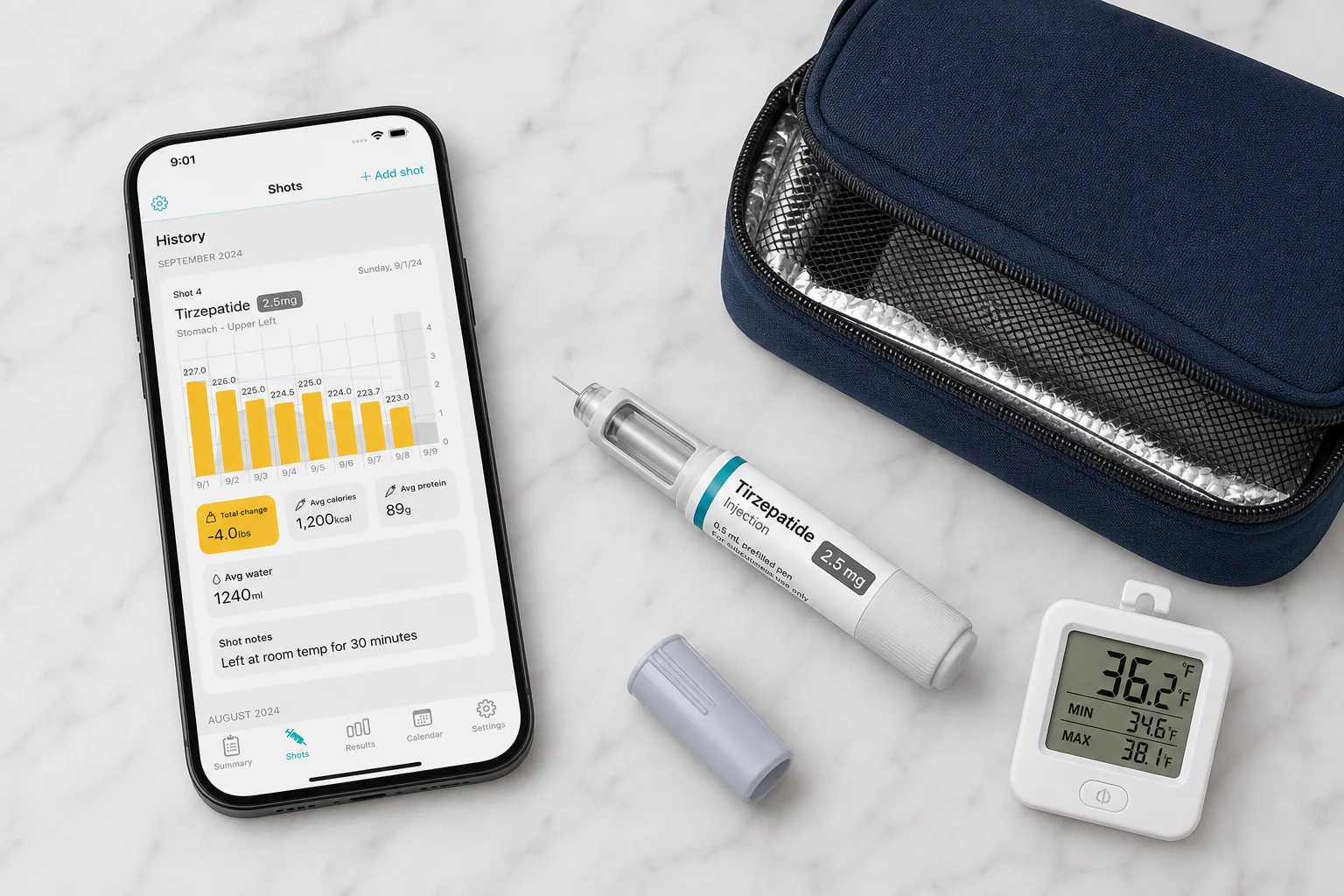
Losing track of when you opened a pen is one of the most common storage mistakes. Shotsy’s injection notes let you record the date you started each pen, so you always know how many days remain before it expires. Countdown widgets can also remind you when your next dose is due, helping you stay consistent with your schedule.
Conclusion
Correct storage depends on the brand, dosage form, and device. Check the current label for the exact presentation, record room-temperature and first-use dates, protect the medicine from freezing, excessive heat, light, and moisture as directed, and ask a pharmacist whenever the storage history is uncertain.
This post is intended for informational purposes only and is not a substitute for professional medical advice. Always consult your physician before making any changes to your medication or health routine.