





Introduction
Compounded semaglutide is not FDA-approved. The FDA does not review compounded versions for safety, effectiveness, or quality before they are marketed, and the agency recommends using a compounded drug only when a patient’s medical need cannot be met by an FDA-approved drug. The rules also changed after the FDA determined on February 21, 2025 that the shortage of semaglutide injection products was resolved. Here is what to discuss with a licensed prescriber before making a decision.
What compounded semaglutide actually is
Compounding pharmacies can prepare drugs for an identified patient’s clinical needs under federal and state requirements. For example, a prescriber may determine that an FDA-approved product cannot meet a patient’s need because of a particular ingredient or dosage form. Compounding is not the same as making a generic drug, and a compounded formulation is not FDA-approved.
The FDA has also warned that some compounders may use semaglutide sodium or semaglutide acetate. These salt forms are different active ingredients from the semaglutide base used in FDA-approved Ozempic and Wegovy. Do not assume that every compounded product uses a salt form; ask the prescriber and pharmacy exactly what ingredient and concentration will be dispensed.
Why compounded semaglutide became popular
Demand and shortages made compounded GLP‑1 products more visible. Federal law includes conditions under which qualifying pharmacies and outsourcing facilities may compound a drug that is on the FDA shortage list. That does not turn the compounded product into an approved generic or establish that it is equivalent to an approved product.
Price and insurance coverage can also influence interest, but cash prices, savings programs, and plan coverage change frequently. Compare current total costs and eligibility using the official manufacturer and insurer information rather than relying on a fixed price quoted in an article.
The safety concerns
The FDA has identified several concerns with unapproved compounded GLP‑1 products:
- No FDA premarket review: The FDA does not verify a compounded product’s safety, effectiveness, or quality before marketing.
- Dosing errors: The FDA has received reports of adverse events, some requiring hospitalization, after dosing errors with compounded injectable semaglutide. Confusion between milligrams, milliliters, and syringe units, as well as varying concentrations, can contribute.
- Fraudulent or mislabeled products: The agency has warned about products sold with false labels and has advised patients to verify that they received a prescription from a licensed prescriber and medication from a state-licensed pharmacy.
- Shipping and storage problems: The FDA has received complaints about compounded injectable GLP‑1 drugs arriving warm or inadequately refrigerated. Patients should contact the dispensing pharmacy rather than use a product that arrived with a temperature concern.
- Salt forms and added ingredients: The FDA says it is not aware of a lawful basis for using semaglutide salt forms in compounding under the cited federal provisions, and it has not determined that adding ingredients such as vitamins makes the product safer or more effective.
What changed after February 2025
On February 21, 2025, the FDA determined that the shortage of semaglutide injection products was resolved. The agency’s temporary enforcement-discretion periods for copies tied to the shortage subsequently ended for state-licensed pharmacies under section 503A and, on May 22, 2025, for outsourcing facilities under section 503B.
FDA guidance still describes limited circumstances in which a compounded drug may differ enough from a commercially available product to meet an identified patient’s medical need. Those exceptions are fact-specific. Because policies and enforcement can change, check the FDA’s current GLP‑1 compounding pages and ask the prescriber and pharmacy how the prescription complies with current requirements.
Questions to ask before using compounded semaglutide
If you are considering a compounded product, discuss these points with your prescriber:
- Pharmacy status: Is the pharmacy licensed in your state? If it says it is a 503B outsourcing facility, can you confirm that status in the FDA’s public list?
- Third-party testing: Does the pharmacy conduct independent testing for potency, sterility, and endotoxins on each batch?
- Ingredient and concentration: Is the active ingredient semaglutide base or a salt form? What is the concentration, and exactly how should the prescribed milligram dose be measured?
- Prescriber experience: Has your provider prescribed compounded GLP‑1 medications before, and do they have a monitoring plan for you?
These questions do not eliminate risk, but they help distinguish higher-quality compounding operations from less regulated ones.
Brand-name alternatives for reducing cost
Ask your prescriber and insurer about current ways to access an FDA-approved treatment:
- Manufacturer savings programs: Eligibility and terms change, so use the manufacturer’s current program page.
- Prior authorization appeals: If your insurance initially denies coverage, your provider can submit a prior authorization with supporting documentation of medical necessity.
- Patient assistance programs: Ask whether you meet the current eligibility requirements.
- Other FDA-approved treatments: Your prescriber can assess whether another product is clinically appropriate and better covered by your plan.
Track your treatment with Shotsy
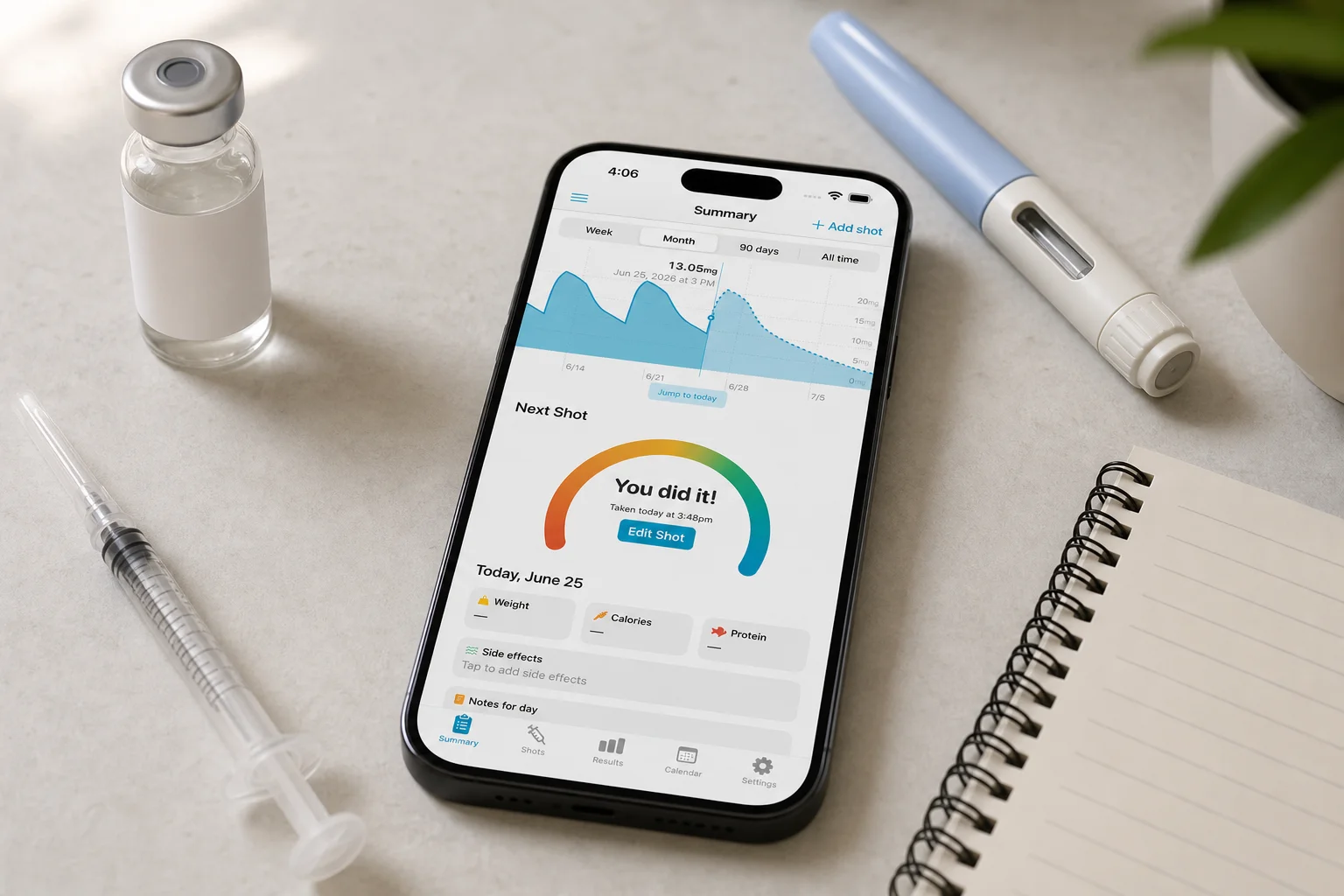
Regardless of whether you use brand-name or compounded semaglutide, Shotsy tracks your doses, weight, and side effects in one place. Documented tracking data is especially important with compounded products, where batch-to-batch variability means closer monitoring helps you and your provider catch irregularities early.
Conclusion
Compounded semaglutide is not FDA-approved, and the FDA does not review it for safety, effectiveness, or quality before marketing. The shortage-based enforcement landscape changed after the semaglutide injection shortage was declared resolved in February 2025. If an individual clinical need leads your prescriber to consider a compounded product, verify the pharmacy, ingredient, concentration, dosing directions, shipping conditions, and current regulatory status. Discuss the risks and available FDA-approved options with your healthcare provider.
This post is intended for informational purposes only and is not a substitute for professional medical advice. Always consult your physician before making any changes to your medication or health routine.