





Introduction
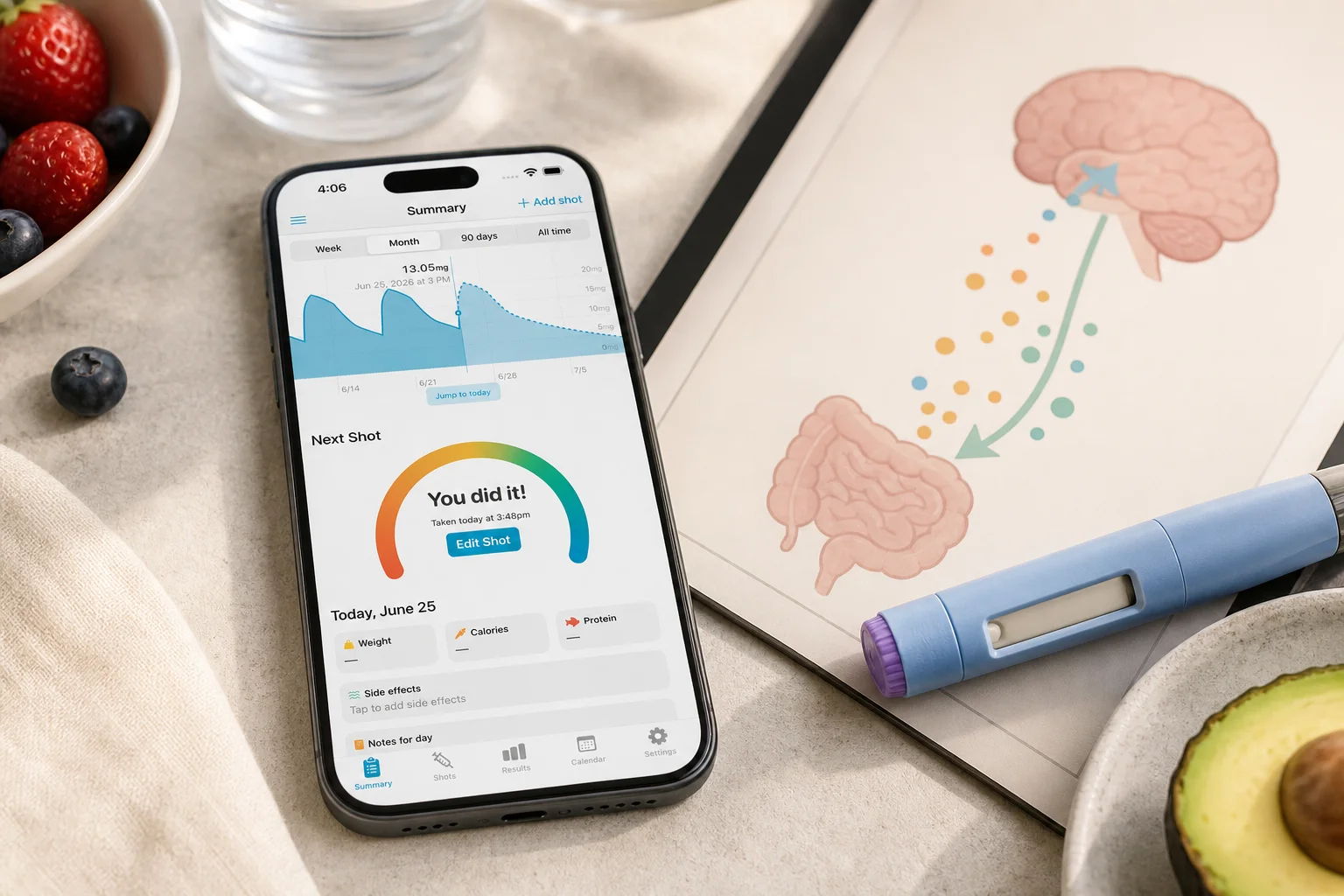
GLP‑1 medications like semaglutide (Ozempic, Wegovy) and tirzepatide (Mounjaro, Zepbound) work by mimicking a hormone your body already makes called glucagon-like peptide-1. This natural hormone is released by cells in the gut after you eat, and it performs three key functions: it stimulates insulin release from the pancreas, slows the rate at which food leaves your stomach, and signals to the brain that you are full. The pharmaceutical versions are engineered to last dramatically longer, about one week for semaglutide versus just two to three minutes for the natural hormone, which allows them to produce sustained appetite suppression and significant weight loss.
The natural hormone: what GLP‑1 does in your body
Glucagon-like peptide-1 is part of a family of hormones called incretins, released from the intestines in response to food. When you eat, specialized L-cells in the small intestine detect nutrients and secrete GLP‑1 into the bloodstream.
Once released, natural GLP‑1 does several things simultaneously:
- Stimulates insulin secretion: GLP‑1 signals pancreatic beta cells to release insulin, but only when blood sugar is elevated. This glucose-dependent mechanism reduces the risk of hypoglycemia.
- Suppresses glucagon: GLP‑1 suppresses the release of glucagon, a hormone that tells the liver to release stored glucose. The net effect is lower blood sugar after meals.
- Slows gastric emptying: GLP‑1 slows the rate at which food moves from the stomach into the small intestine, prolonging fullness and reducing blood sugar spikes.
- Signals the brain: GLP‑1 receptors in the hypothalamus and brainstem regulate appetite. Activating them promotes satiety and reduces the reward value of food.
The problem is that natural GLP‑1 is broken down almost immediately. An enzyme called dipeptidyl peptidase-4 (DPP-4) degrades it within two to three minutes, so its effects are brief and limited to the period right after eating.
How pharmaceutical GLP‑1s are different
The key innovation behind GLP‑1 medications is engineering the molecule to resist degradation by DPP-4, extending its active life from minutes to days or even a full week.
Semaglutide (Ozempic, Wegovy) achieves this through a fatty acid chain that binds to albumin in the blood, shielding it from DPP-4, plus an amino acid substitution that further resists breakdown. The result is a half-life of approximately seven days, dosed once weekly (Dhillon, Drugs, 2018). Liraglutide (Saxenda), an earlier GLP‑1 medication, uses a similar approach but has a shorter half-life of about 13 hours, requiring daily injection.
The extended duration means that instead of a brief post-meal signal, the medication provides continuous GLP‑1 receptor activation throughout the week, producing the persistent appetite suppression and significant weight loss seen in clinical trials.
Tirzepatide: activating two receptors
Tirzepatide (Mounjaro, Zepbound) takes a different approach. Rather than mimicking GLP‑1 alone, it is a dual agonist that activates both GLP‑1 receptors and glucose-dependent insulinotropic polypeptide (GIP) receptors.
GIP is another incretin hormone released from the gut after eating. Like GLP‑1, it stimulates insulin secretion and has effects on appetite and metabolism. By activating both receptor systems, tirzepatide appears to produce greater weight loss than GLP‑1 agonists alone. In the SURMOUNT-1 trial, participants on the highest dose of tirzepatide lost an average of 22.5 percent of their body weight at 72 weeks (Jastreboff et al., NEJM, 2022), compared to roughly 15 percent with semaglutide 2.4 mg in the STEP 1 trial (Wilding et al., NEJM, 2021).
The exact reasons dual agonism produces greater weight loss are still being studied. The GIP receptor is expressed in fat tissue and the brain, and its activation appears to enhance fat metabolism and further reduce appetite beyond what GLP‑1 receptor activation achieves alone.
The next generation: triple agonists
The pharmaceutical industry is not stopping at dual agonism. The next wave of medications targets three receptors simultaneously: GLP‑1, GIP, and the glucagon receptor.
Glucagon is the hormone that raises blood sugar by signaling the liver to release stored glucose. At first glance, activating the glucagon receptor seems counterproductive for a diabetes or weight loss medication. But glucagon also increases energy expenditure, the number of calories your body burns at rest, and promotes fat breakdown in the liver. By combining all three receptor signals, triple agonists aim to reduce appetite (GLP‑1 and GIP), increase caloric burn (glucagon), and improve liver fat metabolism (glucagon).
Retatrutide, a triple agonist in Phase 3 clinical trials, produced average weight loss of 24 percent at 48 weeks in Phase 2 data (Jastreboff et al., NEJM, 2023). If these results hold up in larger trials, triple agonists may become the most effective non-surgical weight loss treatment available.
Why understanding the mechanism matters
Knowing how your medication works is not just academic. It has practical implications for how you manage your treatment:
- Timing expectations: The appetite-suppressing effects of GLP‑1 medications build over several weeks as blood levels stabilize. If you do not feel a difference in the first few days after starting, that is normal, not a sign the medication is not working.
- Dose escalation: Gradual dose increases allow your body to adapt to increasing GLP‑1 receptor activation. This is why rushing through titration schedules often produces more severe side effects.
- Side effects make sense: Nausea, constipation, and bloating are direct consequences of slowed gastric emptying. Understanding this helps you make dietary adjustments, smaller meals, less fat, rather than worrying that something is wrong.
- Food choices: Since GLP‑1 medications already slow gastric emptying, eating high-fat meals that further delay stomach emptying compounds the effect and worsens symptoms.
Understanding your data with Shotsy
When you understand how your medication works, your tracking data tells a richer story. Shotsy+ includes estimated medication level charts that show pharmacokinetic curves based on your dose history, a visual representation of how your medication’s concentration rises after injection and gradually declines over the week. Seeing this alongside your appetite, side effects, and weight data helps you connect the dots between your medication’s activity and what you experience day to day.
Conclusion
GLP‑1 medications work by mimicking a natural gut hormone and extending its effects from minutes to an entire week. They stimulate insulin, slow gastric emptying, and reduce appetite through brain signaling. Tirzepatide adds GIP receptor activation for enhanced weight loss, and next-generation triple agonists are adding glucagon receptor activation to increase caloric burn. Understanding these mechanisms helps you make better decisions about diet, dose timing, and side effect management, and makes your tracking data more meaningful.
This post is intended for informational purposes only and is not a substitute for professional medical advice. Always consult your physician before making any changes to your medication or health routine.