





Introduction
GLP‑1 medication schedules vary by product, formulation, treatment goal, and individual response. The prescribing information for each medication sets out a starting dose and the earliest point at which a dose may be increased. Your prescriber may delay an increase, choose a lower maintenance dose when the label allows it, or change the plan based on tolerability. Do not skip dose levels or change the schedule without your prescriber.
Why titration exists
Gradual dose escalation is used to improve tolerability while moving toward an effective maintenance dose:
- GI tolerability: Nausea, vomiting, diarrhea, constipation, and abdominal discomfort are common adverse effects of these medicines and may be more noticeable during escalation.
- Individual response: Your prescriber can assess effectiveness and adverse effects before deciding whether another increase is appropriate.
- Different maintenance options: Some products have more than one labeled maintenance dose. The maximum dose is not automatically the right dose for every person.
Semaglutide for weight loss (Wegovy)
For adults using Wegovy injection, the labeled escalation schedule is:
- Weeks 1 to 4: 0.25 mg once weekly.
- Weeks 5 to 8: 0.5 mg once weekly.
- Weeks 9 to 12: 1 mg once weekly.
- Weeks 13 to 16: 1.7 mg once weekly.
- Week 17 onward: 1.7 mg or 2.4 mg once weekly for adult weight reduction, with 2.4 mg the recommended maintenance dose.
The current U.S. label also allows an adult who has tolerated 2.4 mg for at least four weeks to increase to 7.2 mg once weekly when additional weight reduction is clinically indicated. That is a prescriber decision, not a routine next step for everyone. If a dose is not tolerated during escalation, the label says delaying the increase for four weeks may be considered.
Semaglutide for diabetes (Ozempic)
Ozempic uses fewer escalation steps:
- Weeks 1 to 4: 0.25 mg once weekly.
- Week 5 onward: 0.5 mg once weekly.
- If additional glycemic control is needed: The dose may be increased to 1 mg after at least four weeks at 0.5 mg, and to 2 mg after at least four weeks at 1 mg.
The maximum labeled Ozempic dose is 2 mg once weekly. Ozempic is indicated for type 2 diabetes and certain cardiovascular and kidney-risk reductions described in its prescribing information; its schedule should not be substituted for the Wegovy schedule.
Tirzepatide for weight loss (Zepbound)
Zepbound starts at 2.5 mg once weekly for four weeks. The label then increases the dose to 5 mg once weekly. If needed, it may be increased in 2.5 mg steps after at least four weeks on the current dose:
- Starting dose: 2.5 mg once weekly for four weeks.
- First increase: 5 mg once weekly.
- Additional dose levels, if prescribed: 7.5 mg, 10 mg, 12.5 mg, and 15 mg once weekly, with at least four weeks between increases.
For adult weight reduction, the labeled maintenance doses are 5 mg, 10 mg, or 15 mg once weekly. For obstructive sleep apnea, the labeled maintenance doses are 10 mg or 15 mg once weekly. The maximum dose is 15 mg once weekly.
Tirzepatide for diabetes (Mounjaro)
For adults, Mounjaro starts at 2.5 mg once weekly for four weeks and then increases to 5 mg once weekly. If additional glycemic control is needed, the dose may be increased in 2.5 mg steps after at least four weeks on the current dose, up to 15 mg once weekly. Mounjaro’s indication and dosing instructions differ from Zepbound even though both contain tirzepatide.
Oral GLP‑1 schedules
Oral products have their own schedules and administration instructions; they are not milligram-for-milligram substitutes for injections.
- Wegovy tablets: 1.5 mg once daily on days 1 to 30, 4 mg on days 31 to 60, 9 mg on days 61 to 90, and 25 mg once daily from day 91 onward under the current U.S. label.
- Foundayo (orforglipron): 0.8 mg once daily for at least 30 days, then 2.5 mg for at least 30 days, then 5.5 mg. If more glycemic control is needed, the label permits further steps to 9 mg, 14.5 mg, and 17.2 mg after at least 30 days at each dose.
Follow each tablet’s instructions about food, water, and timing. They are not the same across oral products.
What happens at each dose increase
There is no universal day-by-day response to a dose increase. Gastrointestinal effects can occur during escalation, but their onset, intensity, and duration vary. Track the dose, timing, symptoms, hydration, and anything else your clinician has asked you to monitor. Contact your healthcare professional about severe or persistent symptoms, and seek urgent help for symptoms your medication guide identifies as an emergency.
When providers slow down or pause titration
Not every patient follows the textbook schedule. Your prescriber may adjust the timeline if:
- A dose is not tolerated: Some labels specifically allow delaying escalation; your prescriber can tell you whether to pause, lower, or stop treatment.
- A labeled maintenance dose is working: Some products offer multiple maintenance doses based on response and tolerability.
- Your health or other medicines change: Illness, procedures, pregnancy plans, and medicines that affect blood sugar or hydration can require an individualized plan.
- You have missed several doses: Restart instructions vary by product. Ask before resuming if the label or your prescriber does not clearly cover your situation.
Track every dose with Shotsy
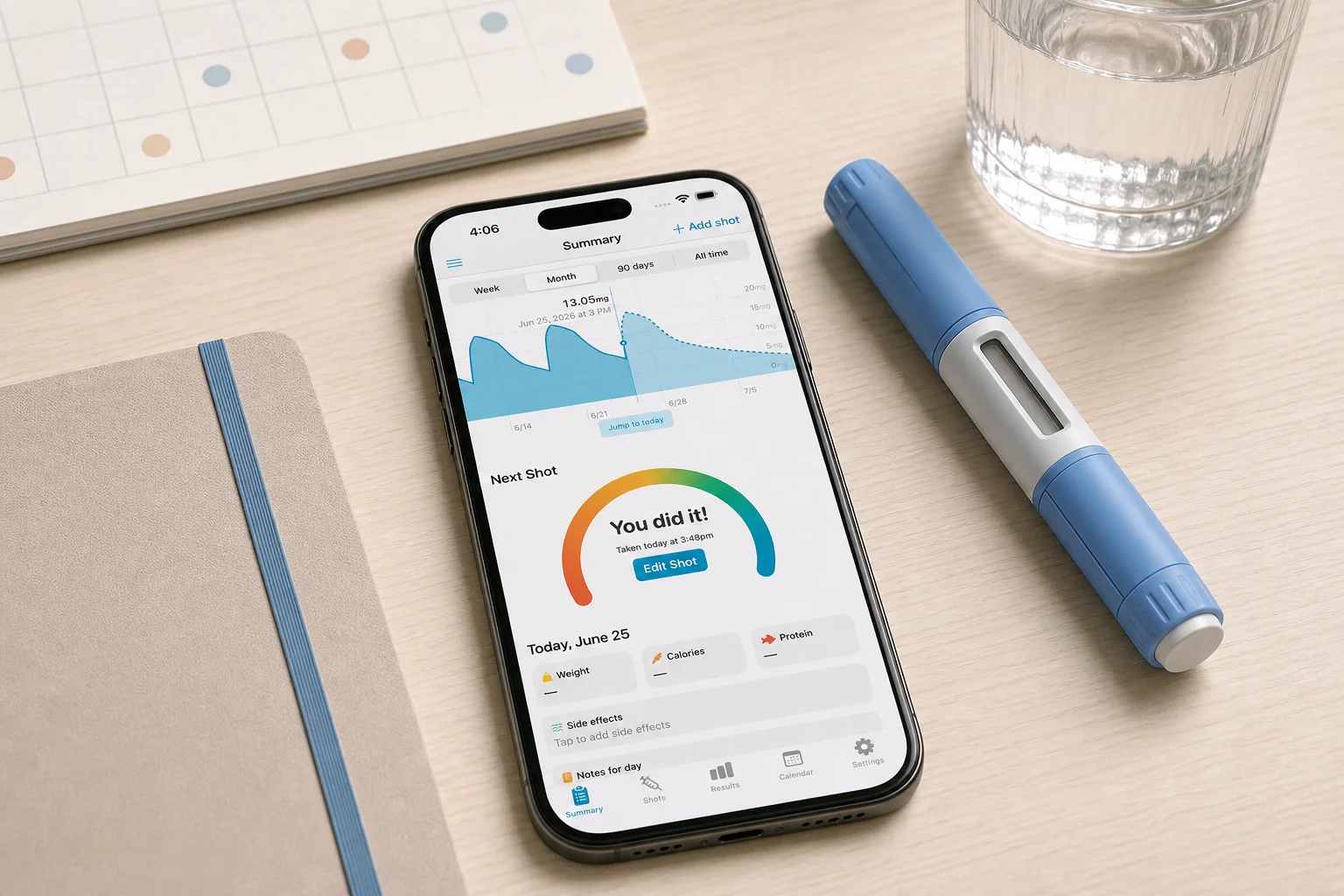
Shotsy tracks your exact dose with each injection and lets you set reminders timed to your specific titration schedule. The Results tab shows your dosage history alongside weight trends, making it easy to see how each dose increase correlates with your progress. When it is time to discuss your next step with your provider, your complete dose history is already organized.
Conclusion
GLP‑1 schedules are product-specific and change as new formulations and labels are approved. Use the prescribing instructions for the exact brand and formulation you take, follow the plan from your prescriber, and do not accelerate or improvise dose changes. A clear record of doses and symptoms can make those conversations more useful.
This post is intended for informational purposes only and is not a substitute for professional medical advice. Always consult your physician before making any changes to your medication or health routine.