





Introduction
If you take semaglutide (Ozempic, Wegovy) or tirzepatide (Mounjaro, Zepbound), you may wonder how long the medication stays in your body after a dose. The answer is important for missed doses, surgery planning, switching medications, pregnancy planning, and understanding why side effects can linger after stopping. Knowing the basics of half-life can help you make sense of what your body is experiencing.
Half-life explains why GLP‑1 levels taper slowly
A drug’s half-life is the time it takes for the amount in your body to drop by about half. Semaglutide has a half-life of approximately one week, and according to the Ozempic prescribing information, it can remain in circulation for about five weeks after the last dose.
Tirzepatide has a shorter half-life of about five days, according to the Zepbound label. That still supports once-weekly dosing, and it also means the medication does not disappear immediately if you miss a dose or stop treatment.
Medication levels build and taper over time
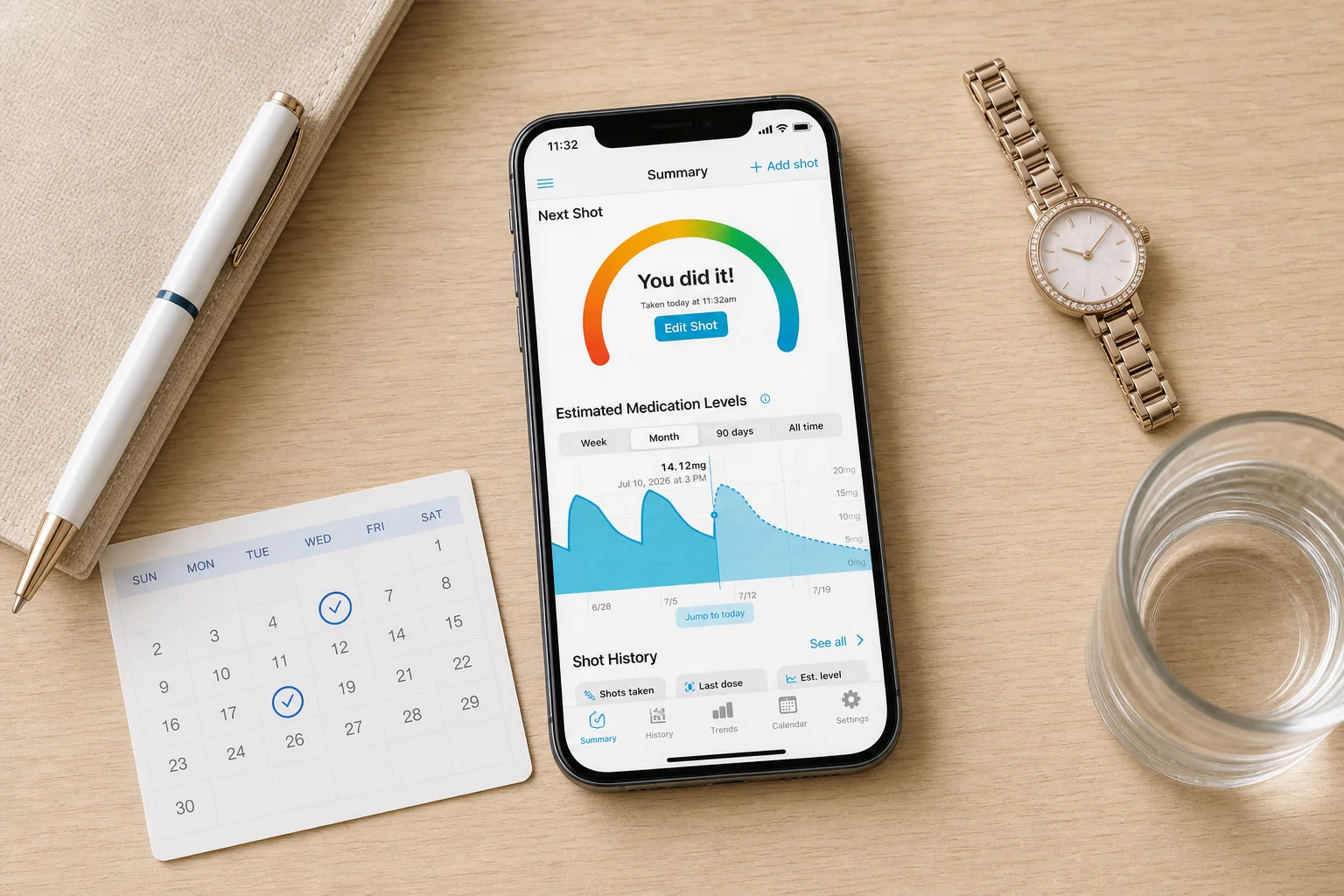
Weekly GLP‑1 medications create a rhythm: levels rise after each injection, dip between shots, and build up over the first several weeks of treatment until they reach a steady state. For semaglutide, the prescribing information says steady-state exposure is reached after four to five weeks of once-weekly dosing.
In practical terms, your body is still adjusting during the first month at any new dose. That is why side effects often peak during titration and settle down later.
Washout timing depends on the situation
There is no single washout rule for every situation. The right timing depends on why you are stopping.
For pregnancy planning, semaglutide labels advise stopping at least two months before a planned pregnancy because of the long washout period. Tirzepatide labels note that delayed gastric emptying during initiation and dose escalation can affect absorption of oral contraceptives, so reproductive planning should be discussed with your clinician.
For surgery, the timing conversation involves your surgical team. For switching medications, your prescriber will consider overlap and adjustment periods. In every case, a clear dose history helps guide the conversation.
Side effects can persist after a dose change
Because GLP‑1 levels taper gradually rather than dropping to zero, symptoms can continue for days or even weeks after a dose change. This does not always mean something is wrong. It often reflects the medication’s slow decline.
That said, persistent vomiting, severe abdominal pain, dehydration, fainting, or worsening symptoms are reasons to contact your healthcare provider rather than waiting for the medication to clear.
Track medication levels with Shotsy
Shotsy’s estimated medication level charts show how your dose builds, peaks, and tapers between shots. The chart is based on dose timing and known pharmacokinetics, not a blood test, but it can help you connect side effects, hunger, and energy changes to where you are in your dosing cycle.
Conclusion
For related reading, see the missed-dose guide, switching guide, and maintenance-dose guide.
Semaglutide stays in your body for about five weeks after the last dose. Tirzepatide tapers over multiple half-lives from a roughly five-day half-life. Understanding that timeline helps you make sense of lingering side effects, plan for procedures, and have better conversations with your care team.
This post is intended for informational purposes only and is not a substitute for professional medical advice. Always consult your physician before making any changes to your medication or health routine.