





Introduction
The four most widely prescribed GLP‑1 medications fall into two pairs: Ozempic and Wegovy both contain semaglutide, while Mounjaro and Zepbound both contain tirzepatide. The core difference between each pair is the approved indication, one is approved for type 2 diabetes and the other for chronic weight management. In head-to-head clinical data, tirzepatide produced 47 percent greater weight loss than semaglutide in the SURMOUNT‑5 trial, though both molecules deliver clinically significant results. Understanding these distinctions helps you ask better questions at your next appointment.
The two active ingredients
Despite four brand names, there are only two molecules involved:
- Semaglutide is a GLP‑1 receptor agonist. It mimics the natural GLP‑1 hormone to slow gastric emptying, reduce appetite, and improve blood sugar regulation. Ozempic and Wegovy are both semaglutide, Ozempic is approved for type 2 diabetes at doses up to 2 mg, while Wegovy is approved for chronic weight management at up to 2.4 mg. Semaglutide is also available as a daily oral pill (Rybelsus for diabetes, and a newer oral Wegovy formulation for weight management).
- Tirzepatide is a dual GIP/GLP‑1 receptor agonist. It activates both the GLP‑1 and GIP receptors, which may explain its stronger weight loss and glucose-lowering effects. Mounjaro is approved for type 2 diabetes and Zepbound for chronic weight management, both at doses up to 15 mg. Tirzepatide is currently available only as a weekly injection.
Comparison at a glance
| Ozempic | Wegovy | Mounjaro | Zepbound | |
|---|---|---|---|---|
| Active ingredient | Semaglutide | Semaglutide | Tirzepatide | Tirzepatide |
| Approved for | Type 2 diabetes | Weight management | Type 2 diabetes | Weight management |
| Dose range | 0.25 to 2 mg | 0.25 to 2.4 mg | 2.5 to 15 mg | 2.5 to 15 mg |
| Route | Weekly injection | Weekly injection | Weekly injection | Weekly injection |
| Oral option | Yes (Rybelsus) | Yes (oral Wegovy) | No | No |
| Trial weight loss | Varies by trial and dose | 14.9% in STEP 1 | Varies by trial and dose | 20.9% in SURMOUNT‑1 |
Note: weight loss percentages reflect the highest approved dose in each pivotal trial.
What the clinical trials found
The landmark weight loss data comes from two trial programs:
- STEP 1 (semaglutide 2.4 mg): Participants lost an average of 14.9 percent of body weight over 68 weeks, compared to 2.4 percent with placebo. Approximately one-third of participants lost 20 percent or more (Wilding et al., New England Journal of Medicine, 2021).
- SURMOUNT‑1 (tirzepatide 15 mg): Participants lost an average of 20.9 percent of body weight over 72 weeks, compared to 3.1 percent with placebo. Over half of participants lost 20 percent or more (Jastreboff et al., New England Journal of Medicine, 2022).
The first direct comparison came with SURMOUNT‑5, a head-to-head randomized trial published in the New England Journal of Medicine. After 72 weeks, tirzepatide produced 47 percent greater relative weight loss than semaglutide 2.4 mg (20.2 percent vs 13.7 percent). This is the strongest evidence to date that the dual-receptor mechanism of tirzepatide provides additional weight loss beyond what semaglutide delivers.
How to think about choosing
The “best” medication depends on several variables that only you and your provider can evaluate:
- Insurance coverage: Many insurance plans cover one brand but not another. Ozempic and Mounjaro have broader diabetes-indication coverage, while Wegovy and Zepbound may require prior authorization for weight management. Your formulary often makes the decision for you.
- Medical history: If you have type 2 diabetes, the diabetes-approved options (Ozempic, Mounjaro) may be covered more readily. If your primary goal is weight management without diabetes, Wegovy or Zepbound may be more appropriate.
- Oral vs injection: If needles are a barrier, semaglutide’s oral formulation is an option. Tirzepatide is injection-only as of mid-2026.
- Weight loss goals: Patients who need more aggressive weight loss may benefit from tirzepatide’s stronger clinical results, though individual response varies.
- Side effect tolerance: Both medications share similar GI side effects (nausea, constipation, diarrhea). The rates are comparable in trials, though tirzepatide showed slightly higher nausea at maximum doses in SURMOUNT‑1 (31 percent vs 44 percent for semaglutide in STEP 1). Individual tolerance varies significantly.
- Cost without insurance: List prices for all four medications range from roughly $900 to $1,350 per month without insurance. Manufacturer savings programs exist for each brand, and eligibility depends on insurance status and indication.
Switching between medications
Switching between GLP‑1 medications is common and medically straightforward. Providers typically start the new medication at a low dose and titrate up, regardless of what dose you were on previously. Reasons to switch include inadequate response, intolerable side effects, insurance changes, or a preference for a different delivery method.
There is no required washout period between semaglutide and tirzepatide. Your provider will determine the appropriate starting dose and titration schedule based on your history.
Compare your progress in Shotsy
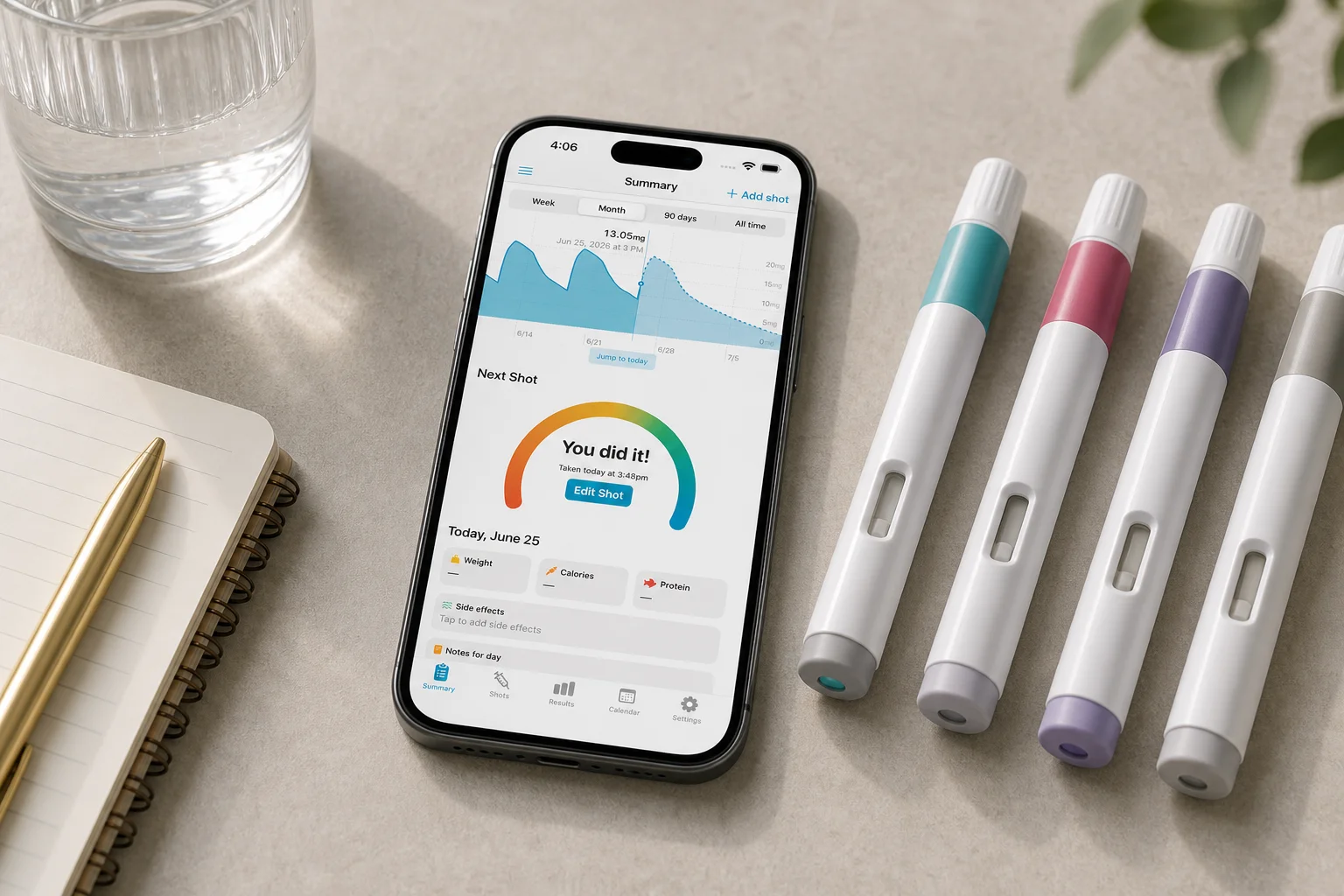
Shotsy supports all four medications with brand-specific dosage options built in. If your provider switches you from one GLP‑1 to another, your full dose history, weight log, side effect data, and nutrition tracking transfer seamlessly. You do not lose any of the data that makes your treatment story complete.
Conclusion
For related reading, see the switching guide, first-month guide, and GLP‑1 side-effects overview.
Ozempic, Wegovy, Mounjaro, and Zepbound are four brand names built on two active ingredients. Semaglutide produced 14.9 percent average weight loss in the STEP 1 trial and comes in injectable and oral forms. Tirzepatide produced 20.9 percent in SURMOUNT‑1 through its dual-receptor mechanism, and the SURMOUNT‑5 head-to-head trial reported 47 percent greater relative weight loss with tirzepatide. The right choice depends on your medical history, insurance coverage, side effect profile, and personal preferences. Bring these data points to your provider and make the decision together.
This post is intended for informational purposes only and is not a substitute for professional medical advice. Always consult your physician before making any changes to your medication or health routine.