




Introduction
Significant weight loss on GLP‑1 medications is something to celebrate, but it can come with an unexpected concern: loose or sagging skin. If you take semaglutide (Ozempic, Wegovy) or tirzepatide (Mounjaro, Zepbound) and have noticed your skin not keeping up with your shrinking frame, you are not alone. Understanding why it happens can help you take steps to minimize it.
Why skin becomes loose after weight loss
Skin stretches to accommodate extra body weight over time. Collagen and elastin, the proteins that give skin its firmness and bounce, weaken when stretched for long periods. When you lose weight, especially quickly, the skin may not have enough time or structural support to contract back to its smaller size. The result is loose, hanging skin, most commonly around the abdomen, arms, thighs, and neck.
Factors that affect skin elasticity
Not everyone experiences the same degree of loose skin. Several factors influence how well your skin recovers:
- Age: Younger skin has more collagen and rebounds more easily.
- Total weight lost: Losing 50 pounds or more increases the likelihood of noticeable loose skin.
- Speed of weight loss: Rapid loss gives skin less time to adjust. GLP‑1 medications can produce significant results in a relatively short window.
- Genetics: Some people naturally produce more collagen and have more resilient skin.
- Sun exposure history: Years of UV damage break down collagen and elastin, reducing skin’s ability to tighten.
- Smoking: Tobacco use accelerates collagen loss and impairs skin recovery.
How to support skin firmness during your GLP‑1 journey
While you cannot fully prevent loose skin when weight loss is substantial, several strategies may help:
- Strength training: Building muscle fills out loose skin and improves overall body composition. Resistance exercises are especially helpful for the arms, thighs, and core.
- Adequate protein: Protein supports collagen production and muscle preservation. Most GLP‑1 users benefit from 70 to 100 grams of protein daily.
- Hydration: Well-hydrated skin maintains better elasticity. Aim for at least 64 ounces of water per day.
- Gradual weight loss: If your provider allows flexibility in your dose schedule, slower, steadier loss gives skin more time to adapt.
- Skin care: Moisturizing regularly will not tighten skin structurally, but it can improve its appearance and comfort.
When to talk to your doctor
If loose skin causes physical discomfort, rashes in skin folds, or significant emotional distress, bring it up with your provider. In some cases, body contouring procedures such as abdominoplasty or brachioplasty may be appropriate after weight has stabilized. Most surgeons recommend waiting at least 12 to 18 months at a stable weight before considering surgery.
Track your progress with Shotsy
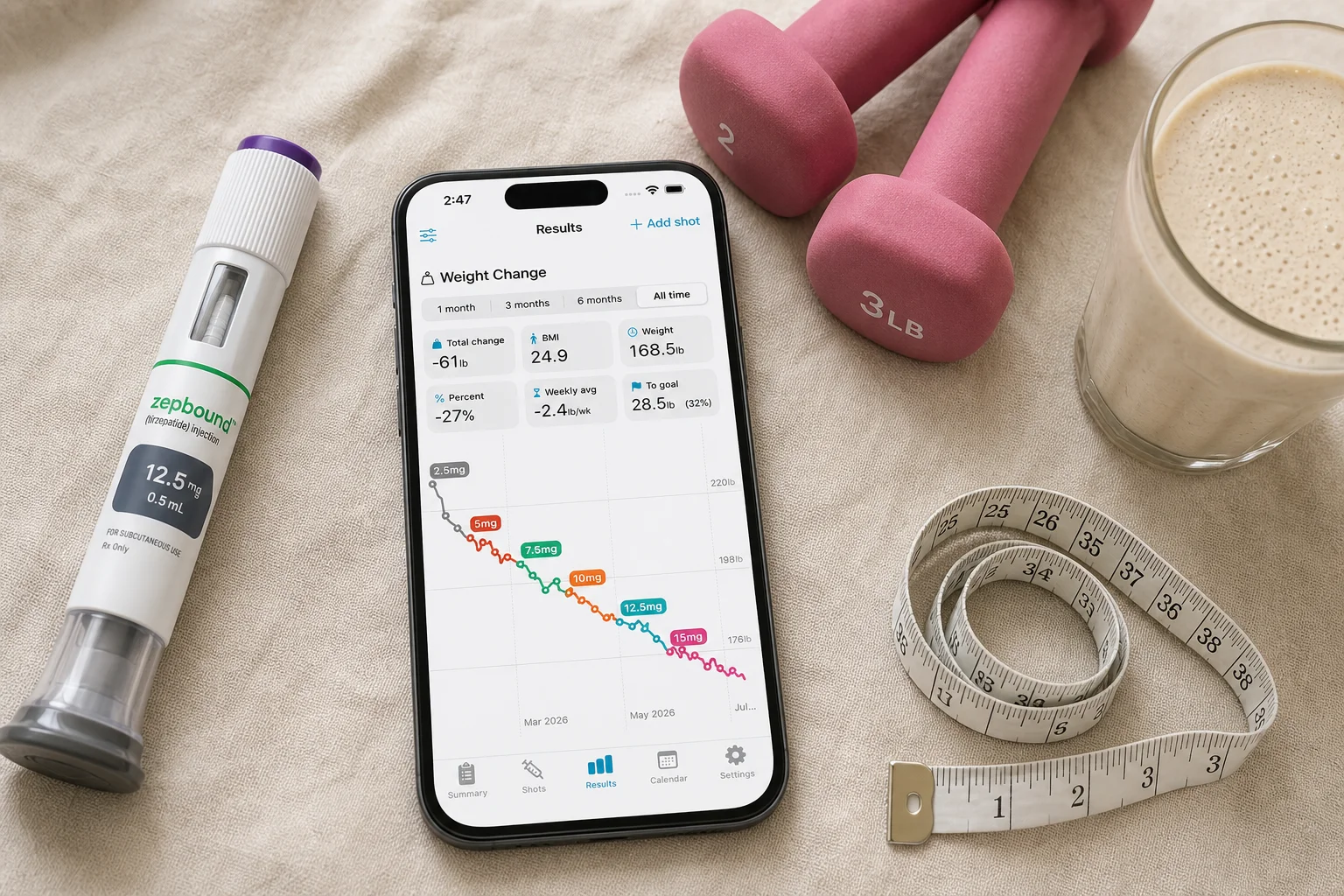
Seeing your weight loss journey over time can help you appreciate how far you have come, even when loose skin feels discouraging. Shotsy’s color-coded weight charts let you visualize your progress by dose, and the Journey feature provides a fun snapshot of your overall transformation. You can also track daily protein intake through Apple Health sync, making it easier to confirm you are hitting your protein goals. Tracking weight consistently also helps your provider determine when your weight has stabilized enough to discuss next steps.
Conclusion
Loose skin after GLP‑1 weight loss is a common experience, not a failure. Strength training, protein intake, and hydration can support your skin as it adjusts. Focus on the health benefits you have gained, and remember that your body is still adapting to a major positive change.
This post is intended for informational purposes only and is not a substitute for professional medical advice. Always consult your physician before making any changes to your medication or health routine.