





Introduction
GLP‑1 side effects are most often digestive symptoms such as nausea, vomiting, diarrhea, constipation, abdominal discomfort, and decreased appetite. They can appear when treatment starts or after a dose increase, but the timing and severity vary by medication, dose, and person. The FDA prescribing information for Ozempic, Wegovy, Mounjaro, and Zepbound lists product-specific frequencies and warnings. This hub explains the common patterns and links to detailed guides for each symptom.
How common GLP‑1 side effects vary by medication
There is no single side-effect rate for the entire GLP‑1 class. Each prescribing label reports adverse reactions by product, indication, dose, and trial population. The labels for semaglutide and tirzepatide products consistently identify gastrointestinal reactions among the common effects, but their percentages should not be pooled into one class-wide number.
Use the label for the medicine you take when you need an exact frequency. Your own symptom record is also important because a reaction can be clinically meaningful even when it is uncommon in a trial.
Nausea and vomiting are common early concerns
Nausea on GLP‑1 medications is often most noticeable during initiation or dose escalation. Smaller portions, slower eating, and avoiding foods that reliably trigger symptoms may help, but persistent nausea or vomiting needs medical guidance. Repeated vomiting can cause dehydration and may signal a more serious problem.
Constipation, diarrhea, bloating, and reflux can affect digestion
Slower gastric emptying and changes in food intake can alter bowel habits. See the focused guides for GLP‑1 constipation, GLP‑1 diarrhea, GLP‑1 bloating, and GLP‑1 acid reflux for symptom-specific tracking and questions to raise with your provider.
Do not assume that severe abdominal symptoms are routine. Contact your healthcare provider for severe or persistent pain, repeated vomiting, inability to keep fluids down, or symptoms that are worsening rather than improving.
Fatigue, dizziness, and headaches need context
GLP‑1 fatigue, dizziness, and headaches can have many causes, including reduced food intake, dehydration, changes in blood glucose, illness, or another medication. Log when the symptom occurs relative to your dose, meals, fluids, sleep, and activity. That context gives your clinician more useful information than a single severity score.
Sulfur burps and hair loss deserve careful interpretation
Sulfur burps are an informal description of foul-smelling belching and are not a standalone diagnosis. They can occur alongside indigestion, delayed gastric emptying, or other gastrointestinal symptoms. Hair loss can also have multiple causes, including rapid weight loss and nutritional changes. A clinician can help determine whether evaluation is needed.
Injection-site reactions are usually local
GLP‑1 injection-site reactions can include redness, itching, swelling, or discomfort where the medicine was injected. Follow the product instructions for injection technique and site rotation. Seek urgent care for trouble breathing, facial swelling, widespread hives, or other signs of a serious allergic reaction.
Dose increases can temporarily change the pattern
Prescribing information uses gradual escalation for several GLP‑1 medicines, and some labels allow delaying escalation when a dose is not tolerated. A symptom that appears after an increase is worth recording with the dose, date, and severity. Do not extend, skip, or repeat a dose without instructions from your prescriber.
When a side effect needs medical attention
Contact your healthcare provider promptly for severe or persistent abdominal pain, repeated vomiting, inability to maintain hydration, severe diarrhea or constipation, fainting, or symptoms that are rapidly worsening. Seek urgent help for trouble breathing, facial swelling, or other signs of a serious allergic reaction. Product labels contain additional warnings and should be reviewed with your clinician.
Track symptoms with Shotsy
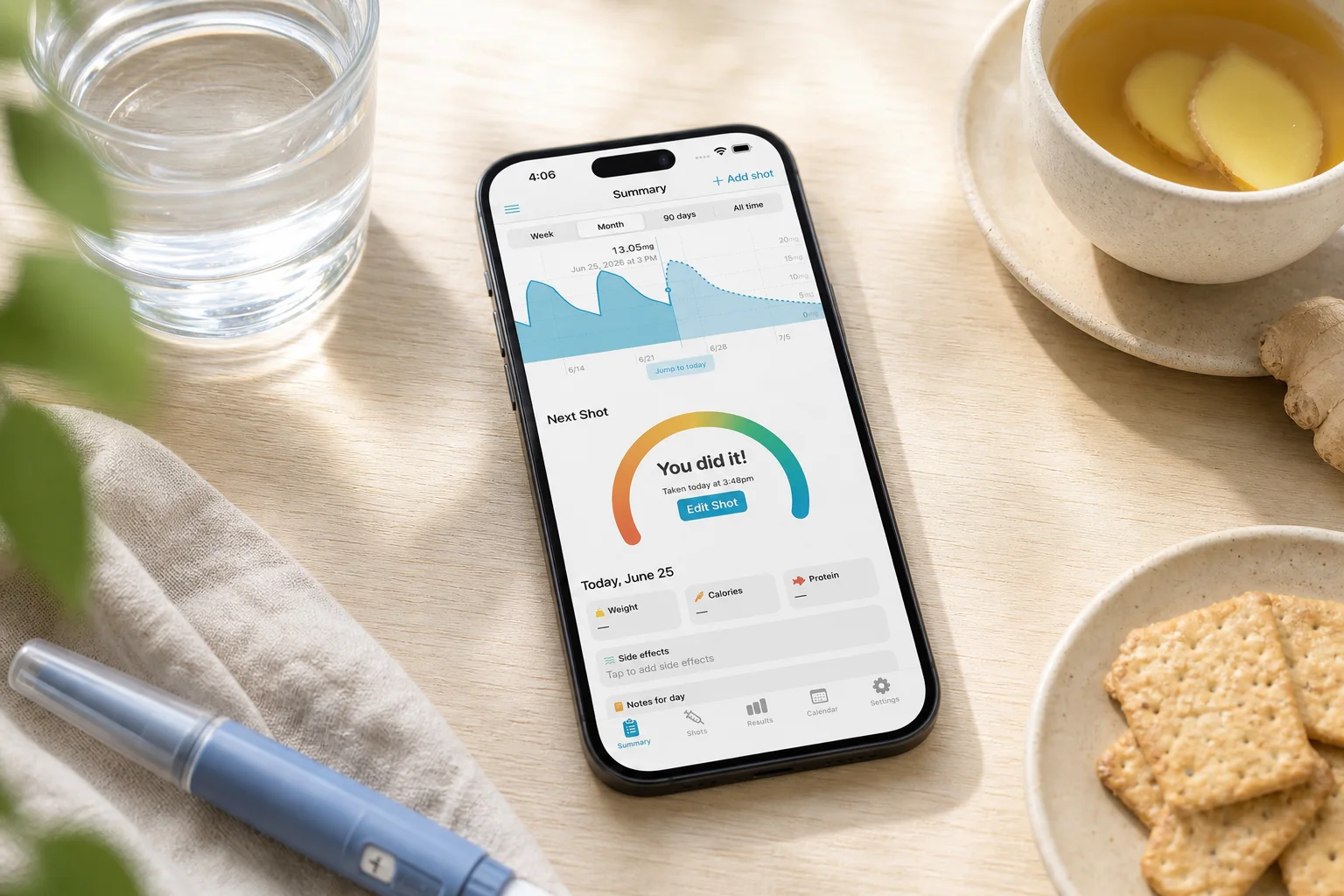
Shotsy lets you record symptoms beside dose dates, meals, hydration, weight, and notes. A consistent record can show whether nausea follows a dose increase, whether constipation improves with a routine, or whether fatigue tracks with low intake. Bring the pattern to your healthcare provider rather than trying to diagnose the cause from the app.
Conclusion
GLP‑1 side effects are product-specific, dose-dependent, and highly individual. Digestive symptoms are common, but severe or persistent symptoms should not be dismissed as normal. Use the relevant FDA label, track what happens around each dose, and work with your healthcare provider to decide what to change.
This post is intended for informational purposes only and is not a substitute for professional medical advice. Always consult your physician before making any changes to your medication or health routine.