





Introduction
Diarrhea can occur during treatment with semaglutide (Ozempic, Wegovy) or tirzepatide (Mounjaro, Zepbound). You may notice it after starting treatment or increasing a dose; Mounjaro trial participants reported most nausea, vomiting, and diarrhea while their doses increased, with fewer reports as treatment continued. 1 Mild symptoms may be manageable at home, but persistent diarrhea or dehydration needs medical advice.
Diarrhea frequency and duration vary
Researchers combined results from STEP 1, 2, and 3, which studied adults with overweight or obesity for 68 weeks. STEP 2 included people with type 2 diabetes. Participants took placebo or weekly semaglutide injections, with the dose increased over time to 2.4 mg. Diarrhea affected 29.7% of the semaglutide group and 15.9% of the placebo group. Episodes with semaglutide lasted a median of three days, similar to placebo. The median is the middle value when durations are listed from shortest to longest. 2 Do not wait three days to get help if you have warning signs.
The exact explanation for an episode is not always clear. A stomach infection, another medicine, or a food intolerance can also cause loose stools. Tell your clinician about recent antibiotics, travel, and other symptoms rather than assuming treatment is the only possible cause. 3
Start with fluids and foods you can manage
Replace lost fluids, taking small sips if larger drinks are difficult. Ask about an oral rehydration solution when losses continue. If you have kidney disease, diabetes, or another condition that affects fluid or electrolyte needs, check the type and amount with your clinician. 4 Our hydration guide covers questions to discuss with your care team.
For mild symptoms, GLP‑1 gastrointestinal experts suggest smaller meals and avoiding fatty foods, alcohol, and sugar alcohols such as sorbitol while diarrhea is active. Choose foods you tolerate; forcing extra fiber during an episode may worsen symptoms. These are expert management recommendations, not proof that one diet prevents diarrhea for everyone. 5
Write down how often you have loose stools, what you can eat and drink, and whether symptoms interrupt sleep or work. Record changes in meals or other medicines alongside dose dates. Those details help your clinician assess what happened without relying on memory.
Discuss persistent symptoms before increasing your dose
Contact your prescriber if diarrhea continues, returns after each injection, or limits eating and drinking. Ask whether you should delay a planned increase; do not adjust the schedule on your own. Experts recommend that your prescriber consider changing the schedule of dose increases and checking for other causes. 5
A clinician or pharmacist may recommend an antidiarrheal such as loperamide for a suitable episode. Do not self-treat bloody diarrhea or diarrhea with fever using these medicines. Follow the product directions, and seek advice if symptoms worsen. 4
Recognize symptoms that need prompt care
Seek urgent care for severe abdominal pain, black or bloody stools, repeated vomiting, or inability to keep fluids down. Very little urine, marked dizziness, or confusion can signal dehydration. Contact a clinician if adult diarrhea lasts more than two days, reaches six or more loose stools in a day, or comes with a high fever. 3
Ozempic prescribing information warns that dehydration from diarrhea or vomiting can lead to kidney injury. Do not wait for your next scheduled appointment if you are struggling to replace fluids. 6
Track your symptoms with Shotsy
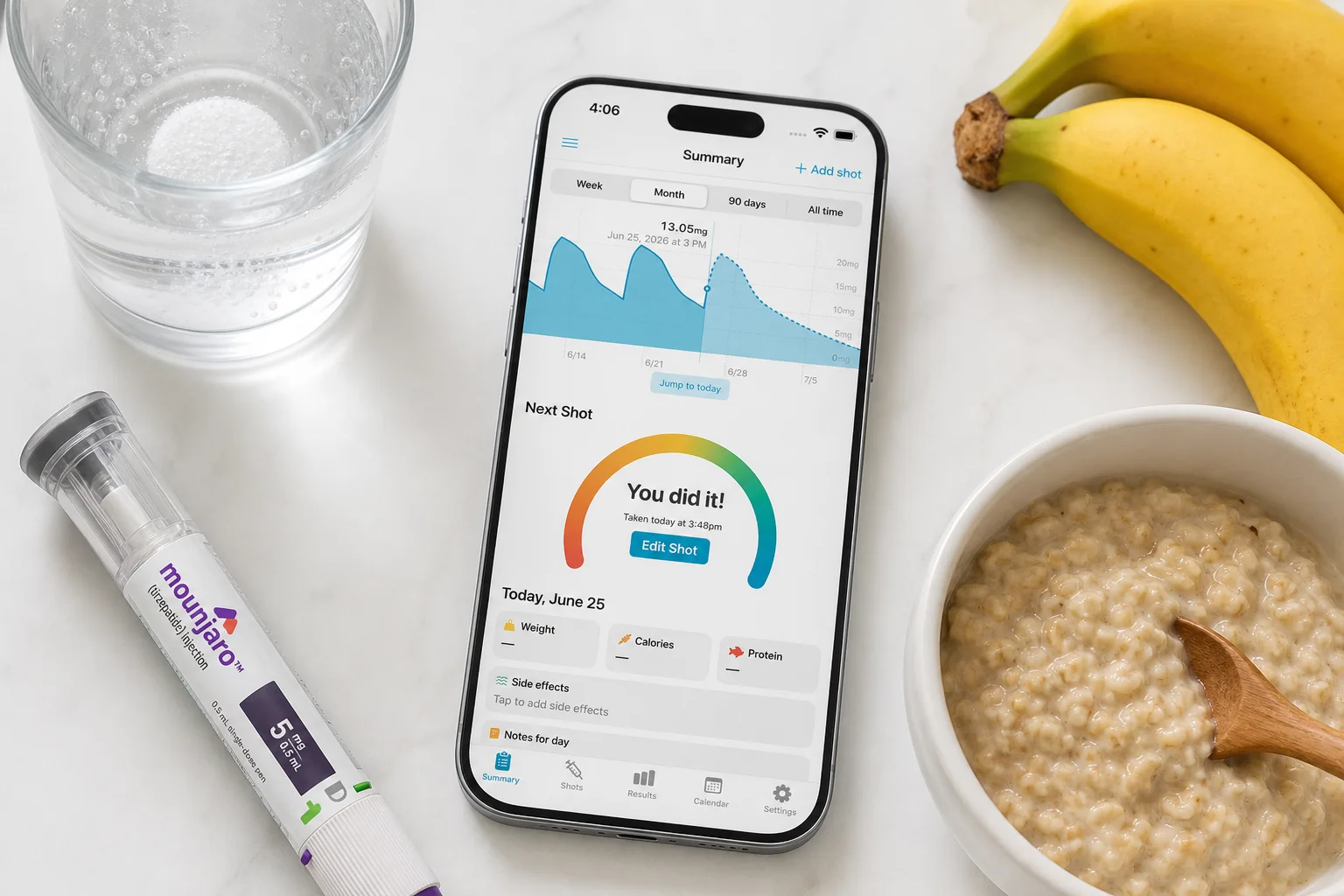
Use Shotsy’s side effect log and daily notes to record diarrhea alongside injection dates and doses. With Shotsy you can export a PDF that includes a side effects chart to see how your symptoms improve or worsen over time. Share it with your provider, along with notes on what you tried and whether it helped.
Conclusion
Mild diarrhea may improve, but the right response depends on severity and hydration. Drink enough to replace lost fluids, choose foods you can manage, and contact your prescriber about ongoing symptoms before increasing your dose.
This post is intended for informational purposes only and is not a substitute for professional medical advice. Always consult your physician before making any changes to your medication or health routine.