





Introduction
Bloating is one of the most frustrating side effects of GLP‑1 medications like semaglutide (Ozempic, Wegovy) and tirzepatide (Mounjaro, Zepbound). Clinical trials report bloating in roughly 7 to 10 percent of patients (Jastreboff et al., New England Journal of Medicine, 2022), but self-reported rates in online communities run significantly higher, likely because mild-to-moderate bloating often goes unreported in trial settings. The cause is straightforward: these medications slow gastric emptying and reduce gut motility, which means food sits in your stomach and intestines longer, producing gas and distension. The good news is that bloating typically responds well to dietary modification and a few practical habits.
Why GLP‑1 medications cause bloating
GLP‑1 receptor agonists work in part by slowing gastric emptying, the rate at which food leaves your stomach and enters the small intestine. This delay is one of the main reasons these medications reduce appetite and promote weight loss. But slower emptying also means food ferments longer in the digestive tract, producing gas that causes that familiar tight, distended feeling.
Two mechanisms compound the problem:
- Reduced gut motility: GLP‑1 receptors are distributed throughout the gastrointestinal tract. Activating them slows the muscular contractions (peristalsis) that move food through the stomach, small intestine, and colon. Less movement means gas gets trapped rather than passing through.
- Changes in gut bacteria: Slower transit time alters the environment for intestinal bacteria. Food that sits longer in the gut provides more opportunity for bacterial fermentation, which produces hydrogen, methane, and carbon dioxide gas.
Bloating tends to be worst during dose escalation, the weeks after each dose increase, because the body is adjusting to a stronger effect on gastric emptying. Many patients notice improvement after four to eight weeks at a stable dose, though some experience persistent bloating throughout treatment.
What makes bloating worse
Not all bloating is equal, and certain dietary and behavioral triggers can take manageable discomfort and turn it into something that disrupts your day.
Carbonated beverages are a top offender. The carbon dioxide in sparkling water, soda, and beer adds gas directly to a digestive system already struggling to move things along. Cutting carbonation is one of the simplest changes you can make.
High-fat foods slow gastric emptying on their own. Combined with a medication that already delays stomach emptying, fatty meals can leave you feeling uncomfortably full for hours. Fried foods, creamy sauces, rich cheeses, and fatty cuts of meat are common triggers.
Large portions overwhelm a slower stomach. Eating a normal-sized meal on a medication designed to reduce your intake is a recipe for bloating, nausea, and discomfort. Your stomach capacity has not physically shrunk, but its ability to process food has slowed considerably.
Certain vegetables produce more gas during digestion. Cruciferous vegetables like broccoli, cauliflower, Brussels sprouts, and cabbage are high in raffinose, a complex sugar that gut bacteria ferment aggressively. Onions, garlic, and legumes (beans, lentils) are also common gas producers. These are nutritious foods, and you do not need to eliminate them, but cooking them thoroughly and introducing them gradually can reduce their impact.
Sugar alcohols and artificial sweeteners found in sugar-free gum, protein bars, and diet drinks (sorbitol, mannitol, xylitol, erythritol) are poorly absorbed in the small intestine and fermented by gut bacteria, producing gas and bloating.
What actually helps
Dietary modification is the most effective approach, and most patients find significant relief with a few targeted changes.
Eat smaller, more frequent meals. Four to five small meals spread throughout the day place less burden on a slower digestive system than three large ones. Each meal should be small enough that you feel comfortably satisfied, not full.
Eat slowly and chew thoroughly. Rushing meals causes you to swallow air, which adds gas to an already slow-moving GI tract. Take 20 to 30 minutes per meal. Put your fork down between bites.
Prioritize cooked over raw vegetables. Cooking breaks down some of the fibers and complex sugars that cause gas. Steamed, roasted, or sautéed vegetables are generally better tolerated than raw salads, especially during the first few months of treatment.
Cut carbonation. Switch from sparkling water to still water. If you miss the flavor, add lemon, cucumber, or a splash of juice.
Reduce high-fat meals. This does not mean eliminating fat, healthy fats from avocado, olive oil, nuts, and fish are important. But keep individual meals moderate in fat content rather than loading a single meal with high-fat foods.
Try peppermint tea or ginger. Both have mild carminative (gas-relieving) properties. Peppermint relaxes the smooth muscle of the GI tract, which can help trapped gas pass. Ginger promotes gastric motility. Neither is a cure, but both can take the edge off.
Over-the-counter options. Simethicone (Gas-X) breaks up gas bubbles and can provide quick relief. Digestive enzyme supplements containing alpha-galactosidase (Beano) help break down the complex sugars in vegetables and legumes before gut bacteria can ferment them.
When bloating signals something more serious
For most people, bloating on GLP‑1 medications is uncomfortable but not dangerous. However, some signs warrant a call to your provider:
- Severe abdominal pain or distension that does not improve
- Inability to pass gas or have a bowel movement for several days
- Vomiting that accompanies severe bloating
- Bloating that worsens progressively rather than fluctuating
These can indicate gastroparesis (severely delayed stomach emptying) or, in rare cases, a bowel obstruction. Both require medical evaluation. If your bloating is significantly affecting your quality of life and dietary changes are not helping, your provider may consider adjusting your dose or switching to a different GLP‑1 medication with a slightly different side effect profile.
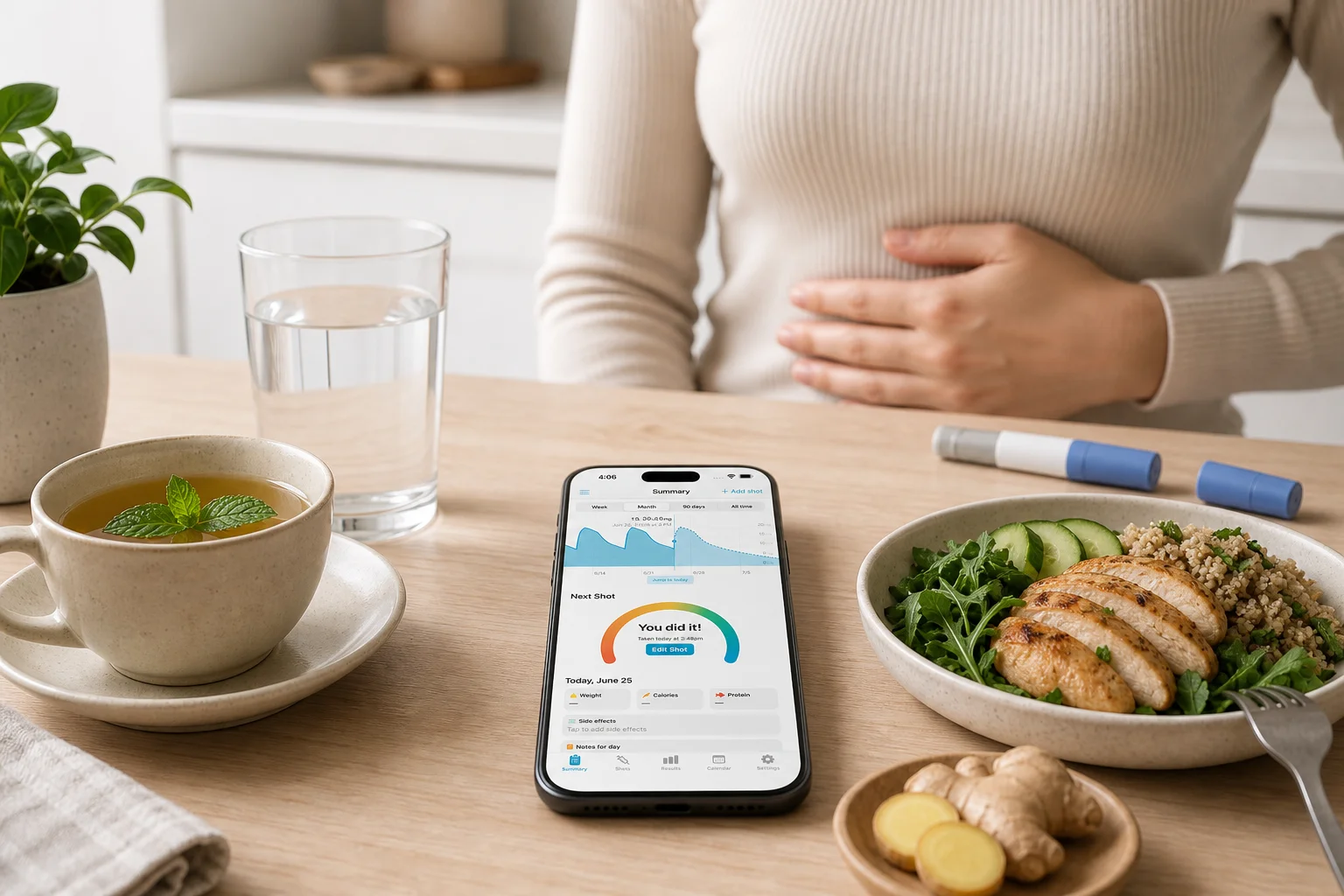
Track bloating patterns with Shotsy
Rate your bloating severity daily using Shotsy’s side effect sliders on a 0-to-10 scale. Use the daily notes to record what you ate, and check the calendar view over two to three weeks to identify which foods and eating patterns coincide with your worst days. This kind of structured data makes it much easier to pinpoint your personal triggers rather than guessing.
Conclusion
Bloating on GLP‑1 medications is driven by delayed gastric emptying and reduced gut motility, the same mechanisms that make these drugs effective for weight loss. It is most common during dose escalation and often improves over time. The most effective relief comes from eating smaller meals, chewing slowly, cutting carbonation, reducing high-fat foods, cooking vegetables thoroughly, and using OTC gas relief when needed. Track your symptoms alongside what you eat to find the specific triggers that affect you most, and talk to your provider if bloating is severe or worsening.
This post is intended for informational purposes only and is not a substitute for professional medical advice. Always consult your physician before making any changes to your medication or health routine.