





Introduction
GLP‑1 medications like semaglutide (Ozempic, Wegovy) and tirzepatide (Mounjaro, Zepbound) suppress appetite by an average of 30 to 50 percent, but that number hides enormous individual variation. Some people feel a dramatic reduction in hunger within the first week. Others reach the highest available dose and still feel uncomfortably hungry. And a third group experiences appetite suppression so intense that they struggle to eat enough to meet basic nutritional needs. All three responses are real, all three have physiological explanations, and all three require different management strategies.
How GLP‑1 medications suppress appetite
Understanding the appetite mechanism helps explain why responses vary. GLP‑1 receptor agonists reduce hunger through three pathways that work simultaneously:
- Brain signaling: GLP‑1 receptors in the hypothalamus and brainstem regulate hunger and satiety. Activating these receptors reduces the drive to eat and lowers the reward value of food, meaning food may still taste good, but the compulsive pull toward eating diminishes.
- Delayed gastric emptying: Food stays in the stomach longer, which sends sustained fullness signals to the brain via the vagus nerve.
- Hormonal cascades: GLP‑1 receptor activation influences other appetite-regulating hormones including leptin, ghrelin, and peptide YY, creating a broader suppression of hunger signals.
Appetite suppression typically begins within the first week of treatment as blood levels of the medication rise. However, full effect may not develop for four to eight weeks as the medication reaches steady-state concentration and the brain’s appetite circuits fully adapt.
Why you might still feel hungry
If you are several weeks into treatment and still experiencing significant hunger, several factors could be at play.
You may be at a subtherapeutic dose. Appetite response is dose-dependent, and many patients do not experience meaningful suppression until the mid-to-high range. On semaglutide, the starting dose of 0.25 mg is primarily for GI tolerance, significant appetite effects typically emerge at 1.0 mg and above.
Individual medication resistance. GLP‑1 receptor sensitivity varies between people. Genetic differences in receptor expression, gut microbiome composition, and baseline hormonal profiles all influence how strongly you respond. This is normal biological variation, not a personal failure.
Behavioral and psychological hunger may persist. GLP‑1 medications primarily reduce physiological hunger. They are less effective against habitual eating, emotional eating, and food cue reactivity. If the urge feels more like a psychological pull than a physical stomach sensation, the medication may be working while behavioral patterns remain.
Hormonal factors can blunt the response. Insulin resistance, chronic stress, poor sleep, and certain medications (antidepressants, antipsychotics, corticosteroids) can counteract appetite suppression.
Inadequate protein intake can paradoxically increase hunger. Protein is the most satiating macronutrient. Aim for 1.2 to 1.6 grams per kilogram of body weight per day.
Why you might not feel hungry enough
The opposite problem, appetite suppression so intense that eating feels impossible, is equally concerning and often gets less attention.
Dangerously low calorie intake is a real risk. When appetite vanishes, some patients eat fewer than 500 to 800 calories per day. Recommended calorie floors are 1,000 to 1,200 per day for women and 1,200 to 1,500 for men. Going below these levels accelerates muscle loss, triggers hair loss, impairs immune function, and slows metabolic rate.
Muscle loss is the most consequential risk. Approximately 25 to 40 percent of weight lost on GLP‑1 medications can be lean mass (Wilding et al., NEJM, 2021), and that percentage increases when protein and calorie intake are too low. Losing muscle reduces resting metabolic rate and makes weight regain more likely.
Nutrient deficiencies develop when you consistently eat too little. Iron, B12, vitamin D, calcium, and essential fatty acids are commonly low in patients not meeting calorie minimums.
Food aversion can develop when every meal feels like a chore. If eating has become genuinely distressing, discuss dose reduction with your provider.
What to do if you are still hungry
- Be patient with dose escalation. Give each dose level at least four to eight weeks before concluding it is not working.
- Track your food intake. You may be eating more than you realize through snacking or liquid calories. Daily tracking provides objective data.
- Increase protein. Protein enhances the satiety effect of your medication. Eat protein first at every meal.
- Evaluate non-physical hunger. If your stomach is not growling but you still want to eat, consider whether boredom, stress, or habit is driving the urge.
- Share data with your provider. If you are genuinely hungry at the highest approved dose, your provider may consider switching medications or adding complementary treatments.
What to do if you are not hungry enough
- Set calorie and protein minimums and treat them as non-negotiable. Use a tracking app to ensure you are meeting at least 1,000 to 1,200 calories (women) or 1,200 to 1,500 calories (men) per day.
- Eat on a schedule. When appetite signals are absent, external cues replace internal ones. Set alarms or meal reminders and eat at those times regardless of hunger.
- Choose calorie-dense, nutrient-rich foods. Nuts, nut butter, avocado, cheese, Greek yogurt, smoothies, and eggs pack significant nutrition into small volumes that are easier to consume when appetite is low.
- Prioritize liquid calories when solids are too much. Protein shakes, smoothies, and bone broth provide calories and nutrients when chewing a meal feels impossible.
- Talk to your provider about dose adjustment. Excessive appetite suppression may indicate your current dose is higher than necessary. A lower dose that still produces weight loss but allows adequate nutrition may be the right balance.
Track appetite and intake with Shotsy
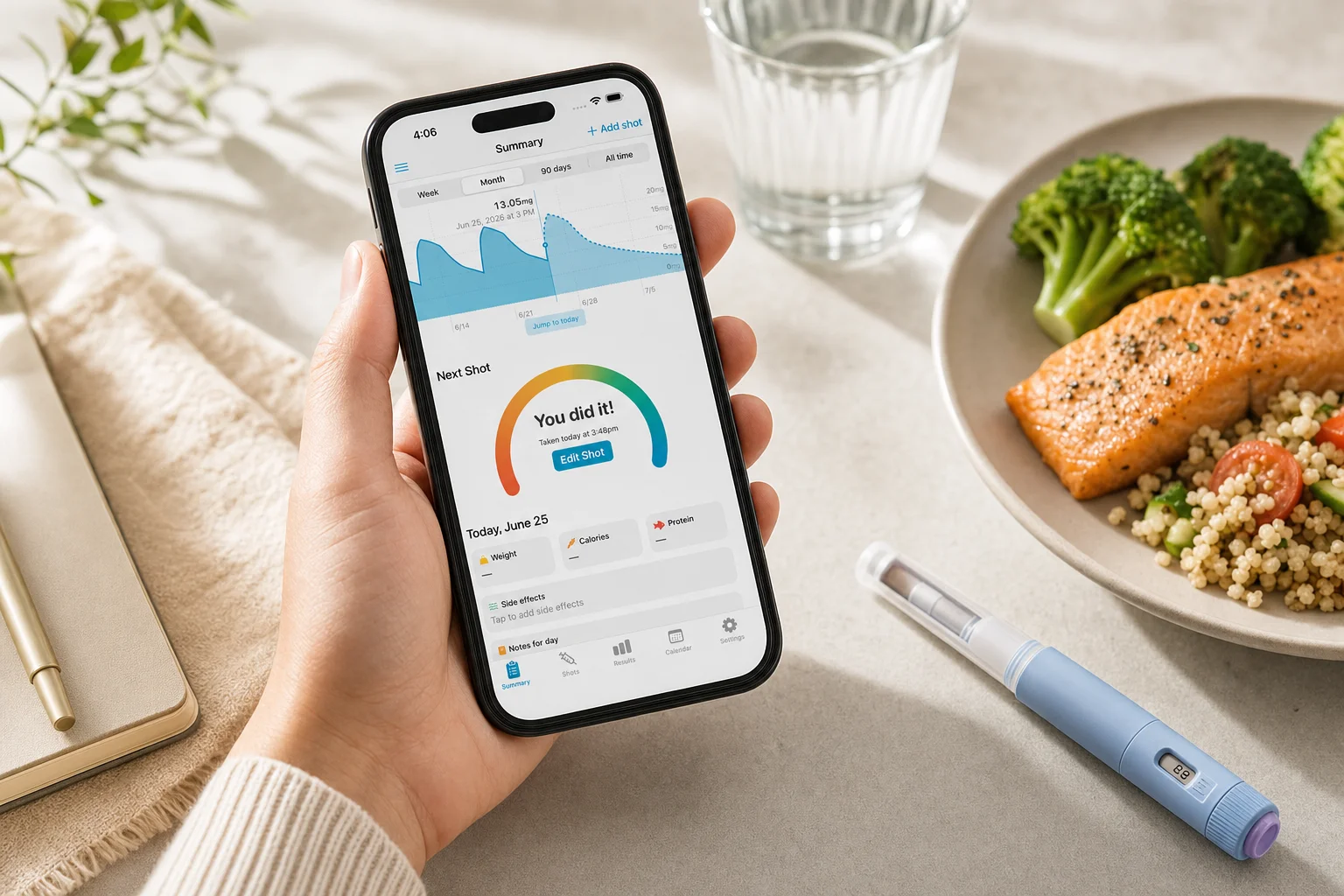
Track your daily calories and protein in Shotsy alongside your dose history. If you are still hungry, the data gives your provider objective evidence to support a dose increase or medication change. If you are not hungry enough, daily calorie tracking ensures you are meeting your minimums. Shotsy’s calendar view makes it easy to see whether appetite changes correlate with dose adjustments, giving both you and your provider the information needed to find the right balance.
Conclusion
GLP‑1 medications suppress appetite by 30 to 50 percent on average, but your experience may fall well outside that average. If you are still hungry, it may be a matter of dose, timing, or behavioral patterns. If you are not hungry enough, the priority shifts to meeting calorie and protein minimums to prevent muscle loss. Both situations benefit from consistent daily tracking, which replaces guesswork with data and supports better conversations with your provider.
This post is intended for informational purposes only and is not a substitute for professional medical advice. Always consult your physician before making any changes to your medication or health routine.