





Introduction
Constipation is one of the most persistent side effects of GLP‑1 medications, affecting approximately 24 percent of patients on semaglutide 2.4 mg in the STEP 1 trial (Wilding et al., New England Journal of Medicine, 2021). Unlike nausea, which tends to fade as your body adapts, constipation can continue throughout treatment because the underlying mechanism, delayed gastric and intestinal motility, does not diminish with time. The good news is that a combination of dietary adjustments, hydration, and over-the-counter remedies can provide meaningful relief for most people.
Why GLP‑1 medications cause constipation
GLP‑1 receptor agonists slow the entire gastrointestinal tract, not just the stomach. This delayed transit time means food and waste move more slowly through the intestines, allowing the colon to absorb more water from stool. The result is harder, drier stool that is more difficult to pass.
Three factors compound the problem:
- Reduced food intake: When your appetite drops, you eat less. Less food means less bulk moving through the intestines, which further slows transit time.
- Lower fiber consumption: Many people on GLP‑1 medications gravitate toward protein-rich, easy-to-digest foods and unintentionally reduce their fiber intake.
- Dehydration: Reduced appetite often extends to fluids. If you are drinking less water, the colon compensates by pulling even more water from stool.
The persistence of constipation distinguishes it from most other GLP‑1 side effects. Nausea typically improves within 8 to 12 weeks at a given dose, but constipation rates remain relatively stable across the treatment period because the medication continues to slow gut motility for as long as you take it.
How much fiber you actually need
The recommended daily fiber intake for adults is 25 to 35 grams, yet the average American consumes just 15 grams (USDA Dietary Guidelines, 2020–2025). On a GLP‑1 medication with reduced appetite, hitting that target requires deliberate planning.
Focus on a mix of soluble and insoluble fiber:
- Soluble fiber dissolves in water and forms a gel that softens stool. Sources include oats, chia seeds, flaxseeds, apples, citrus fruits, beans, and psyllium husk.
- Insoluble fiber adds bulk and helps move waste through the intestines. Sources include whole grains, vegetables, wheat bran, and nuts.
Increase fiber gradually, adding too much too quickly can worsen bloating and gas, especially on a medication that already slows digestion. Add 3 to 5 grams per day over the course of a week until you reach your target.
Why hydration matters more than usual
Adequate hydration is the single most important complement to fiber intake. Without sufficient water, increasing fiber can actually worsen constipation because the fiber absorbs water and creates harder stool.
General hydration targets for GLP‑1 users:
- Women: At least 73 ounces (about 9 cups) of water per day
- Men: At least 100 ounces (about 12.5 cups) of water per day
These are baseline recommendations from the National Academies of Sciences, Engineering, and Medicine. If you are exercising, living in a hot climate, or experiencing other GI side effects like diarrhea or vomiting, your needs will be higher. Sip throughout the day rather than consuming large quantities at once. Electrolyte drinks can help if plain water is unappealing.
Over-the-counter remedies that work
When dietary changes are not enough, over-the-counter options can provide additional relief:
- Osmotic laxatives (MiraLAX / PEG 3350): This is the first-line OTC recommendation from most gastroenterologists. MiraLAX draws water into the colon to soften stool without stimulating the gut muscles. It is generally safe for daily use during GLP‑1 treatment, though you should confirm with your provider.
- Psyllium husk (Metamucil): A fiber supplement that absorbs water and adds bulk. Take with a full glass of water. Start with a low dose and increase gradually.
- Magnesium citrate: Acts as both an osmotic laxative and a mild smooth-muscle relaxant. Doses of 200 to 400 mg before bed can improve morning regularity.
- Stool softeners (docusate sodium): These are gentler than stimulant laxatives and work by allowing water to penetrate stool. They are most effective for mild constipation.
Avoid relying on stimulant laxatives (senna, bisacodyl) for more than occasional use, as they can cause the colon to become dependent on stimulation to function. If you need a stimulant laxative more than twice a week, talk to your provider.
Lifestyle habits that help
Beyond diet and hydration, a few daily habits can support regular bowel movements:
- Move your body: Even 20 to 30 minutes of walking per day stimulates intestinal contractions and helps move waste through the colon.
- Establish a routine: The gastrocolic reflex is strongest in the morning. Try to use the bathroom within 30 minutes of waking or after breakfast, even if you do not feel an urgent need.
- Do not ignore the urge: Delaying bowel movements allows the colon to absorb additional water from stool, making future movements harder.
- Consider your position: A squatting position or using a footstool to elevate your knees above your hips straightens the anorectal angle and can make elimination easier.
When to call your provider
Constipation is usually manageable, but see your provider if you experience fewer than three bowel movements per week for multiple consecutive weeks, severe abdominal pain or bloating, blood in your stool, or no relief from a combination of fiber, hydration, and OTC options. In rare cases, GLP‑1 medications can contribute to a bowel obstruction or severe gastroparesis that requires medical intervention.
Track symptoms and fiber with Shotsy
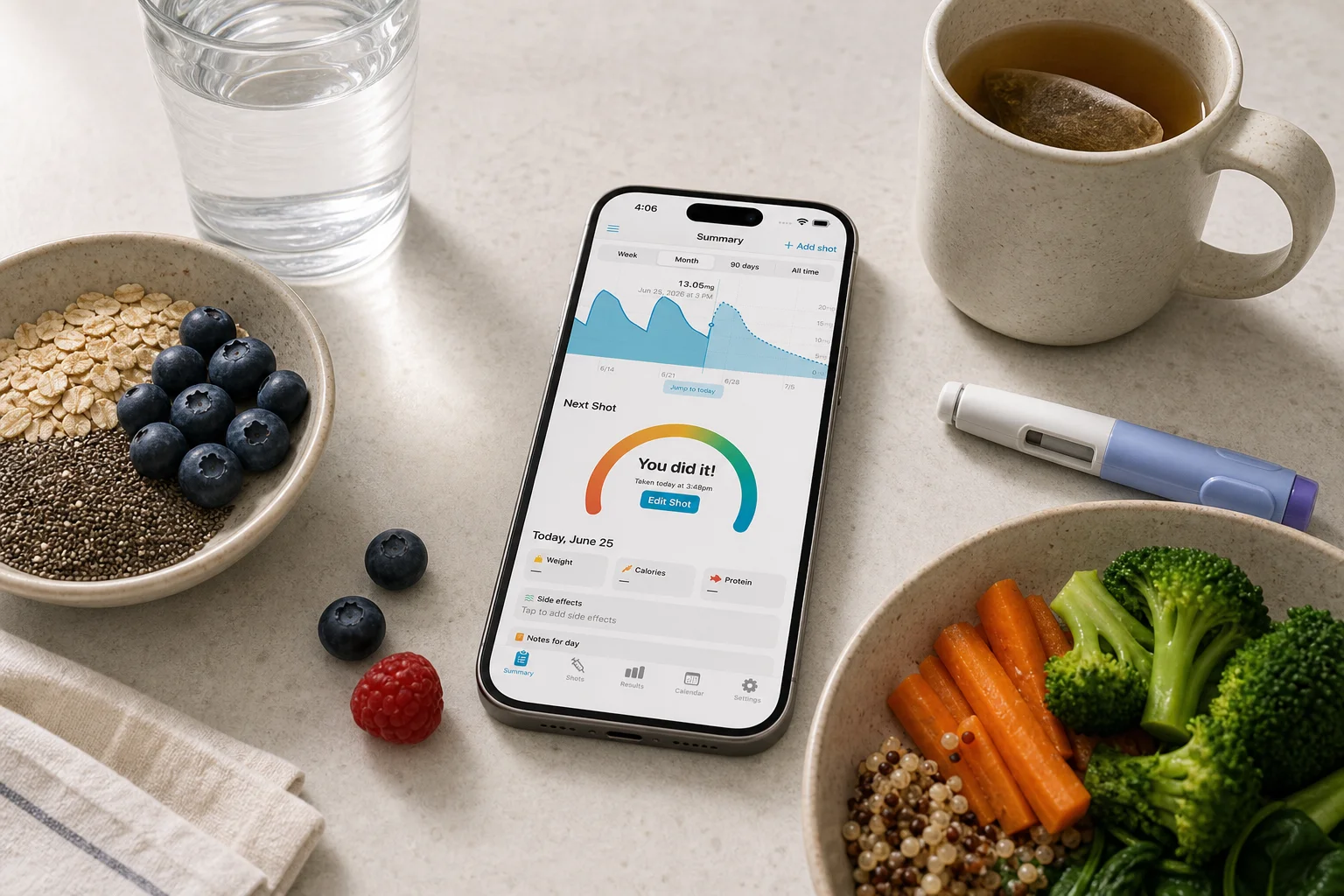
Shotsy’s side effect sliders let you rate constipation severity daily on a 0-to-10 scale. Log your daily fiber and water intake in the nutrition tracker to see whether your symptoms correlate with days when fiber or hydration fell short. Over a few weeks, your calendar view reveals patterns that help you and your provider fine-tune your approach.
Conclusion
Constipation on GLP‑1 medications is common, persistent, and driven by the same slowed gut motility that helps reduce appetite. Unlike nausea, it does not tend to resolve on its own. The most effective relief comes from a combination of hitting 25 to 35 grams of fiber daily, drinking at least 73 to 100 ounces of water, staying physically active, and using an osmotic laxative like MiraLAX when dietary changes are not sufficient. Track your daily fiber and symptom severity to find the combination that works for your body.
This post is intended for informational purposes only and is not a substitute for professional medical advice. Always consult your physician before making any changes to your medication or health routine.