






Introduction
You may notice more GLP‑1 side effects when you start treatment or increase your dose. Many digestive symptoms ease over time, but the timing varies. This pattern applies to semaglutide medicines, including Ozempic and Wegovy, and tirzepatide medicines, including Mounjaro and Zepbound. [1] [2] [3] [4]
Use the week ranges below to review your symptoms with your healthcare provider. You may need more or less time to adjust at each dose.
For help with specific symptoms, see our overview of GLP‑1 side effects.
The first four weeks: build a symptom baseline
Nausea, vomiting, diarrhea, constipation, and abdominal discomfort are common digestive effects. You may have less appetite or feel fatigued. Participants in Wegovy and Zepbound trials reported fatigue; the frequency of side effects varies by medication and dose. [2] [3] [4]
| Treatment stage | What to watch for |
|---|---|
| Weeks 1 and 2 | Record symptoms after starting treatment, including days without symptoms. |
| Weeks 3 and 4 | Compare your notes after subsequent doses. Discuss ongoing symptoms before a planned dose increase. |
| Week 5 onward, if the dose increases | Record new or stronger symptoms after the dose increase. |
| Months 2 and 3 and beyond | Compare dose steps and report symptoms that persist or disrupt daily life. |
Log your dose and time, symptoms, meals, fluids, bowel movements, and energy. Use the same severity scale each day so you can compare symptoms before and after a dose increase. Note any difficulty with eating, drinking, sleep, or work.
Ask your healthcare provider to help assess the cause. They may need to check for illness, effects of other medicines, or changes in blood glucose.
Week 5 and later: dose increases can change symptoms
For weekly injections of Ozempic, Wegovy, Mounjaro, and Zepbound, you start with four weeks at the initial dose before the first planned increase in week five. Your healthcare provider sets later increases based on the medication, your treatment goals, and how you tolerate it. Follow the schedule for your prescribed medication; oral medicines use different schedules. [1] [2] [3] [4]
During dose escalation, your healthcare provider increases your dose in steps. You may notice more nausea, vomiting, or diarrhea after an increase. In Mounjaro and Zepbound trials, participants reported most of these events during escalation and fewer over time. [3] [4]
Contact your healthcare provider before the next planned increase if you struggle with side effects. They may delay the increase or change your treatment. Ask them before adjusting doses to manage routine symptoms. Our GLP‑1 dose-schedule guide explains the schedules for different medications.
Months 2 and 3: duration varies by symptom
Researchers who pooled the STEP 1-3 trials of weekly semaglutide 2.4 mg found median durations of 8 days for individual nausea episodes, 3 days for diarrhea, 2 days for vomiting, and 47 days for constipation. Your symptoms may last a different amount of time. Seek care if symptoms are severe, persist, or disrupt daily life. [5]
You may develop symptoms again after a dose increase. Compare how you feel at each dose and whether you can eat and drink enough. After you reach a stable dose, record new or worsening symptoms and bring your notes to appointments.
Practical ways to ease mild digestive symptoms
GLP‑1 clinical experts recommend changes to meal size, fluid intake, and activity to help manage mild digestive symptoms. [6]
- Smaller meals: Take your time eating and stop when you feel full. Large or high-fat meals may worsen nausea.
- Fluids: Take small sips throughout the day. Follow any fluid restriction your healthcare provider has given you.
- Constipation support: Add fiber in small amounts as you tolerate it, and stay active. Ask your healthcare provider before adding a laxative or other symptom-relief medicine.
Keep a short note of what helps. Our nausea guide and constipation guide cover these symptoms in more detail.
Symptoms that need medical attention at any week
Do not wait for your body to adjust if symptoms are severe, persistent, or getting worse.
- Emergency help: Seek immediate help for trouble breathing, swelling of the face, lips, tongue, or throat, collapse, or severe confusion.
- Urgent medical assessment: Get urgent care for severe or persistent abdominal pain, including pain spreading to the back, repeated vomiting, inability to keep fluids down, or very little urination.
- Contact your healthcare provider: Report symptoms that interfere with eating, drinking, sleep, work, or taking other medicines, even if they seem mild. [1] [3]
Follow your medicine’s safety instructions: stop treatment and seek immediate medical help if you suspect a serious allergic reaction or have symptoms of pancreatitis, such as severe, persistent abdominal pain. [1] [3]
Track your timeline with Shotsy
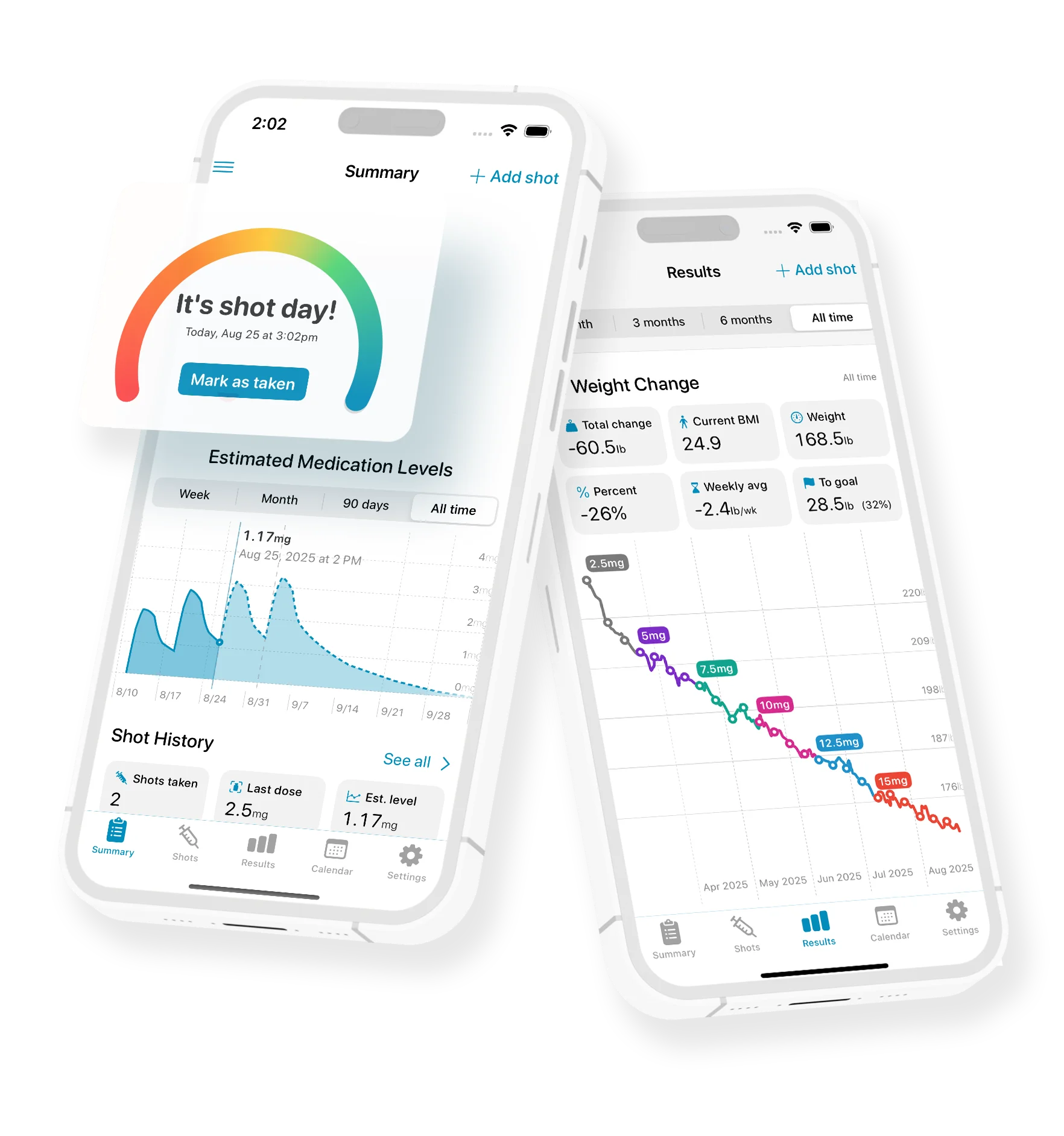
In Shotsy, you can record dose dates, side-effect ratings, weight, hydration, and notes. Share your record with your healthcare provider so they can assess your symptoms and advise you about treatment.
Conclusion
Most side effects improve as the body adjusts to treatment. The goal is not to simply push through severe symptoms. Treatment should be both effective and tolerable, and persistent or significant symptoms deserve evaluation.
This post is intended for informational purposes only and is not a substitute for professional medical advice. Always consult your physician before making any changes to your medication or health routine.