





Introduction
Reaching your goal weight on semaglutide (Ozempic, Wegovy) or tirzepatide (Mounjaro, Zepbound) is a significant milestone, and it naturally raises a new question: what dose helps you maintain it? A maintenance dose is the ongoing dose used after the initial titration and weight-loss phase. The answer is different for everyone, but tracking your response can help you and your clinician find the right plan.
There is no universal maintenance dose
For Wegovy, the FDA prescribing information lists 2.4 mg once weekly as the recommended maintenance dose for most weight-management indications, with 1.7 mg as another option. Zepbound labeling includes 5 mg, 10 mg, or 15 mg once weekly after dose escalation.
Those are clinical starting points, not a guarantee that everyone will do best on the same number. Your clinician will consider your weight trend, side effects, appetite, health conditions, and medication access. The best maintenance dose is usually the one you can tolerate and sustain.
Reaching goal weight does not always mean stopping
Obesity is a chronic condition for many people. Studies of GLP‑1 treatment show that weight regain can happen after stopping, which is why many clinicians discuss long-term treatment rather than a short course. That does not mean every person needs the highest dose indefinitely. It means the decision to stop, lower, or space out doses should be planned, monitored, and individualized.
The lowest effective dose is a common conversation
Many people ask whether they can use the lowest dose that keeps weight, appetite, blood sugar, and side effects stable. That is a reasonable conversation to have with your prescriber, especially when side effects, cost, or access are concerns.
Do not adjust your dose on your own. Even small changes can affect hunger, side effects, blood glucose, and the timing of medication levels in your body.
Maintenance is about more than the scale
A good maintenance plan also considers appetite, protein intake, energy, side effects, strength training, waist measurement, blood sugar when relevant, and quality of life.
If weight begins to climb, that does not automatically mean failure. It may signal that dose, nutrition, movement, sleep, stress, or medication access needs attention. Catching changes early with data makes adjustments much easier.
Track maintenance with Shotsy
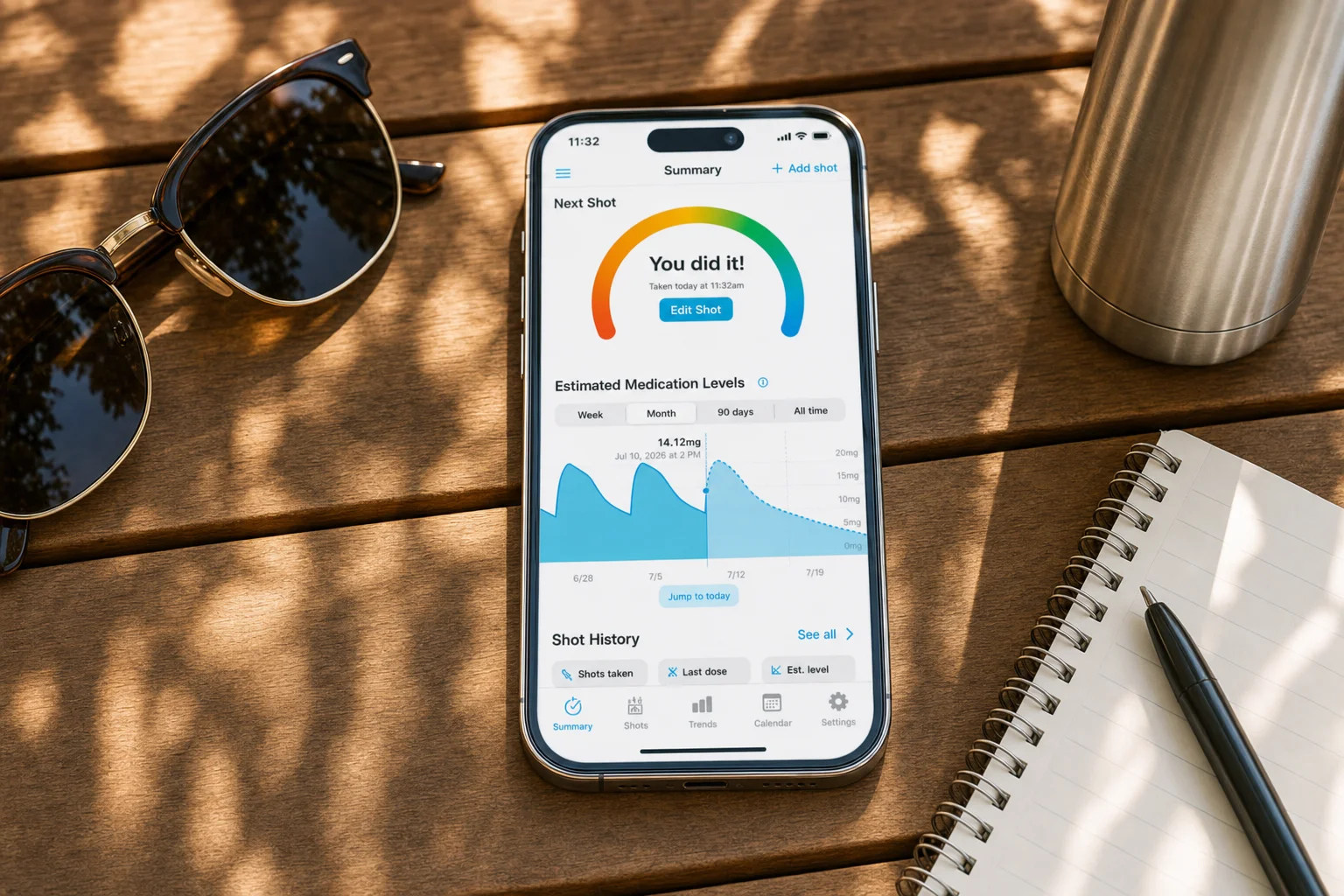
Shotsy includes weight tracking, color-coded weight charts, maintenance mode, dose history, side effect logging, and nutrition totals through Apple Health sync. Seeing your weight and symptoms organized by dose helps you and your clinician decide whether your maintenance plan is holding steady or needs adjustment.
Conclusion
For related reading, see the stopping GLP‑1 guide, weight-loss plateau guide, and half-life guide.
A maintenance dose is the dose that helps you preserve your results after active weight loss. Labels provide approved ranges, but the right plan depends on your individual response and medical history. Track weight, symptoms, appetite, and intake so maintenance becomes a data-informed phase rather than guesswork.
This post is intended for informational purposes only and is not a substitute for professional medical advice. Always consult your physician before making any changes to your medication or health routine.