





Introduction
If you miss a GLP‑1 dose, follow the instructions for the exact product and presentation you use. Ozempic allows a missed weekly dose within five days. Wegovy injection instead bases the decision on whether the next scheduled dose is more or less than 48 hours away. Mounjaro and Zepbound allow a missed dose within four days. Wegovy tablets should be skipped until the following day, while Foundayo should be taken as soon as possible without taking two doses in one day. Labels change, so confirm the current instructions or ask your prescriber or pharmacist when you are unsure.
Why missing a dose matters
GLP‑1 receptor agonists work by maintaining consistent medication levels in your body. Each weekly injection delivers a controlled release of the drug over roughly seven days. When you miss a dose, those levels begin to drop, which can lead to a return of appetite, blood sugar fluctuations, and a temporary stall in weight loss progress. Research suggests that inconsistent dosing can reduce the overall effectiveness of treatment, as the receptor stimulation that suppresses appetite and regulates glucose becomes irregular. The longer you go without a dose, the more your body reverts to its pre-medication baseline.
Ozempic missed-dose timing
The current Ozempic prescribing information says to administer a missed dose as soon as possible within 5 days. If more than 5 days have passed, skip it and take the next dose on the regularly scheduled day. Keep at least 48 hours between doses when changing the weekly day.
Wegovy missed-dose timing
The current Wegovy prescribing information uses a different rule. If the next scheduled injection is more than 2 days, or 48 hours, away, take the missed dose as soon as possible. If the next dose is less than 2 days away, skip it and resume the regular schedule. If 2 or more consecutive doses are missed, the label says to reinitiate dose escalation at a lower dosage to reduce the risk of gastrointestinal side effects, so talk to your prescriber before restarting.
Tirzepatide (Mounjaro and Zepbound)
Tirzepatide follows a similar once-weekly dosing schedule but has a slightly shorter catch-up window:
- Within 4 days (96 hours) of your scheduled dose: Take the injection as soon as possible, then continue with your normal weekly schedule.
- More than 4 days late: Skip the missed dose and take your next injection on the regularly scheduled day.
The current Mounjaro prescribing information and Zepbound prescribing information also require at least three days, or 72 hours, between doses. If you miss doses during escalation, ask your prescriber how to restart rather than choosing a dose yourself.
Daily oral GLP‑1 medications
Oral products do not all use the same missed-dose rule:
- Wegovy tablets: Skip the missed dose and take the next dose the following day.
- Foundayo: Take the missed dose as soon as possible, but do not take two doses in the same day. If seven or more consecutive doses are missed, the label directs patients to restart escalation at a lower dose with clinician guidance.
- Other oral products: Follow the instructions supplied with that exact medicine rather than applying another brand’s rule.
Administration also differs. Wegovy tablets have specific fasting and water instructions, while Foundayo prescribing information says it may be taken with or without food. Do not assume two oral GLP-1 products are interchangeable.
What happens when you miss multiple doses
Missing one dose occasionally is manageable, but a pattern of missed doses can undermine your treatment. When GLP‑1 levels fall, appetite suppression fades and food noise, the persistent mental preoccupation with eating, often returns within days. Blood sugar control may worsen in people with type 2 diabetes. Studies on medication adherence in chronic disease management consistently show that patients who take fewer than 80% of prescribed doses see significantly reduced clinical outcomes (World Health Organization, 2003 adherence report).
If you’ve missed several consecutive doses, contact your healthcare provider before resuming. Depending on how long you’ve been off the medication, they may recommend restarting at a lower dose and re-titrating upward to reduce the likelihood of gastrointestinal side effects.
Tips to avoid missing doses
Building a consistent routine makes missed doses far less likely:
- Set a recurring reminder: Choose a specific day and time each week (for injectables) or a morning alarm (for daily pills) that fits naturally into your schedule.
- Keep the reminder visible, not necessarily the medicine: Store medication exactly as its label requires and place a calendar, note, or app reminder somewhere you will see it.
- Plan around travel: If you’re traveling across time zones, decide in advance when you’ll take your dose. Bring your medication in a carry-on with a cooler pack if needed.
- Use a tracking app: Logging each dose as soon as you take it creates a reliable record and makes gaps immediately visible.
Stay on schedule with Shotsy
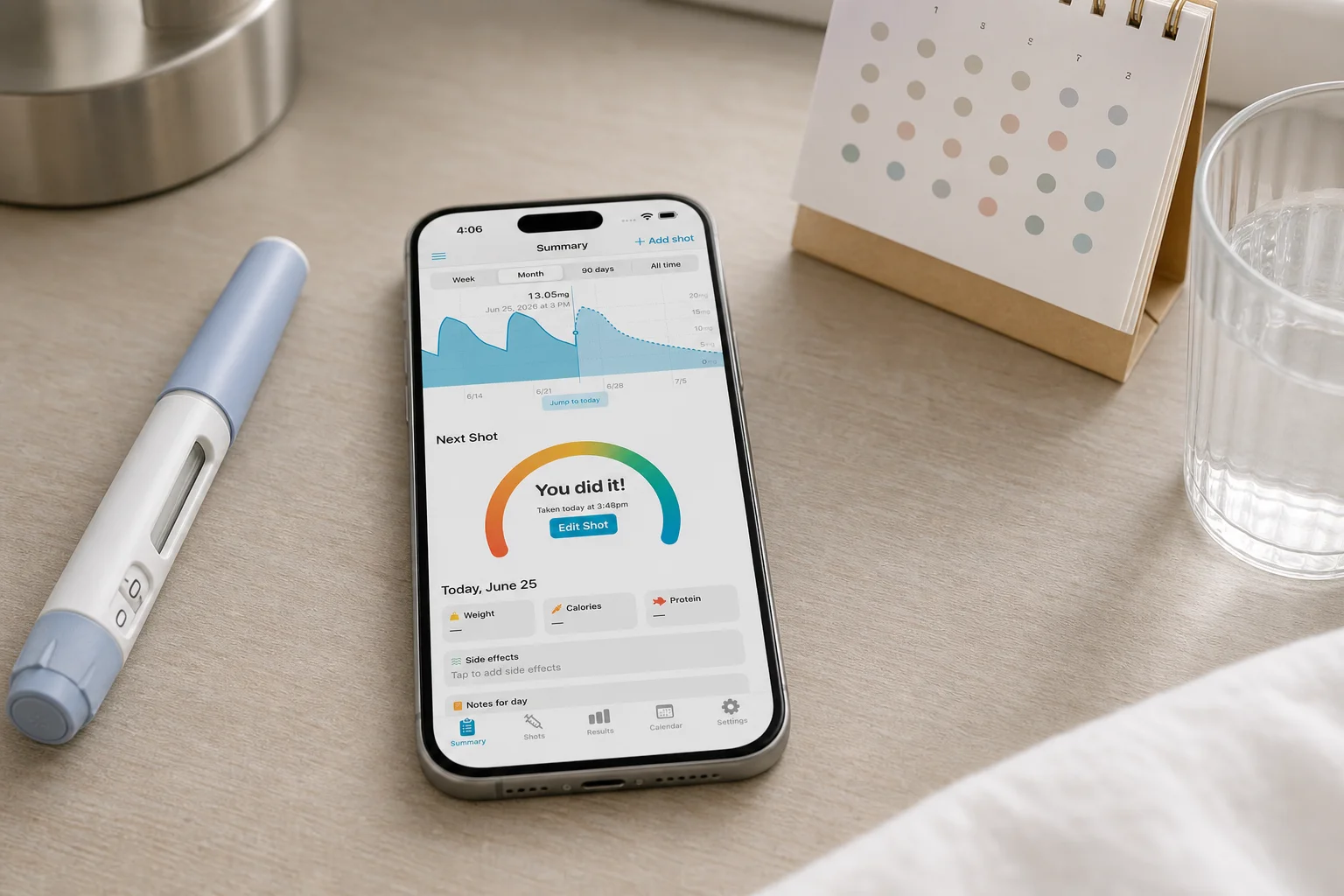
Shotsy’s dose reminders notify you on your scheduled injection day so missed doses become far less likely. The dose calendar gives you an at-a-glance view of exactly when you last injected, making it easy to determine whether you’re still within the catch-up window or need to skip. The Next Shot widget on your home screen keeps your schedule visible without even opening the app, so your next dose date is always top of mind.
Conclusion
For related reading, see the first-month guide, switching guide, and half-life guide.
Missing a GLP‑1 dose is manageable when you use the rule for your exact product. Ozempic, Wegovy injection, tirzepatide products, Wegovy tablets, and Foundayo have different instructions, so avoid class-wide shortcuts and never double a dose. Current labeling, your pharmacist, and your prescriber are the safest references for deciding what to do next.
This post is intended for informational purposes only and is not a substitute for professional medical advice. Always consult your physician before making any changes to your medication or health routine.