





Introduction
Switching between GLP-1 medications requires an individualized plan. Current product labels generally do not provide dose-conversion tables for switching between different active ingredients, and semaglutide and tirzepatide products should not be used together. The safe start date and dose depend on the products, prior dose, time since the last dose, side effects, glucose-lowering medicines, and reason for switching. Use the plan written by your prescriber rather than a class-wide rule.
Common reasons patients switch
There are several well-established reasons why a provider may recommend changing your GLP‑1 medication:
- Weight loss plateau or treatment goals: A prescriber may reassess the treatment when progress, tolerability, or health goals change. In SURMOUNT-5, adults with obesity but without diabetes assigned to maximum tolerated tirzepatide lost an estimated mean 20.2% of body weight at 72 weeks, compared with 13.7% for maximum tolerated semaglutide. That trial compared treatment strategies; it did not establish a self-directed switching protocol.
- Intolerable side effects: Some patients experience persistent nausea, vomiting, or GI distress on one medication but tolerate a different GLP‑1 well. Individual responses vary significantly between drugs in this class.
- Insurance or coverage changes: Formulary changes, prior authorization denials, or employer plan switches can force a medication change regardless of clinical preference.
- Cost considerations: With GLP‑1 medications ranging from $900 to over $1,300 per month without insurance, a more affordable option may become available through compounding, manufacturer programs, or new entrants to the market.
- New options available: The approval of oral semaglutide at higher doses (Rybelsus) and newer agents like orforglipron (Foundayo) gives patients and prescribers more choices than existed even a year ago.
How providers approach the transition
There is no single standard schedule for every cross-product switch. A prescriber will usually consider:
- Overlap and timing: Approved semaglutide and tirzepatide labels advise against combining them with another GLP-1 receptor agonist. The next start date must avoid unintended overlap while accounting for the prior medicine’s dosing interval and half-life.
- The new product’s labeled starting schedule: A previous high dose does not create an automatic equivalent dose in another product. Do not convert milligrams across products yourself.
- Tolerability and other medicines: Recent vomiting, dehydration, severe gastrointestinal symptoms, insulin, or a sulfonylurea can change the risk assessment and monitoring plan.
- Follow-up: Appetite, gastrointestinal symptoms, hydration, weight, and glucose when relevant may change during the transition. Report severe or persistent symptoms promptly.
Switching from semaglutide to tirzepatide
The Mounjaro and Zepbound labels start tirzepatide at 2.5 mg once weekly and increase in 2.5 mg steps only after at least four weeks at the current dose. They do not provide a conversion table from semaglutide. Your prescriber may need to account for recent semaglutide exposure, prior side effects, treatment indication, and glucose-lowering medicines before choosing the start date and dose.
Switching from tirzepatide to semaglutide
Ozempic and Wegovy have product-specific starting and escalation schedules, and their labels do not provide a conversion table from tirzepatide. The two semaglutide brands also have different indications, doses, and presentations. Follow the prescribed product’s plan and do not infer a starting dose from the amount of tirzepatide previously used.
Switching to or from oral formulations
Oral GLP-1 products also differ. Wegovy tablets have specific morning fasting, water, and waiting-period instructions. Foundayo is taken once daily with or without food. The Wegovy label includes specific directions for switching between certain Wegovy injection and tablet doses, but those instructions do not apply to a switch between different active ingredients. Use the label for the exact oral product prescribed.
What to track during the transition
The weeks around a medication switch are when tracking is most valuable:
- Side effect changes: Rate your symptoms daily during the first four weeks on the new medication. This creates a clear before-and-after comparison.
- Weight trajectory: Record the trend without assuming that a short-term change proves whether the new medicine is working. Ask your prescriber what timeframe is meaningful for your situation.
- Appetite patterns: Note when hunger returns relative to your injection day. This helps your provider determine if the dose is adequate.
- Injection site reactions: A new medication may behave differently at your usual injection sites. Track any redness, swelling, or discomfort.
Keep your full history with Shotsy
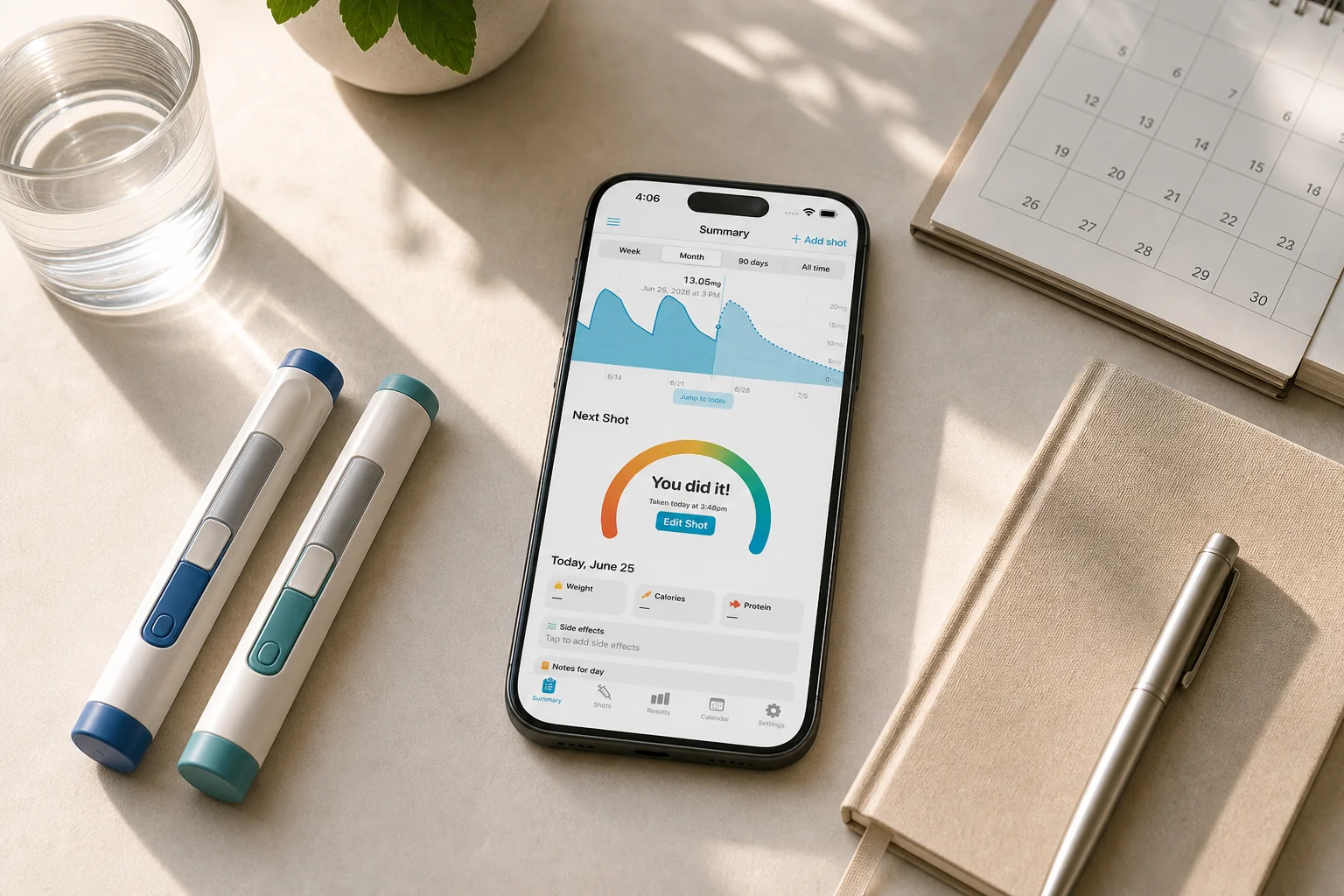
Shotsy supports all GLP‑1 medications, and your complete tracking history stays intact when you switch. Dose logs, weight trends, side effect ratings, and daily notes carry forward so you can compare your response across medications. Export a PDF summary for your provider showing your trajectory on both drugs side by side.
Conclusion
For related reading, see the medication comparison guide, first-month guide, and how long GLP‑1 medicines stay in the body.
Switching GLP-1 medications has no universal dose conversion, washout period, or start-day rule. Follow a prescriber-written plan, avoid using two GLP-1 products together unless an appropriately licensed clinician has explicitly directed otherwise, and use the current labels for the exact products involved. Tracking doses and symptoms can support follow-up, but it cannot determine the new dose.
This post is intended for informational purposes only and is not a substitute for professional medical advice. Always consult your physician before making any changes to your medication or health routine.