





Introduction
Muscle loss is one of the most important but underappreciated concerns for people taking GLP‑1 medications. Without the right approach, 25 to 40 percent of the weight you lose on semaglutide (Ozempic, Wegovy) or tirzepatide (Mounjaro, Zepbound) can come from lean mass rather than fat. Losing muscle slows your metabolism, weakens your joints, and increases the risk of weight regain after treatment. The good news is that two straightforward interventions, adequate protein and resistance training, can dramatically shift the ratio in favor of fat loss.
How much muscle are people actually losing
A 2026 systematic review and meta-analysis published in the International Journal of Obesity examined GLP‑1 receptor agonists at obesity-management doses and found that semaglutide was associated with a 9.9 percent reduction in absolute lean mass from baseline. While the proportion of lean mass relative to total body weight actually improved (because fat loss was greater), the absolute loss of muscle is clinically meaningful.
At the 2026 American Diabetes Association Scientific Sessions, the BELIEVE study demonstrated that combining bimagrumab with semaglutide shifted 92.8 percent of total weight loss to fat mass, compared to 71.8 percent with semaglutide alone. This highlights how much room there is to improve the quality of weight loss beyond what the medication achieves on its own.
Across clinical trials, the pattern is consistent: without deliberate muscle-preservation strategies, a significant portion of weight loss is lean mass. With the right interventions, that proportion drops substantially.
The protein protocol that protects muscle
Protein is the single most important nutritional variable for muscle preservation during GLP‑1 therapy. The 2017 International Society of Sports Nutrition meta-analysis and the 2024 British Journal of Sports Medicine guidelines both recommend 1.2 to 1.6 grams of protein per kilogram of body weight daily to preserve muscle during weight loss. People doing regular resistance training may need 1.6 to 2.0 grams per kilogram.
Practical strategies for hitting your target when appetite is suppressed:
- Distribute protein across three to four meals, aiming for 20 to 30 grams per meal to maximize muscle protein synthesis, which requires approximately 2.5 to 3 grams of leucine per meal to trigger effectively.
- Eat protein first at every meal before filling up on other foods. When appetite is limited, this ensures the most important macronutrient gets priority.
- Use liquid or soft protein sources when solid food feels unappealing. Greek yogurt, cottage cheese, protein shakes, and bone broth are easier to consume during periods of strong appetite suppression.
- Do not drop below 1,000 to 1,200 calories per day for women or 1,200 to 1,500 for men. Excessive calorie restriction accelerates muscle breakdown regardless of protein intake.
Why resistance training is non-negotiable
Resistance training is the strongest signal your body receives to retain muscle during a calorie deficit. Multiple systematic reviews and meta-analyses confirm that resistance training is effective for maintaining muscle mass during caloric restriction in people with overweight or obesity.
The minimum effective dose is two to three sessions per week targeting major muscle groups. You do not need a gym membership or heavy equipment. Bodyweight exercises like squats, push-ups, lunges, and resistance band work are sufficient to send the signal your body needs to prioritize keeping muscle.
Current physical activity guidelines recommend 150 to 300 minutes per week of moderate-intensity exercise or 75 to 150 minutes of vigorous-intensity exercise, plus muscle-strengthening activities on two or more days per week. For GLP‑1 users, the strength component matters most for preserving lean mass.
Monitor your progress beyond the scale
The number on your scale does not tell you whether you are losing fat or muscle. Two people can lose the same amount of weight with very different body composition changes. Track these signals:
- How your clothes fit: Losing inches while the scale stalls often indicates fat loss with muscle preservation or gain.
- Strength levels: If you can lift the same or more weight in your workouts, your muscle mass is likely stable.
- Energy and recovery: Adequate protein and muscle mass support energy levels and faster recovery between workouts.
Track your protein with Shotsy
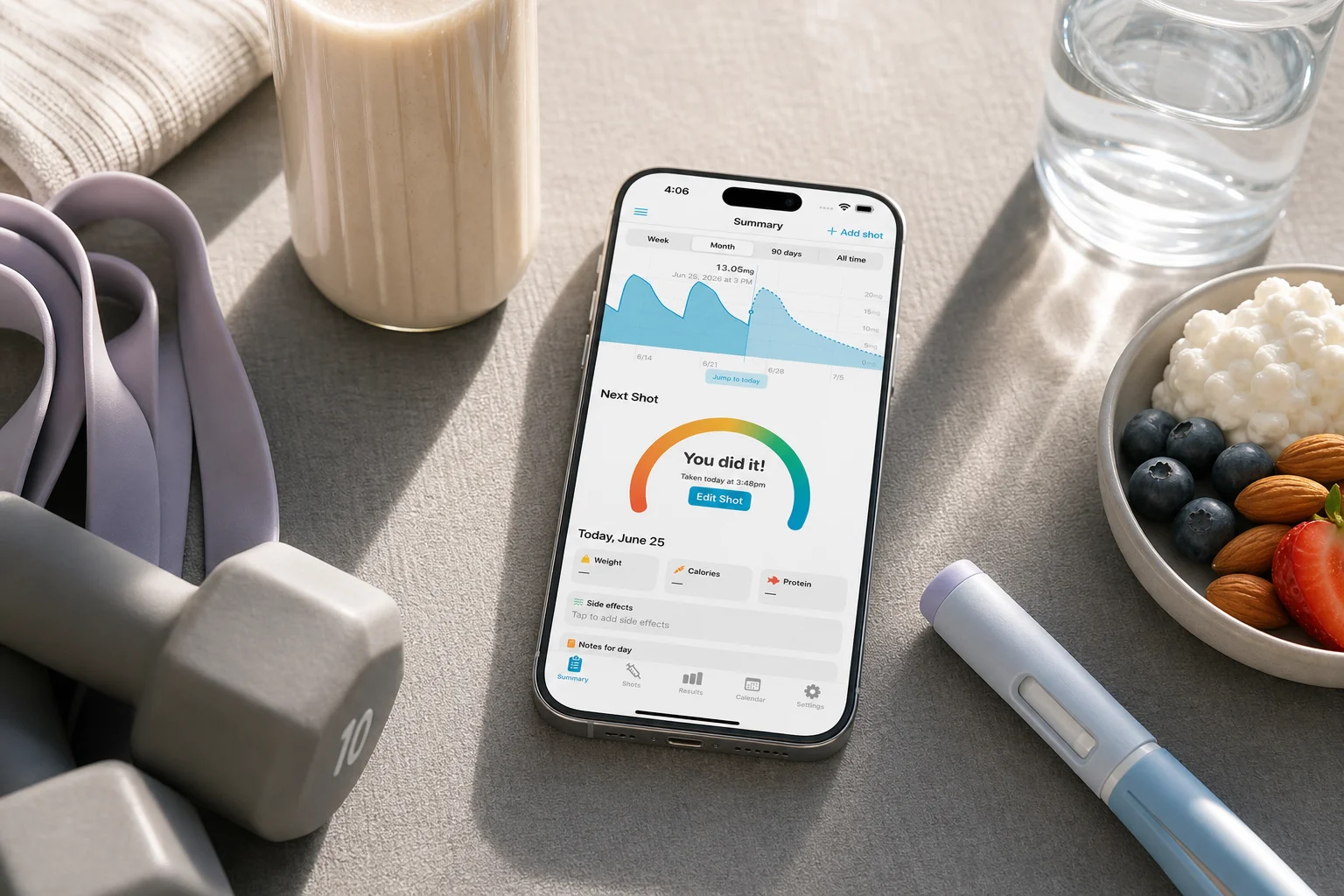
Shotsy lets you log daily protein intake alongside your weight and side effects so you can see whether you are hitting the 1.2 to 1.6 grams per kilogram target. If you use a separate nutrition app, Shotsy+ can automatically import your protein data via Apple HealthKit so everything stays in one place.
Conclusion
For related reading, see the protein intake guide, GLP‑1 exercise guide, and maintenance-dose guide.
Muscle loss on GLP‑1 medications is real but largely preventable. Work with your care team toward a protein target, commonly 1.2 to 1.6 grams per kilogram of body weight daily in published guidance, perform resistance training at least twice a week, and avoid overly aggressive calorie restriction. These three habits protect your metabolism, support long-term weight maintenance, and ensure the weight you lose is the weight you want to lose.
This post is intended for informational purposes only and is not a substitute for professional medical advice. Always consult your physician before making any changes to your medication or health routine.