





Introduction
GLP‑1 medications like semaglutide (Ozempic, Wegovy) and tirzepatide (Mounjaro, Zepbound) quietly increase your risk of dehydration through several overlapping mechanisms. General hydration recommendations from the National Academies of Sciences, Engineering, and Medicine call for about 73 ounces per day for women and 100 ounces per day for men, but most GLP‑1 users need more than that. Reduced food intake, gastrointestinal side effects, and suppressed thirst signals all conspire to tip the balance toward chronic mild dehydration, a state that worsens constipation, fatigue, dizziness, and overall treatment tolerability.
Why GLP‑1 users are at higher risk
Several factors converge to make dehydration more common on GLP‑1 therapy than most patients realize.
You are eating less food. Roughly 20 percent of your daily water intake comes from food, according to the National Academies of Sciences, Engineering, and Medicine. When your appetite drops by 30 to 50 percent, the water you used to get from fruits, vegetables, soups, and other moisture-rich foods drops proportionally. A person who previously consumed 2,000 calories per day and now eats 1,200 may be losing several cups of water daily from food alone without realizing it.
GI side effects accelerate fluid loss. Nausea affects up to 44 percent of patients on semaglutide 2.4 mg (Wilding et al., New England Journal of Medicine, 2021), diarrhea roughly 30 percent, and vomiting about 24 percent. Each episode drains fluid and electrolytes far faster than normal. Persistent vomiting or diarrhea can cause electrolyte imbalances, particularly sodium, potassium, and magnesium, leading to muscle cramps, irregular heartbeat, and cognitive fog.
Thirst signals may be suppressed. GLP‑1 receptors are expressed in the brain regions that regulate thirst. Some patients report feeling less thirsty while on medication, which means they do not drink as much as their body needs. Relying on thirst alone is already an imperfect strategy, by the time you feel thirsty, you may already be mildly dehydrated, and this effect makes it even less reliable.
The downstream effects of dehydration
Chronic mild dehydration does not always announce itself with obvious symptoms. Instead, it amplifies the side effects you are already managing on your GLP‑1 medication.
Constipation is the most direct consequence. Approximately 24 percent of patients on semaglutide 2.4 mg report constipation in clinical trials (Wilding et al., NEJM, 2021). When the body is low on water, the colon absorbs more fluid from stool, producing harder, drier stool that is difficult to pass. Many patients try to fix constipation with fiber alone, but without adequate water, extra fiber can actually make things worse.
Fatigue affects roughly 11 percent of patients in the STEP trials and is frequently reported in patient communities at higher rates. Dehydration reduces blood volume, which means the heart must work harder to circulate oxygen and nutrients. Even a 1 to 2 percent drop in body water can impair concentration and energy levels.
Dizziness and headaches affect about 8 percent of patients in clinical trials. Low fluid volume decreases blood pressure, particularly when standing up quickly. This postural lightheadedness is a common early warning sign of dehydration and can become a fall risk, especially in older adults.
How much water you actually need
Start with the baseline recommendations and adjust upward:
- Women: At least 73 ounces (roughly 9 cups) per day
- Men: At least 100 ounces (roughly 12.5 cups) per day
These are adequate intake levels from the National Academies, and they assume a typical diet providing roughly 20 percent of water from food. If you are eating significantly less, add 8 to 16 ounces to compensate. If you are experiencing active vomiting or diarrhea, you may need substantially more, plus electrolyte replacement.
A simple self-check: your urine should be pale yellow throughout the day. Dark yellow or amber urine suggests you need more fluid. Clear urine may indicate overhydration, which is rare but possible if you are consuming excessive water without electrolytes.
Practical strategies for drinking more
Knowing how much water you need and actually drinking it are two different challenges. These strategies help bridge the gap:
- Set a schedule, not a goal. Rather than chasing a daily ounce target, drink a glass at specific intervals, upon waking, before each meal, midafternoon, and before bed.
- Use a marked water bottle. A bottle with time-based markings creates visual accountability throughout the day.
- Front-load your intake. Drink the majority of your water before late afternoon to reduce nighttime bathroom trips while hitting your target.
- Flavor it if plain water is unappealing. Add cucumber, lemon, or berries. Sugar-free electrolyte packets help during weeks with active GI symptoms.
- Count other fluids. Herbal tea, broth, and water-rich foods all contribute. Coffee and caffeinated tea count too, though their mild diuretic effect makes them slightly less efficient.
Electrolytes matter too
Water alone is not always enough. When you lose fluid through vomiting or diarrhea, you also lose electrolytes, sodium, potassium, magnesium, and chloride, that regulate nerve function, muscle contraction, and fluid balance.
Signs of electrolyte imbalance include muscle cramps, tingling, irregular heartbeat, nausea that worsens despite taking your medication at the usual time, and unusual fatigue that does not improve with rest.
Oral rehydration solutions like Pedialyte or sugar-free electrolyte drinks are more effective than plain water at restoring balance after significant fluid loss. If you are experiencing persistent vomiting or diarrhea lasting more than 48 hours, contact your healthcare provider. In severe cases, IV rehydration may be necessary.
Track water intake with Shotsy
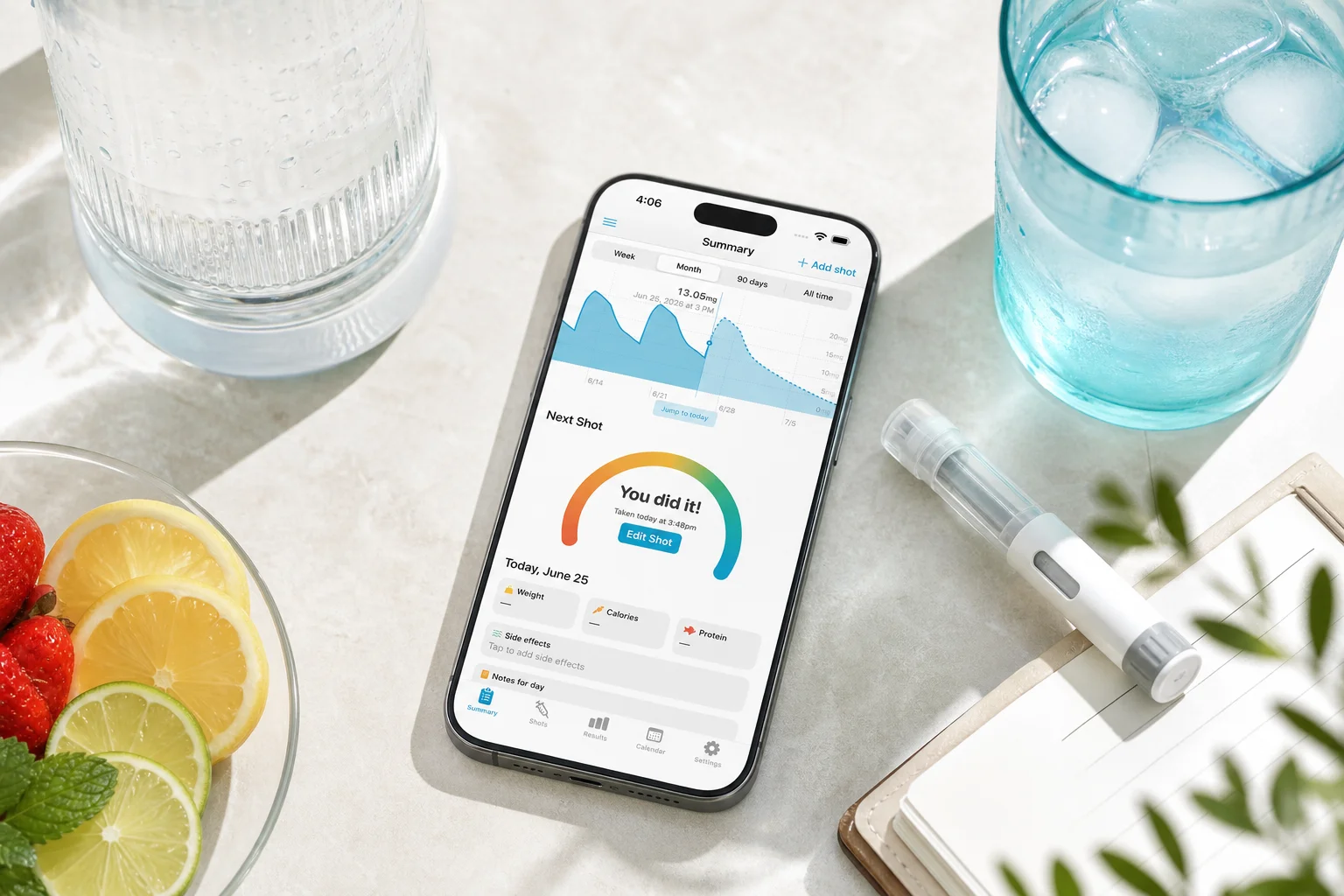
Shotsy tracks daily water intake alongside your other nutrition data, calories, protein, fiber, and fat. Logging your water every day reveals patterns you might otherwise miss: days with lower water intake often correlate with worse side effect scores in your Shotsy calendar view. Over a few weeks, the data helps you and your provider identify whether dehydration is contributing to symptoms like constipation, fatigue, or headaches.
Conclusion
Dehydration on GLP‑1 medications is common, underrecognized, and quietly worsens the side effects you are already managing. You need more water than the average person, not less, because your food intake is down, your GI tract may be losing extra fluid, and your thirst signals may not be keeping pace. Aim for at least 73 to 100 ounces per day depending on sex, adjust upward for GI symptoms and activity level, monitor your urine color, and replace electrolytes when needed. Consistent daily tracking turns a vague intention into a measurable habit.
This post is intended for informational purposes only and is not a substitute for professional medical advice. Always consult your physician before making any changes to your medication or health routine.