





Introduction
When your appetite drops by 30 to 50 percent on a GLP‑1 medication like semaglutide (Ozempic, Wegovy) or tirzepatide (Mounjaro, Zepbound), every bite becomes more important. You are eating less overall, which means the foods you do eat need to carry their weight nutritionally. Choosing the right foods supports weight loss, minimizes GI side effects, protects muscle mass, and sustains energy. Choosing the wrong ones can worsen nausea, accelerate muscle loss, and stall your progress.
The best foods to eat on GLP‑1 medications
These categories should form the foundation of your meals:
Lean proteins are the highest priority. Aim for 20 to 30 grams of protein per meal to protect muscle mass and keep you satisfied. The best options include:
- Chicken breast, turkey, and fish: High in protein and low in fat, making them easy to digest.
- Eggs: Versatile, affordable, and packed with nutrients. Scrambled eggs are particularly well-tolerated when appetite is low.
- Greek yogurt and cottage cheese: Soft protein sources that are easier to eat when solid food feels unappealing.
- Legumes and tofu: Good plant-based options that also provide fiber.
Non-starchy vegetables provide volume, fiber, and micronutrients without excess calories:
- Cooked vegetables like zucchini, spinach, broccoli, and carrots are generally better tolerated than raw vegetables, which can cause gas and bloating.
- Leafy greens like spinach and romaine in salads, though some patients find raw greens harder to digest during the first few months.
Complex carbohydrates for sustained energy:
- Oatmeal, sweet potatoes, and brown rice: These provide steady energy and fiber without spiking blood sugar.
- Whole grain bread and crackers: Useful for small snacks, especially when plain carbohydrates help settle mild nausea.
Fiber-rich foods support gut health and enhance the satiety effect of your medication. Harvard Health notes that dietary fiber mimics some of the fullness signals that GLP‑1 medications produce naturally. Aim for at least 25 grams per day from food sources.
Foods that commonly cause problems
These foods are more likely to trigger or worsen GI side effects:
- High-fat and fried foods: Fat slows gastric emptying, and your GLP‑1 medication already does this. The combination often causes nausea, bloating, and discomfort. Fried chicken, pizza, burgers, and creamy sauces are frequent offenders.
- Sugary foods and drinks: Candy, pastries, soda, and fruit juice provide empty calories and can cause blood sugar instability. When appetite is limited, these displace the nutrient-dense foods your body needs.
- Carbonated beverages: The gas from carbonation can worsen bloating and stomach discomfort, particularly during the first few months.
- Very spicy foods: Capsaicin can irritate the stomach lining and amplify nausea for some patients, especially during dose escalation.
- Large portion sizes: Even healthy food in large quantities is a problem. Overfilling a stomach that is emptying slowly leads to nausea, bloating, and reflux.
- Alcohol: Amplifies GI side effects and dehydration. If you drink, limit to one serving with food and alternate with water.
Practical eating strategies
Beyond specific food choices, how and when you eat matters on GLP‑1 medications:
- Eat protein first: When appetite is limited, eat your protein source before anything else on the plate to ensure you hit your target.
- Four to five small meals instead of three large ones reduces the burden on a slower stomach.
- Eat slowly: Take 20 to 30 minutes per meal. Rushed eating overwhelms digestion and increases nausea.
- Do not skip meals: Even when appetite is low, going too long without eating can cause blood sugar drops, fatigue, and muscle loss. A small protein-rich snack is better than nothing.
- Meet minimum calorie floors: Do not drop below 1,000 to 1,200 calories per day for women or 1,200 to 1,500 for men. Going lower accelerates muscle loss, hair loss, and nutrient deficiencies.
Nutrient targets to aim for
These daily targets support weight loss while protecting muscle and overall health:
- Protein: 1.2 to 1.6 grams per kilogram of body weight. This is the most important number to track.
- Fiber: At least 25 grams per day from whole food sources.
- Water: At least 64 ounces (eight cups) per day, more if you are experiencing GI side effects.
- Calories: Enough to meet your protein and micronutrient needs. Severely restricting calories below the minimums above does more harm than good.
Track what works for you with Shotsy
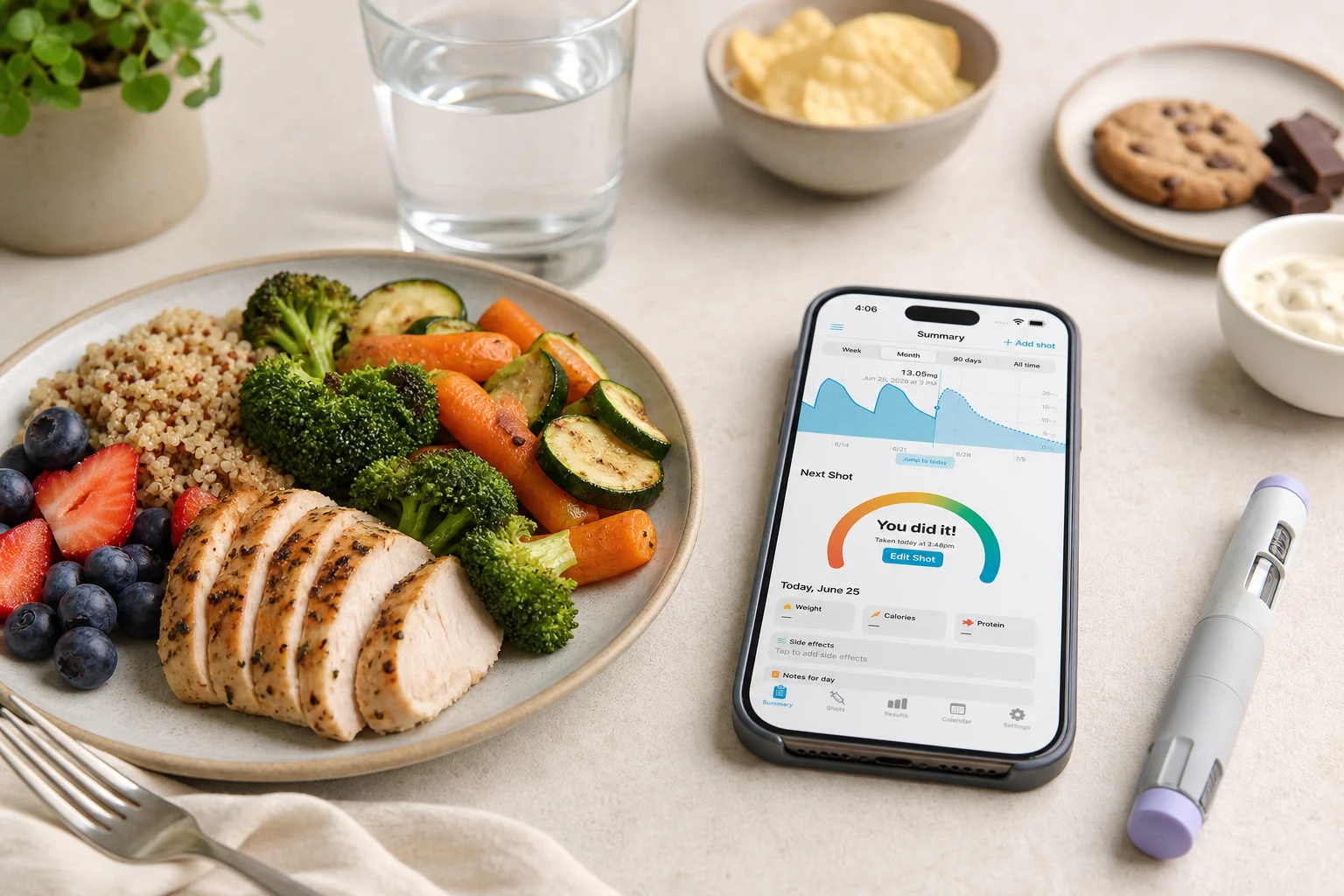
Track daily calories, protein, fiber, and fat in Shotsy to see how your nutrition correlates with side effects and weight progress. If you already use a nutrition app like MyFitnessPal, Shotsy+ can sync your data from Apple HealthKit automatically. Use the daily notes to record which foods worked well and which triggered discomfort.
Conclusion
On a GLP‑1 medication, you are eating less, which means quality matters more than ever. Prioritize lean protein, cooked vegetables, and complex carbohydrates. Avoid high-fat foods, sugary drinks, and large portions that overwhelm your slower digestion. Track your nutrition so you can identify what works for your body and adjust as you go.
This post is intended for informational purposes only and is not a substitute for professional medical advice. Always consult your physician before making any changes to your medication or health routine.