






Introduction
Food noise describes persistent, intrusive thoughts about food that can occupy your attention even when you are not hungry. Some people report fewer of these thoughts while taking semaglutide (Ozempic, Wegovy) or tirzepatide (Mounjaro, Zepbound). Food noise is not a formal diagnosis, and researchers are still studying how to define, measure, and treat it. [1]
Food noise, hunger, and cravings can overlap
You might think about snacks throughout a meeting or keep returning to thoughts of food after a meal. Hunger describes your need to eat, while a craving focuses on a particular food. These experiences can overlap with intrusive thoughts, so a single episode does not establish a medical condition.
A 2025 review in Nutrition & Diabetes examined food noise as a research concept, including its relationship to food cues and eating behavior. The authors described unanswered questions about measurement and health outcomes. [1]
Research on semaglutide and food noise
Semaglutide affects appetite regulation, which may help explain reported changes in food-related thoughts. The Wegovy prescribing information describes effects on appetite and calorie intake, but it does not establish food noise as a separate approved indication. [2]
The INFORM survey, published in Advances in Therapy in 2026, included 550 U.S. adults using injectable semaglutide for weight management. Looking back at the period before treatment, 62% recalled constant food-related thoughts throughout the day. At the time of the survey, 16% reported that experience. [3]
Participants recalled their earlier experience rather than completing an assessment before treatment began. The study had no randomized comparison group, and Novo Nordisk funded it. The results describe perceived changes among respondents; they cannot prove that semaglutide caused the change or establish the same effect for tirzepatide. [3]
Eating enough when your appetite changes
Less interest in food can change your meal routine. Keep track of what you eat and drink, not only whether you feel hungry. If you struggle to eat enough, feel weak or dizzy, or avoid meals because of nausea, discuss this with your healthcare provider. Our nausea guide covers mild-symptom strategies and warning signs. [2]
Your healthcare provider or a registered dietitian can help you plan meals that meet your needs. Follow that plan even if your appetite feels different from day to day. The first-month guide covers other changes to discuss during treatment.
Record the thoughts and the context
Choose descriptions you can use from one day to the next:
- Frequency and impact: Note how often food thoughts arise and whether they distract you from work, rest, or conversations.
- Hunger and meals: Record hunger, fullness, cravings, and missed meals without labeling a day as good or bad.
- Context: Add dose dates, sleep, stress, and digestive symptoms. Our side-effects overview can help you decide which symptoms to record.
Include days with few intrusive thoughts too. Share the record if food thoughts cause distress or appetite changes make eating difficult. Changes in food noise alone should not determine your medication dose.
Track appetite patterns with Shotsy
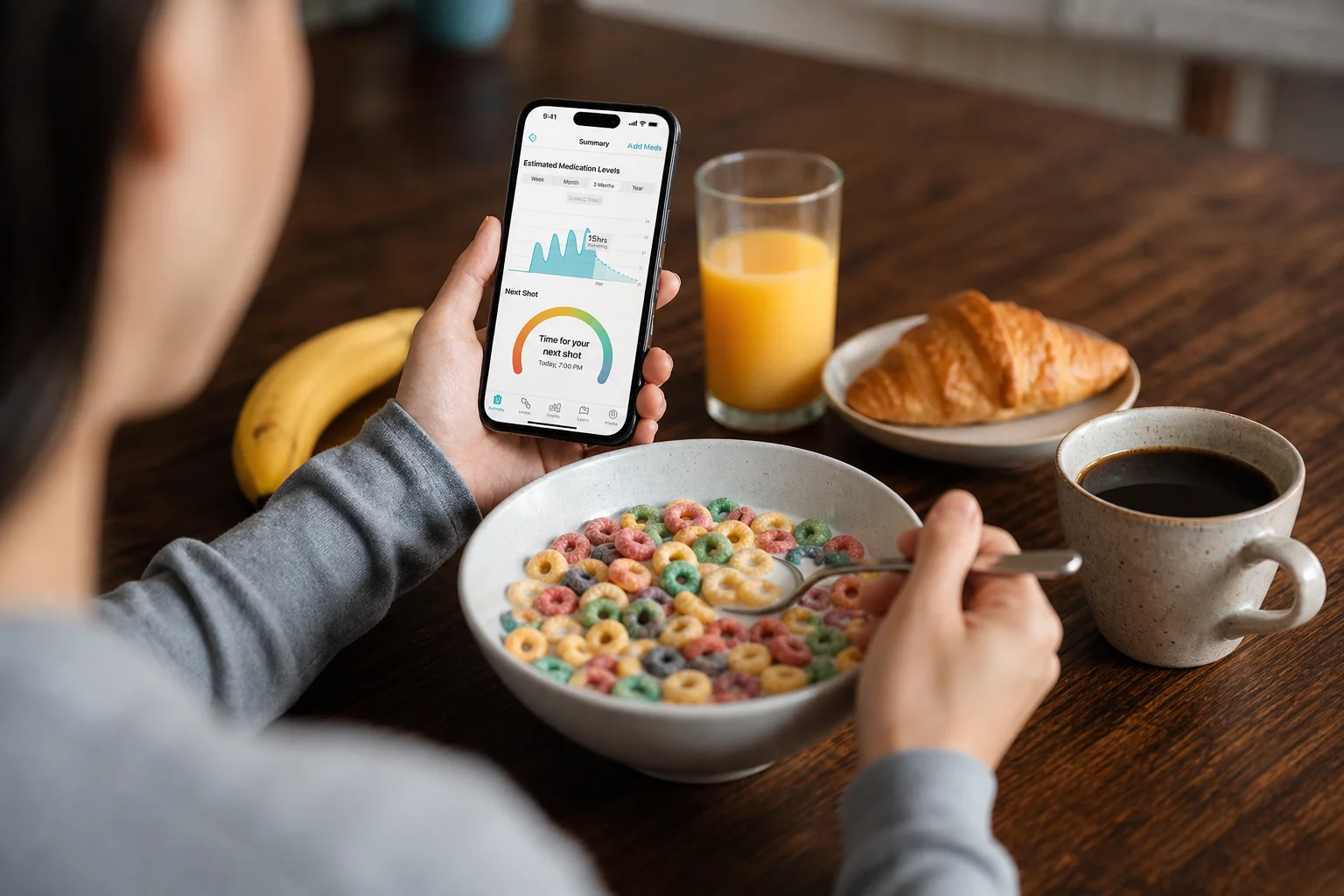
In Shotsy, you can record food noise, symptom ratings, dose dates, and day notes. Use the same descriptions over time and share the record with your healthcare provider to discuss your experience.
Conclusion
Food noise is a developing research concept that describes intrusive food-related thoughts. Some people report improvement during GLP‑1 treatment, but the evidence does not predict an individual’s response. Keep a record of appetite changes and seek support if thoughts about food cause distress or you struggle to meet your nutritional needs.
This post is intended for informational purposes only and is not a substitute for professional medical advice. Always consult your physician before making any changes to your medication or health routine.