





Introduction
Nausea is the number one reason people consider stopping their GLP‑1 medication, and it is the most commonly reported side effect across semaglutide (Ozempic, Wegovy) and tirzepatide (Mounjaro, Zepbound). In clinical trials, nausea rates reached 44 percent at the highest Wegovy dose. But here is what the same data shows: nausea is strongly front-loaded, it improves significantly over time, and simple behavioral changes can meaningfully reduce its severity. This article covers why nausea happens, when it gets better, and exactly what to do about it.
Why GLP‑1 medications cause nausea
Nausea is not an accidental side effect. It is a direct result of how these medications work in your body through two primary mechanisms:
- Slower gastric emptying: GLP‑1 receptor agonists slow the rate at which your stomach empties food into the small intestine. This increases feelings of fullness but can also cause food to sit in the stomach longer, triggering nausea, bloating, and discomfort.
- Central satiety signaling: These medications act on GLP‑1 receptors in the brain’s appetite centers, changing how your body perceives hunger and fullness. This neurological effect can produce nausea independently of what is happening in your stomach.
Nausea is dose-dependent. In clinical trials, Ozempic reported nausea in 15.8 percent of patients at the 0.5 mg starting dose and 20.3 percent at 1 mg. Wegovy at the full 2.4 mg dose saw 44 percent nausea rates. The oral form Rybelsus recorded approximately 20 percent in trials.
When nausea typically improves
A systematic review of semaglutide trials found nausea in 35 percent of patients during the first four weeks, dropping to 20 percent after 12 weeks. The pattern is consistent: nausea is worst during the first two to four weeks after starting or increasing a dose, then gradually improves as your body adjusts.
Most patients find that nausea becomes manageable or resolves entirely by weeks 8 to 12 at a given dose level. However, it can return temporarily each time you move to a higher dose during titration.
Evidence-based strategies that reduce nausea
Over 30 percent of patients report meaningful relief with dietary and behavioral changes. These are the most effective approaches:
- Eat smaller, more frequent meals: Four to five small meals per day instead of three large ones reduces the amount of food sitting in your stomach at any given time. This is the single most effective dietary change for nausea management.
- Eat slowly: Take 20 to 30 minutes per meal minimum. Put your fork down between bites. Eating too quickly overwhelms a stomach that is emptying more slowly than usual.
- Avoid high-fat and greasy foods: Fat slows gastric emptying further, compounding the effect of the medication. Lean proteins, easily digestible carbohydrates, and cooked vegetables are better tolerated.
- Stay hydrated: Sip water throughout the day rather than drinking large amounts at once. Dehydration worsens nausea, and GLP‑1 medications already increase dehydration risk through reduced appetite and GI side effects.
- Try ginger: Ginger has well-established anti-nausea properties. Doses near 1,500 mg per day are commonly recommended. Ginger tea, ginger chews, or ginger supplements are all options.
- Time your meals around your dose: Some patients find that nausea is worse immediately after their injection. Eating a light, protein-rich meal before your injection, and keeping meals small for the following 24 to 48 hours, may help.
When nausea signals a problem
Mild to moderate nausea during dose adjustment is expected. However, contact your provider if you experience:
- Persistent vomiting that prevents you from keeping food or fluids down for more than 24 hours.
- Severe abdominal pain or tenderness, which could indicate pancreatitis.
- Signs of dehydration such as dark urine, dizziness, or rapid heart rate.
- Nausea that worsens rather than improves after several weeks at the same dose.
Your provider may recommend slowing the titration schedule, temporarily reducing your dose, or prescribing anti-nausea medication if behavioral strategies are not sufficient.
Track your nausea patterns with Shotsy
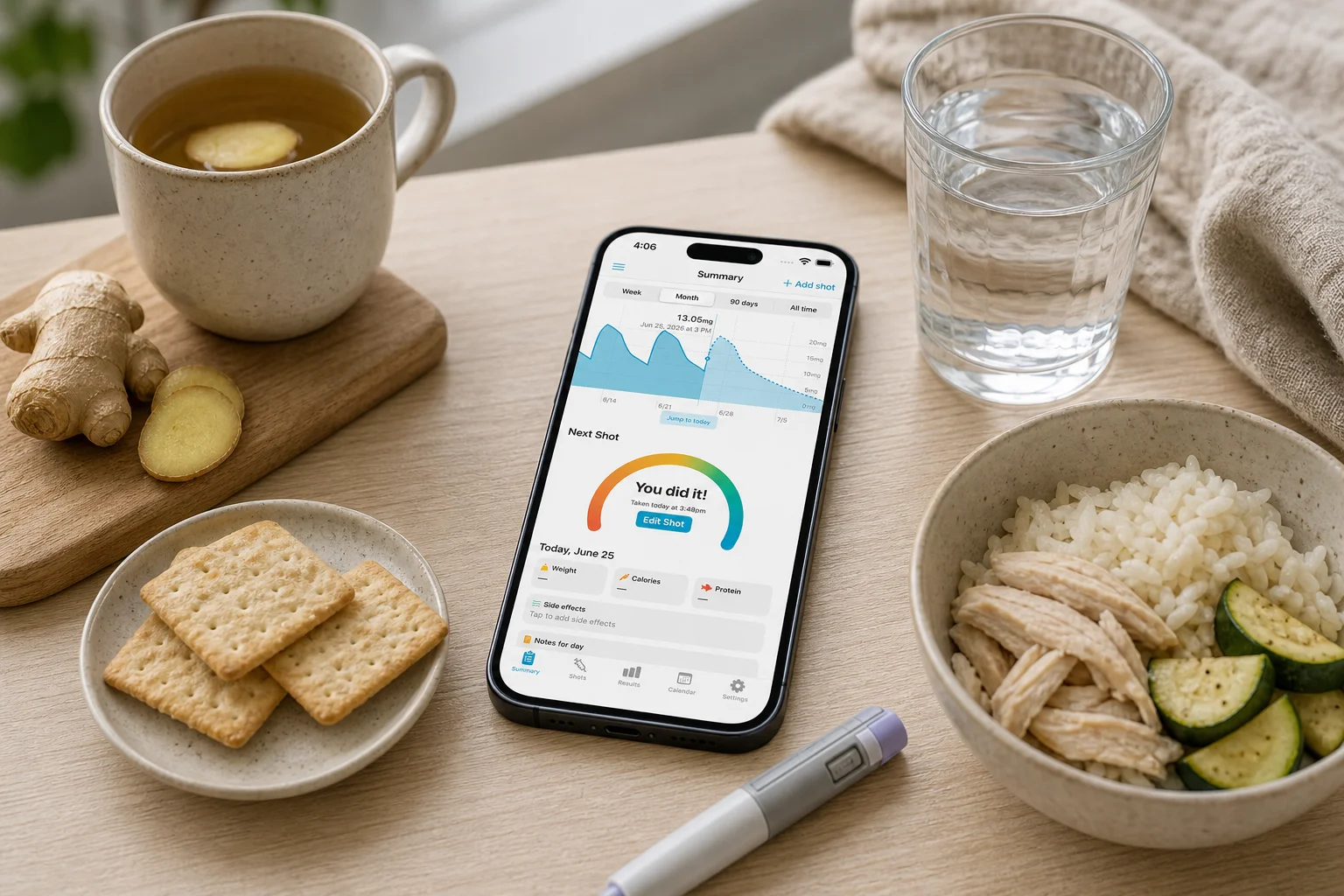
Shotsy’s side effect sliders let you rate nausea daily on a 0-to-10 scale, and you can log what you ate in the daily notes. Over a few weeks, the calendar view reveals whether nausea clusters around certain days after your dose or after specific types of food. Export this data as a PDF for your next provider visit.
Conclusion
For related reading, see the GLP‑1 side-effects overview, first-month guide, and constipation guide.
Nausea on GLP‑1 medications is common, but it is also temporary and highly manageable. It peaks in the first few weeks after starting or increasing a dose, then gradually improves. Smaller meals, slower eating, avoiding greasy food, staying hydrated, and trying ginger can make a meaningful difference for many people. Track your symptoms to find your personal triggers and bring the data to your provider if nausea persists.
This post is intended for informational purposes only and is not a substitute for professional medical advice. Always consult your physician before making any changes to your medication or health routine.