





Introduction
Headaches are a common side effect for people taking semaglutide (Ozempic, Wegovy) or tirzepatide (Mounjaro, Zepbound), especially during the first weeks or after a dose increase. Wegovy prescribing information lists headache among adverse reactions occurring in at least 5 percent of adults. Because several factors can contribute at once, identifying your triggers is the most helpful step you can take.
Several things change at once
When you start a GLP‑1 medication, your appetite drops, your meal timing changes, your fluid intake may fall, and your digestion slows. Any of these shifts can contribute to headaches, and they often overlap.
Common patterns include eating much less than usual, drinking less water because of lower food intake, reducing caffeine suddenly, sleeping poorly because of reflux, or dealing with constipation. The contributing factor may change from week to week, which is why tracking is so valuable.
Hydration and regular meals are a good starting point
If you are eating smaller meals, you may also be getting less fluid and sodium from food. That alone can cause headaches, fatigue, or lightheadedness. Drink steadily through the day, replace fluids after vomiting or diarrhea, and ask your clinician whether electrolyte drinks make sense for you. If you have high blood pressure, heart disease, or kidney issues, get personalized advice before increasing sodium intake.
Caffeine and meal gaps are easy to overlook
GLP‑1 medications make it easy to unintentionally skip meals. Your body may not feel hungry, but it can still react to long gaps without food. A small snack with protein and fluid may help if headaches appear on low-intake days.
Caffeine is another common factor. If nausea leads you to stop coffee abruptly, a caffeine withdrawal headache can feel identical to a medication side effect. Tapering gradually tends to be gentler than stopping all at once.
When a headache needs medical attention
Most GLP‑1-related headaches are mild and improve once the underlying trigger is addressed. Call your healthcare provider for severe, sudden, or unusual headaches, especially with vision changes, weakness, confusion, chest pain, fainting, persistent vomiting, or signs of dehydration. If you have diabetes and take insulin or a sulfonylurea, ask about low blood sugar as a possible contributor.
Track headaches with Shotsy
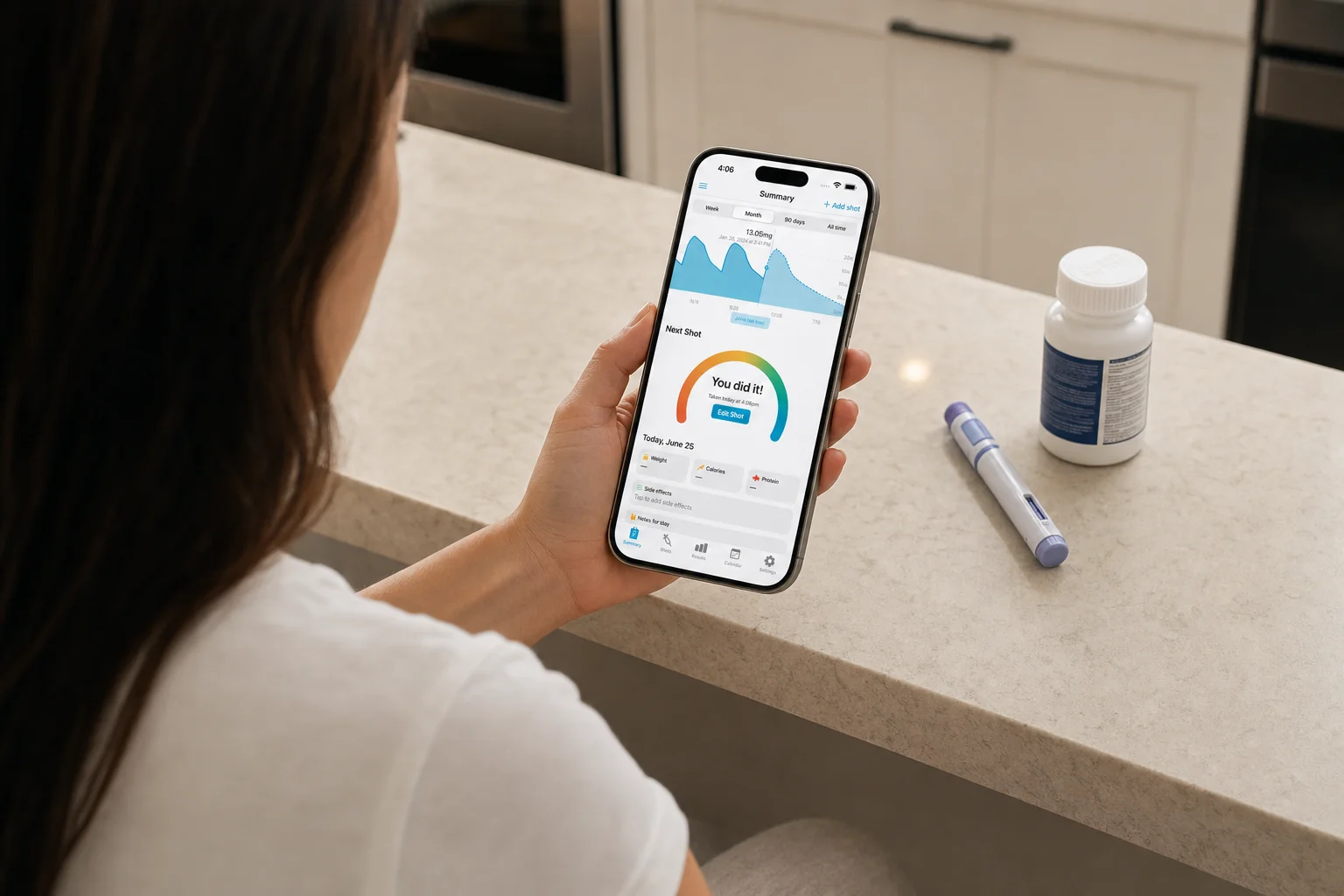
Shotsy lets you log headache severity with side effect sliders and compare them against dose timing, hydration, nutrition totals, and day notes. If headaches cluster one to two days after your shot or on low-fluid days, that pattern gives you and your provider something concrete to work with.
Conclusion
Headaches on GLP‑1 medications often come from a combination of hydration, intake, caffeine, and adjustment factors rather than one single cause. Most improve once the trigger is identified. Tracking helps you move from guessing to pattern recognition, which makes a real difference in managing the symptom.
This post is intended for informational purposes only and is not a substitute for professional medical advice. Always consult your physician before making any changes to your medication or health routine.