





Introduction
Acid reflux, heartburn, and gastroesophageal reflux disease (GERD) affect approximately 9 to 15 percent of people taking GLP‑1 medications like semaglutide and tirzepatide, based on incidence rates across multiple clinical trials. The primary cause is delayed gastric emptying: food stays in the stomach longer, increasing pressure and the likelihood that stomach acid pushes back into the esophagus. Lifestyle modifications are the first-line treatment and are often sufficient to manage symptoms. This article explains the mechanism, identifies common triggers, and outlines evidence-based strategies that help.
How GLP‑1 medications cause acid reflux
GLP‑1 receptor agonists slow the rate at which your stomach empties its contents into the small intestine. This delayed gastric emptying is central to how the medications reduce appetite and promote weight loss, but it also means food and stomach acid remain in the stomach for extended periods.
When the stomach is full for longer, internal pressure increases. This pressure can force the lower esophageal sphincter (LES) to relax or open, allowing acidic stomach contents to flow back into the esophagus. The result is the burning sensation commonly called heartburn. In people with a predisposition to GERD or a weakened LES, this effect can be more pronounced.
The relationship is dose-dependent. Higher doses of GLP‑1 medications produce greater delays in gastric emptying, which is why reflux symptoms may worsen during dose titration. The effect is most noticeable in the first few weeks at a new dose and often stabilizes as the body adapts.
Common triggers that make reflux worse
Several dietary and behavioral factors compound the medication’s effect on gastric emptying:
- High-fat meals: Dietary fat independently slows gastric emptying. When combined with the medication’s effect, high-fat meals can keep food in the stomach significantly longer, increasing reflux risk. Fried foods, creamy sauces, and fatty meats are common culprits.
- Large portions: A full stomach puts more pressure on the LES. Eating large meals, even of otherwise well-tolerated foods, is one of the most reliable triggers for acid reflux on GLP‑1 therapy.
- Eating close to bedtime: Lying down within two to three hours of eating removes the gravitational assistance that helps keep stomach contents down. This is a well-established trigger for nighttime GERD in the general population and is amplified by delayed gastric emptying.
- Carbonated beverages: Carbonation introduces gas that distends the stomach and increases upward pressure. Sparkling water, soda, and beer can all trigger or worsen reflux episodes.
- Acidic and spicy foods: Tomato-based sauces, citrus, coffee, and spicy foods can irritate an already sensitized esophagus, even if they do not directly cause reflux.
- Alcohol: Alcohol relaxes the LES and stimulates acid production, creating a double mechanism for reflux. Even moderate consumption can trigger symptoms in people already predisposed by their medication.
Lifestyle modifications that reduce symptoms
Lifestyle changes are the recommended first step for managing GLP‑1-related reflux and are effective for the majority of people:
- Eat smaller, more frequent meals: Dividing daily intake into four to six smaller meals keeps stomach volume lower and reduces pressure on the LES. This is the single most impactful change for most people.
- Stop eating two to three hours before bed: Give your stomach time to partially empty before lying down. If reflux is a significant issue, three hours is a safer buffer than two.
- Elevate the head of your bed: Raising the head of your bed by six to eight inches using bed risers or a wedge pillow uses gravity to help keep acid in the stomach. Propping up with regular pillows is less effective because it bends the body at the waist without changing the angle of the esophagus.
- Reduce fat intake per meal: Swap high-fat options for leaner proteins and cooking methods. Grilling, baking, and steaming produce less reflux than frying. This does not mean eliminating fat entirely; it means distributing it across meals and avoiding large single-meal fat loads.
- Eat slowly: Taking 20 to 30 minutes per meal gives your brain time to register fullness before you overeat. Rushing meals leads to larger portions and more air swallowed, both of which worsen reflux.
- Avoid tight clothing after eating: Tight waistbands increase abdominal pressure and can push stomach contents upward. Loose-fitting clothing after meals is a simple but underappreciated intervention.
When to consider medication for reflux
If lifestyle modifications do not adequately control symptoms, over-the-counter and prescription medications can help:
- Antacids: Calcium carbonate (Tums) or magnesium hydroxide provide fast but short-acting relief by neutralizing stomach acid. Useful for occasional breakthrough symptoms.
- H2 blockers: Famotidine (Pepcid) reduces acid production for 6 to 12 hours. Effective for predictable reflux episodes, such as after dinner.
- Proton pump inhibitors (PPIs): Omeprazole (Prilosec), esomeprazole (Nexium), and similar drugs suppress acid production more completely and are the standard treatment for frequent GERD. PPIs are most effective when taken 30 to 60 minutes before a meal.
Discuss any new medications with your provider, especially if you take other prescriptions. Long-term PPI use carries its own considerations, including potential effects on calcium and magnesium absorption.
When reflux requires medical attention
Occasional heartburn is manageable at home, but see your provider if you experience:
- Reflux symptoms more than twice per week despite lifestyle changes.
- Difficulty swallowing or a sensation of food getting stuck in your chest.
- Unintended weight loss beyond what is expected from your GLP‑1 medication.
- Persistent cough, hoarseness, or sore throat, which can indicate acid reaching the throat and airways.
- Chest pain that could be confused with cardiac symptoms; always rule out heart-related causes.
Your provider may recommend adjusting your GLP‑1 dose, extending the titration schedule, or referring you to a gastroenterologist for further evaluation.
Track your reflux patterns with Shotsy
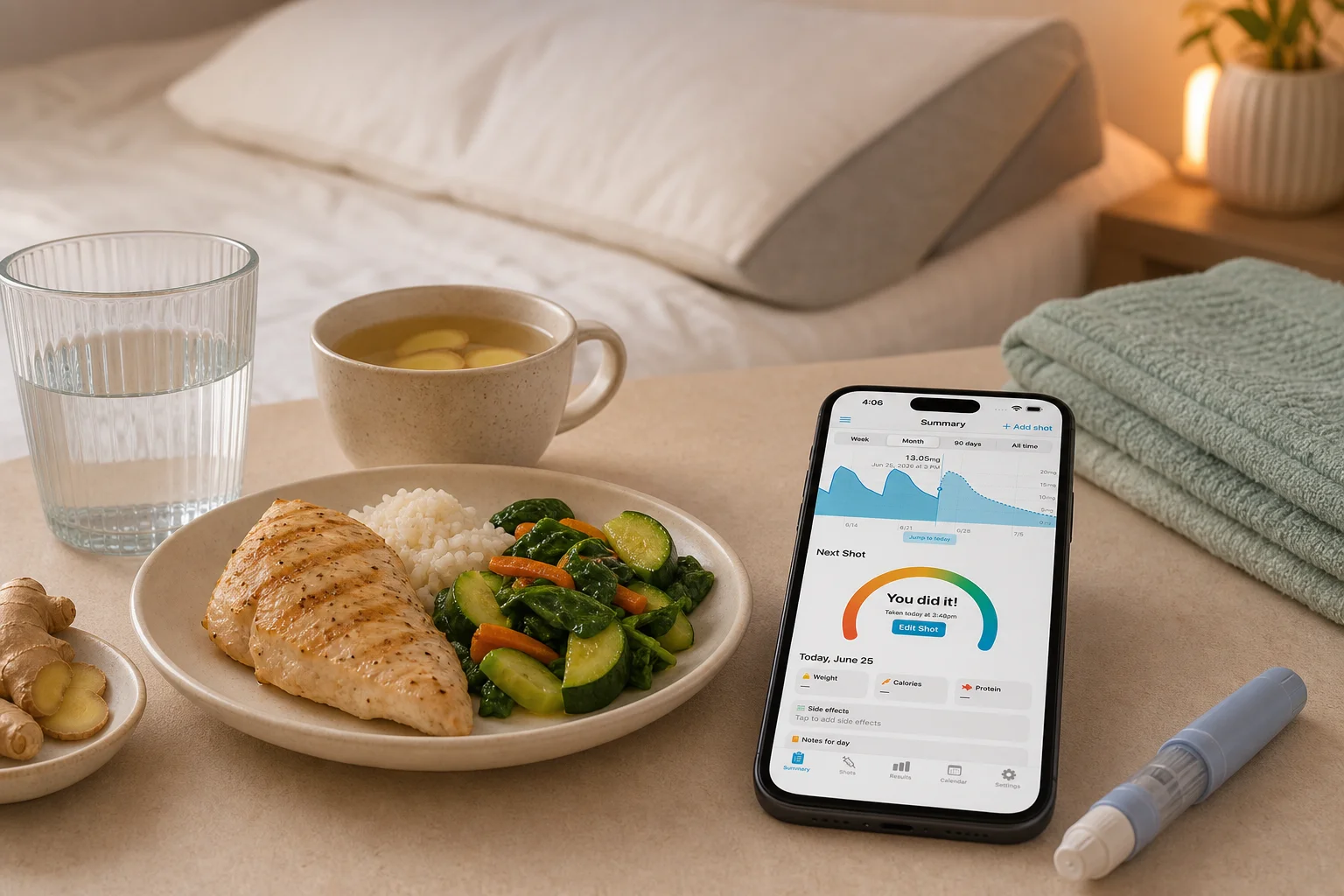
Shotsy’s side effect sliders let you rate reflux severity daily on a 0-to-10 scale. Log dietary triggers and meal timing in the daily notes to build a record of what makes symptoms better or worse. The calendar view shows reflux patterns relative to dose timing, helping you and your provider identify whether symptoms cluster around specific days in your injection cycle.
Conclusion
Acid reflux on GLP‑1 medications is driven by delayed gastric emptying and is worsened by high-fat meals, large portions, eating too close to bedtime, and carbonated beverages. Lifestyle modifications including smaller meals, earlier dinner cutoffs, bed elevation, and slower eating are effective first-line treatments. Over-the-counter acid reducers can manage breakthrough symptoms, and prescription options are available for persistent GERD. Track your symptoms and triggers to find your personal patterns and bring the data to your provider if reflux does not improve with lifestyle changes.
This post is intended for informational purposes only and is not a substitute for professional medical advice. Always consult your physician before making any changes to your medication or health routine.