





Introduction
Seeing a drop of blood or a small bruise after a GLP‑1 shot can be surprising, especially if previous injections were perfectly clean. This can happen with semaglutide and tirzepatide, including Ozempic, Wegovy, Mounjaro, and Zepbound. In many cases, a tiny spot of bleeding or a small bruise is minor and fades without special treatment.
Still, bleeding and bruising deserve attention when they are large, worsening, painful, frequent, or paired with signs of infection. Your prescribing information, device instructions, and healthcare provider’s guidance should lead your injection routine and any decision about symptoms that do not feel normal for you.
Small blood spots often come from tiny vessels
The skin has small surface blood vessels. Sometimes a needle nicks one on the way in or out, even when the injection is done correctly. That can leave a tiny dot of blood on the skin or a small bruise that appears later.
This kind of bleeding is usually limited and stops quickly with gentle pressure. A small bruise may be tender for a short time, then gradually change color and fade. Mild redness, stinging, and small bruising are common after injections and typically resolve within 24-48 hours.
The important pattern is improvement. A small mark that gets better is different from a bruise that grows, becomes very painful, feels firm and expanding, or appears with other symptoms.
Pressure helps more than rubbing
If you see a drop of blood after your injection, use clean gauze or a cotton pad and apply gentle pressure. Hold it still rather than rubbing. Rubbing can irritate the skin, spread blood under the surface, and make tenderness or bruising worse.
Avoid pressing hard enough to hurt. The goal is simple control, not force. If you need a bandage, use one that does not irritate your skin and remove it when it is no longer needed.
After the shot, check whether the site continues to bleed or whether the mark stays small. Make a note if it is different from your usual pattern. The body area, dose day, and exact injection spot can all matter when you are trying to understand why bruising happened.
Site rotation lowers repeated irritation
Approved GLP‑1 injection sites are the abdomen at least 2 inches from the navel, the front or outer thigh, and the back or outer upper arm. These areas give you several options, but each exact spot still needs rest between injections.
If you repeatedly inject into the same small area, the tissue can become irritated. Repeated injections in the same spot can also cause lipohypertrophy, firm lumps that may alter absorption. A lump, bruise, or tender patch is a reason to avoid that exact spot until you have guidance and the area has recovered.
Rotation works best when it is specific. Instead of writing down “abdomen,” note left lower abdomen, right upper abdomen, left thigh, or right thigh if that matches your routine. The more specific the location, the easier it is to avoid repeating a sensitive area.
Technique details can influence bruising
Device instructions matter. Medication should be held for the full device instruction time, commonly 5-10 seconds depending on the pen. Pulling away early or moving the device abruptly may make the injection feel less controlled and can irritate the skin.
Choose a site that is not already bruised, tender, firm, or irritated. Let alcohol dry fully if you use a swab according to your instructions. Keep the area relaxed so you are not pushing against tense tissue.
Small changes can help you compare outcomes. If bruising happens after a thigh injection but not after an abdomen injection, site choice may be part of the pattern. If bruising happens when you rush, the routine itself may need more time and steadiness.
Blood thinners and easy bruising belong in provider conversations
If you take blood thinners, have a bleeding disorder, bruise easily, or have been told to watch for bleeding, discuss injection bruising with your healthcare provider. Do not stop or change any medication because of a bruise without medical guidance.
Your provider may want to know how often bruising happens, how large the bruises are, whether they are painful, whether bleeding stops with gentle pressure, and whether bruises appear away from injection sites. That information is much easier to provide when you track it as it happens.
Even if each bruise seems minor, a repeating pattern can be useful. It may point to a site, timing issue, device technique question, or another factor your healthcare provider should review.
Concerning signs should not be watched silently
Some symptoms are not routine bruising. Contact your healthcare provider if a bruise is large, keeps expanding, becomes very painful, or appears with swelling that worries you. Seek medical guidance if bleeding does not stop with gentle pressure or if you notice unusual bruising that is not limited to injection sites.
Also watch for infection warning signs, including spreading redness, warmth, pus, fever, and worsening pain. These signs mean the issue may not be a simple bruise from a small vessel. If symptoms are severe or you feel unwell, seek urgent care.
When in doubt, err on the side of asking. A brief message with a photo, if your healthcare system allows it, plus your dose and site notes can help your provider decide what needs attention.
Track bruising patterns with Shotsy
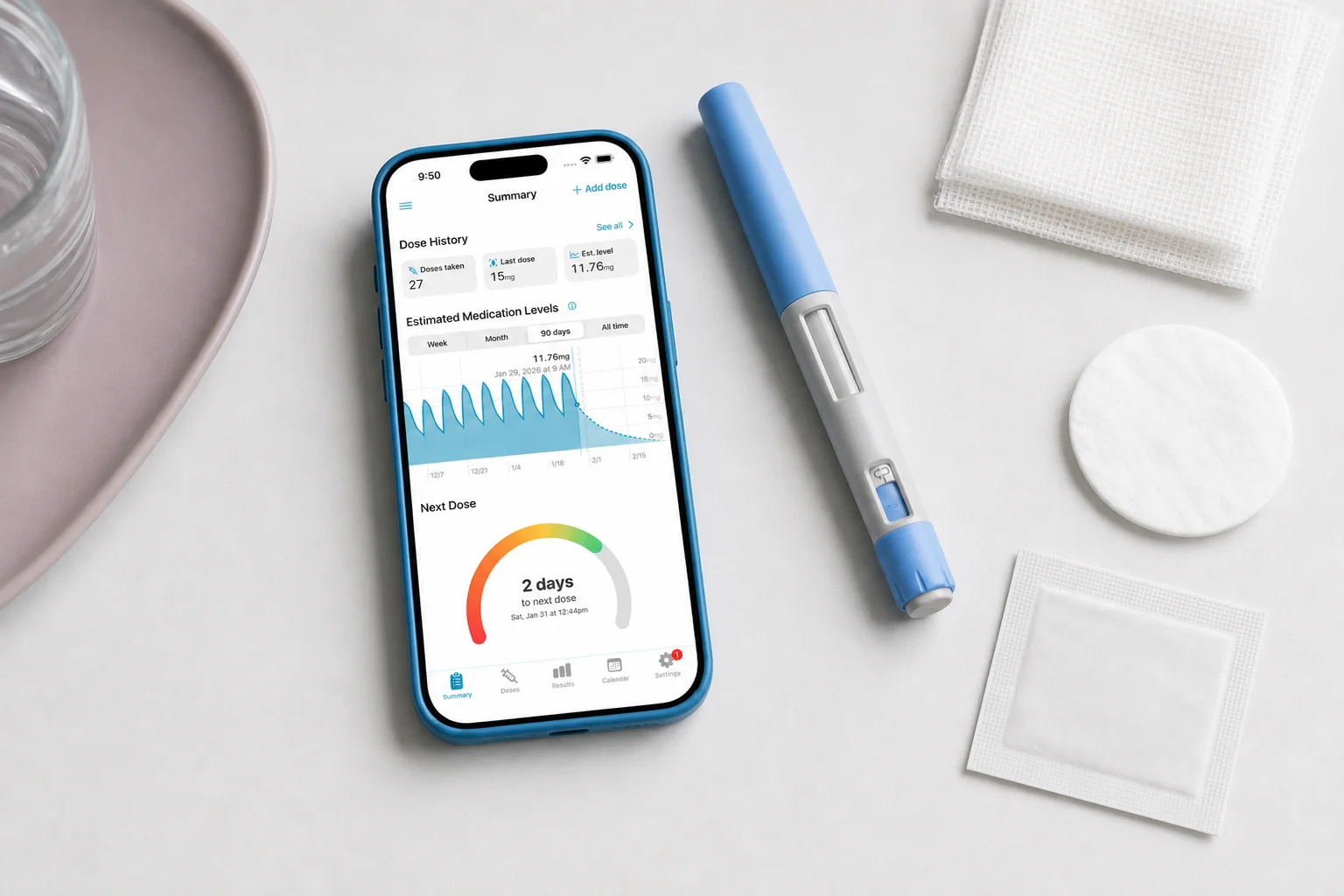
Shotsy lets you log each injection site, pain level, injection notes, and side effect sliders so bruising does not become a vague memory by your next appointment. Side effects charts can show whether bleeding or bruising clusters around certain sites or dose levels. If you need to share the pattern, PDF export can give your healthcare provider a clearer record.
Conclusion
A tiny blood spot or small bruise after a GLP‑1 injection is often minor, especially when it stays small and improves within 24-48 hours. Gentle pressure, no rubbing, careful site choice, and consistent rotation can help reduce irritation and make patterns easier to spot.
Shotsy does not provide medical advice, diagnosis, or treatment, and tracking is not a substitute for professional care. Consult your healthcare provider before making medical decisions, especially if bruising is frequent, large, worsening, painful, or connected to blood thinners or other bleeding concerns.
This post is intended for informational purposes only and is not a substitute for professional medical advice. Always consult your physician before making any changes to your medication or health routine.