





Introduction
Talk to your healthcare provider about any lump you notice after a GLP‑1 injection, even if it is small or painless. They can help identify the cause and decide whether you need an examination. Avoid injecting into the lump. This advice applies to semaglutide (Ozempic, Wegovy) and tirzepatide (Mounjaro, Zepbound); medical guidance recommends getting unexplained lumps checked. 1
Record the appearance and changes
Note when you first felt the lump and whether it appeared at the injection spot or somewhere nearby. Describe its approximate size, tenderness, and any skin color change. Compare it over time without repeatedly pressing or squeezing it.
Keep track of whether it is shrinking, growing, draining, or becoming more painful. Include the medicine, dose, device, injection site, and whether you used that spot before. A photo can help you show your clinician a change that is difficult to describe.
Do not assume every bump after a shot has the same cause. Clinicians consider several explanations for skin lumps, including cysts and infection. Your provider may need an examination to distinguish them. 1
Avoid diagnosing lipohypertrophy yourself
You cannot tell from a lump’s feel whether it is lipohypertrophy, a buildup of fat under the skin associated with repeated injections. Ask your clinician to identify the cause rather than assuming advice about insulin injection lumps applies to you. Tell them if you also inject insulin and where you give each medicine, so they can assess your injection history.
A chart comparing your weight with injection sites cannot show whether a lump changed how much medicine your body absorbed. A week with less weight loss, more hunger, or fewer side effects does not measure the amount that entered your body.
If you also saw leakage or removed the device early, tell your pharmacist or prescriber. Use our leakage guide to describe the device sequence, and do not take an extra dose based on the bump or your symptoms.
Choose skin without swelling or irritation next time
General subcutaneous injection guidance recommends healthy skin without swelling, redness, bruising, scars, or other damage. Leave the lumpy area out of your plan until your care team advises you about reusing it. 2
Follow your product’s site diagram and change the exact spot. Mounjaro and Zepbound instructions allow you to use the same body region while rotating within it; another person should give an injection into the back of your upper arm. 3 4
Use a site rotation record to note where you injected. An entry such as “left thigh, front, away from the raised area” gives you more to review than “leg.” Ask your pharmacist to check your technique if you struggle to keep the device steady.
Act on infection or allergy symptoms
Seek prompt medical care if the lump has spreading redness, increasing warmth or pain, drainage, or fever. Those symptoms can accompany a skin infection. Do not wait for a presumed 48-hour recovery period if the area is getting worse. 5
Call emergency services for trouble breathing, swelling of the face or throat, or fainting. Stop using the medicine and seek immediate help if you have signs of a serious allergic reaction. A reaction involving the whole body needs urgent attention even if the injection-site bump is small. 3 4
Even without those warning signs, contact your healthcare provider to discuss the lump. You do not need to wait for it to hurt or keep returning before asking for advice. Avoid trying to drain it or choosing a treatment before you know the cause. 1
Track lumps with Shotsy
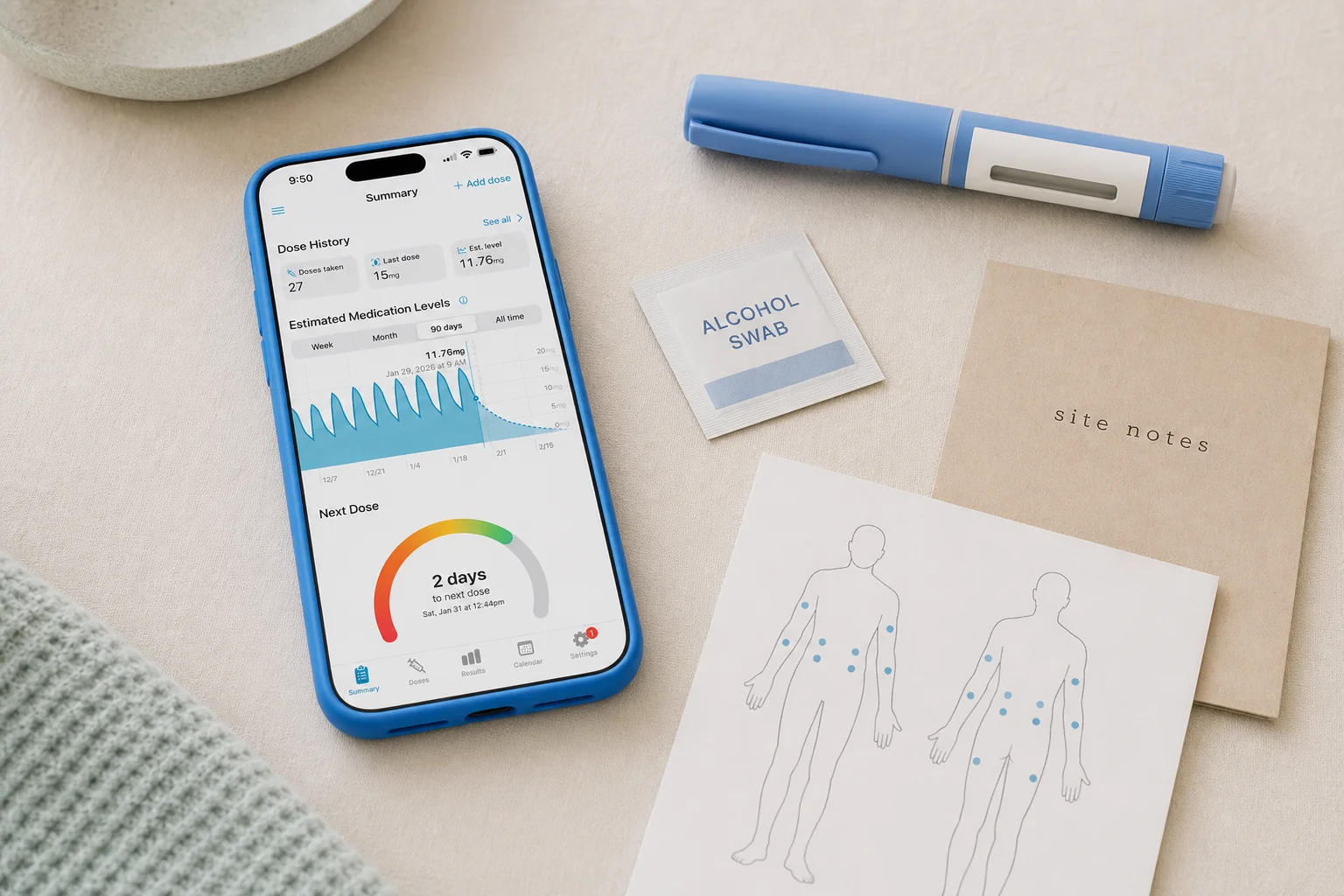
Keep your site, dose, and symptom notes together in Shotsy for your appointment. Tracking can help you describe the pattern, but cannot diagnose the lump or measure drug absorption.
Conclusion
Discuss any injection-site lump with your healthcare provider and ask where to give your next injection. Share when the lump appeared and how it has changed. Seek prompt care if you develop spreading redness, increasing pain, drainage, or fever.
This post is intended for informational purposes only and is not a substitute for professional medical advice. Always consult your physician before making any changes to your medication or health routine.