





Introduction
If medication leaks after a GLP‑1 injection, do not guess a replacement dose. Some small drops are expected, but you cannot calculate the amount delivered from the wet patch. Check the instructions for your medication and the type of pen or syringe you use, and contact your pharmacist or prescriber if delivery is uncertain.
A needle-tip drop differs from a larger leak
Ozempic pen instructions describe a residual drop at the needle tip after injection as normal. Mounjaro single-dose pen instructions also describe a drop of liquid or blood on the skin afterward as normal. These statements do not cover a stream, spray, or pool of medication. 1 2
Write down what you saw: a needle-tip bead, a spot on the skin, or liquid running down your leg. Note whether you lifted or moved the device early. Do not estimate missing milligrams from the size of a drop or use how hungry you feel to judge the dose.
Check your pen’s signs that the injection is complete
Use these checks to describe what happened. If medicine leaked onto your skin, these checks cannot tell you how much entered your body.
- Ozempic multidose pen: Hold the dose button until the counter reaches 0, then keep the needle in your skin and the button pressed while counting slowly to 6. 1
- Wegovy single-dose automatic pen: Keep pressure against the skin until the yellow bar stops moving through the window. Its second click means the injection is still ongoing. 3
- Wegovy FlexTouch: Keep pressing the dose button until the counter shows 0, then keep the needle in your skin and the button pressed while counting slowly to 6. 3
- Mounjaro or Zepbound single-dose automatic pen: Follow the button-hold sequence for up to 10 seconds. Look for the gray plunger and listen for the second click. 2 4
- Mounjaro or Zepbound KwikPen: Push the dose knob in until it stops, hold it while counting slowly to 5, and check for 0 in the window before removing the needle. 5 6
Pens, prefilled syringes, and syringes you fill from a vial have different instructions. Follow the leaflet supplied with your device; a pen’s clicks or hold time do not apply to a syringe.
Record the uncertainty without repeating the dose
Call your pharmacist, prescriber, or the manufacturer contact on your carton if you saw substantial leakage, removed the device early, or did not see its expected completion signal. Have the product name, device type, prescribed dose, injection time, and observations ready.
Record “delivery uncertain” alongside the prescribed dose rather than inventing a smaller delivered dose. Ask what to do about the current injection and when to take the next one. Keep used equipment safe from needle sticks and follow the manufacturer’s disposal or troubleshooting instructions.
Follow the device’s troubleshooting steps
A Wegovy automatic pen cannot be restarted after removal because its needle cover locks. KwikPen instructions have a separate process for an unfinished injection: follow that leaflet, do not redial, and do not start over if you remain unsure. These are device-specific instructions, not permission to replace leaked medicine. 3 5 6
Before the next shot, ask your pharmacist to review preparation and technique. Review site rotation and choose a location where you can hold the device steady. Read our injection-site reaction guide if you also notice skin symptoms.
Keep injection notes in Shotsy
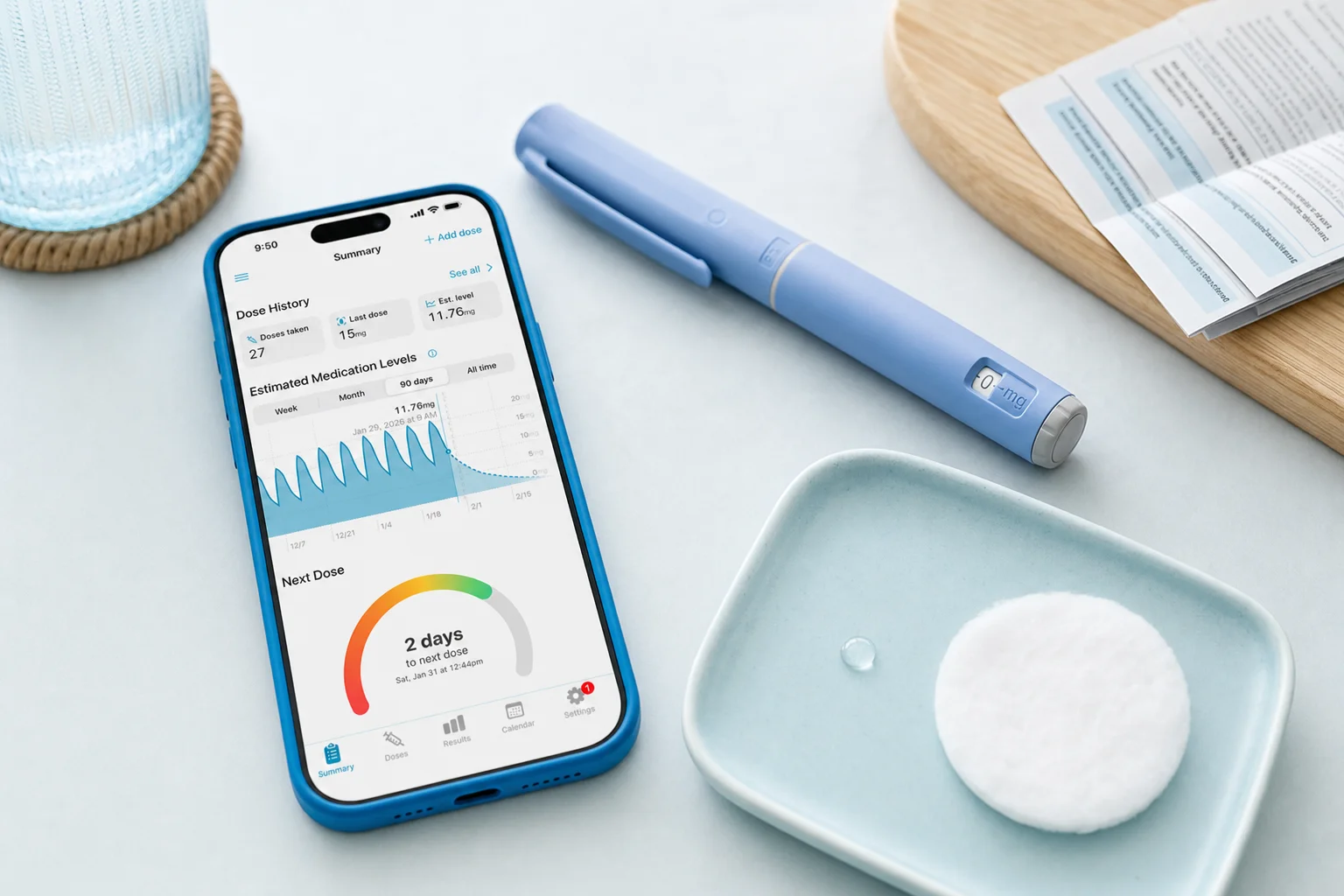
Shotsy gives you a place to record the site, prescribed dose, and what you observed. Share those notes with your care team; tracking cannot measure a partial dose.
Conclusion
A small drop does not necessarily mean the injection failed. If medicine leaked, even a pen that shows the injection is complete cannot tell you how much reached your body. Get device-specific advice before taking extra medication.
This post is intended for informational purposes only and is not a substitute for professional medical advice. Always consult your physician before making any changes to your medication or health routine.