





Introduction
A GLP‑1 injection that stings, burns, or aches can make dose day feel more stressful than it needs to be. This can happen with semaglutide and tirzepatide, including Ozempic, Wegovy, Mounjaro, and Zepbound, even when you are using the medication correctly. Pain does not always mean the shot failed or that something dangerous happened, but it is worth understanding the common reasons injections hurt.
The goal is not to ignore pain. The goal is to notice patterns, follow your prescribing information and device instructions, and use simple technique habits that may make injections easier. If pain is severe, worsening, associated with infection warning signs, or different from your usual experience, contact your healthcare provider.
Cold medication can sting more
Many people find that a cold injection feels sharper than one that has had time to sit at room temperature as allowed by the product instructions. Cold liquid can create a brief burning or stinging sensation as it enters the tissue. The needle itself may be barely noticeable, while the medication is what you feel most.
Use the storage and handling guidance that came with your medication. Do not heat the pen, put it in hot water, microwave it, or leave it somewhere unsafe. If your instructions allow the pen to sit out before injection, letting it warm naturally on a clean surface can make the experience gentler.
If cold medication seems to be the issue, make a note of how long the pen sat out before the shot and how painful the injection felt. A consistent pattern can help you build a routine that still follows the device instructions.
Wet alcohol and tense muscles can increase discomfort
Alcohol swabs are helpful for skin preparation when instructed, but injecting before the alcohol dries can sting. The liquid can be carried slightly into the skin by the needle or irritate the surface around the puncture. Waiting until the skin is fully dry is a small step that can make a noticeable difference.
Muscle tension can also make a shot feel worse. If you brace, hold your breath, or tighten the area, the needle may meet more resistance and the sensation can feel sharper. Before injecting, take a slow breath and let the chosen area relax. If you are using the thigh, sit so the leg is supported instead of flexed.
Pain often increases when dose day becomes emotionally loaded. A short routine can help: wash hands, prepare supplies, let alcohol dry, relax the area, inject steadily, and pause for the full device instruction time.
Site choice changes how the shot feels
Approved GLP‑1 injection sites are the abdomen at least 2 inches from the navel, the front or outer thigh, and the back or outer upper arm. These areas are not identical in comfort. One person may find the abdomen easiest, while another may prefer the outer thigh.
The exact spot matters too. Avoid injecting into skin that is irritated, bruised, firm, tender, scarred, or recently used. If a site is already sore before the shot, it is more likely to hurt during the shot. Repeated injections in the same spot can cause lipohypertrophy, firm lumps that may alter absorption, so comfort today should not come at the cost of using one favorite spot every week.
Try rotating within the approved areas instead of switching randomly. A planned rotation makes it easier to compare pain levels and helps you avoid repeating the same patch of skin.
Device timing can affect the experience
Each pen has instructions for how long to keep the device in place. Medication should be held for the full device instruction time, commonly 5-10 seconds depending on the pen. Removing the device too quickly can leave medication on the skin or create uncertainty about whether the dose was delivered.
The moment after the injection also matters. If you see a drop of blood, use gentle pressure with a clean cotton pad or gauze. Do not rub the area after injection. Rubbing can irritate the skin, increase tenderness, and make minor bruising more noticeable.
It can help to keep your hand steady for a moment before lifting away. A rushed movement may tug the skin or make the shot feel more dramatic than it is.
A less painful routine is usually simple
A practical pain-reduction routine starts before the needle touches the skin. Review the prescribing information and device instructions. Choose an approved site that is not bruised, firm, or tender. Let the medication sit at room temperature only as allowed. Clean the skin if instructed and wait for it to dry fully.
When you inject, keep the area relaxed. Breathe out slowly, press or place the device as directed, activate it, and hold it in place for the full instruction time. Afterward, apply gentle pressure only if needed and avoid rubbing.
If the shot hurts, record what happened while the memory is fresh. Useful details include the site, whether the medication was cold, whether alcohol was dry, pain level, whether there was bleeding or bruising, and how long discomfort lasted. Patterns are easier to fix than isolated memories.
Track shot comfort with Shotsy
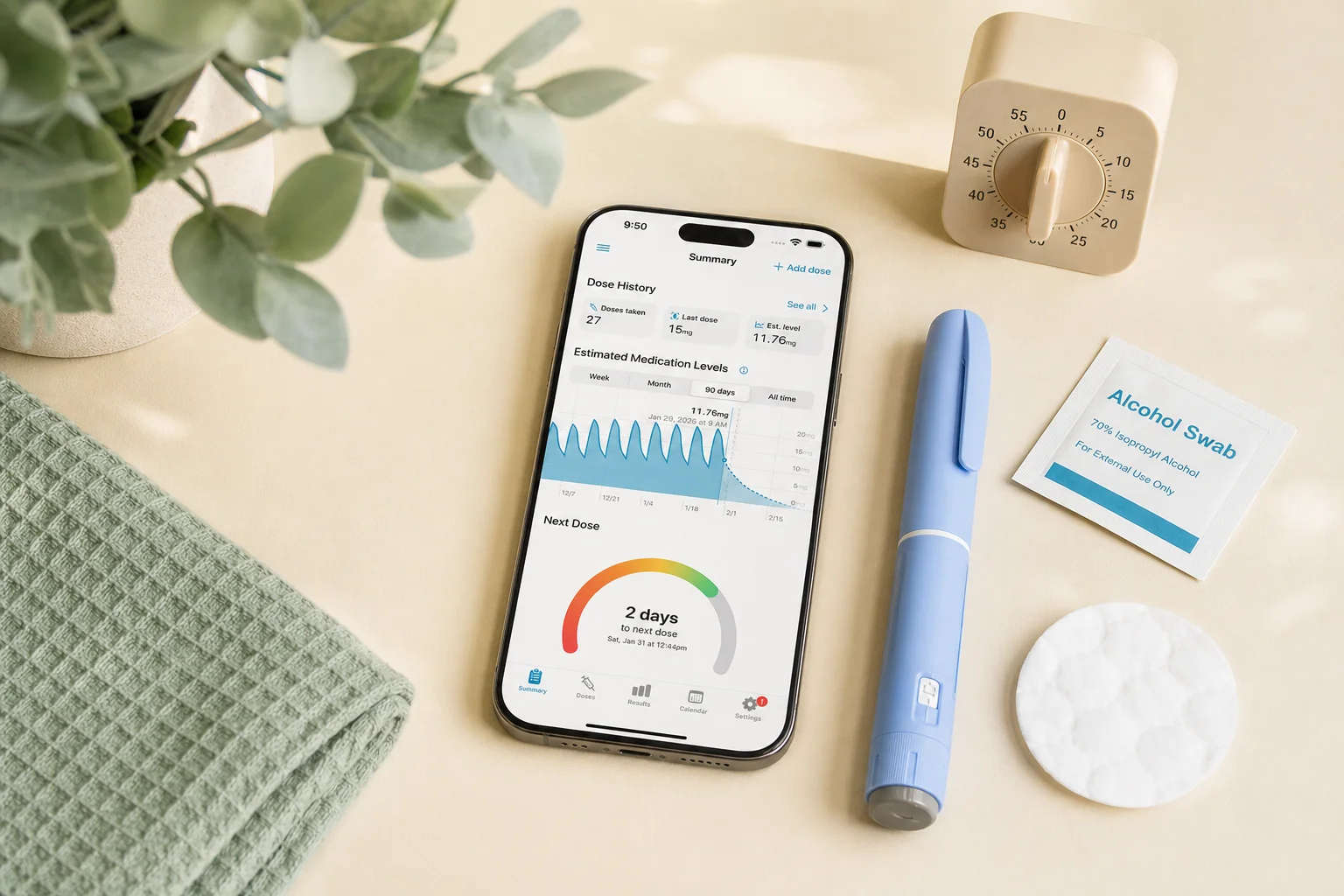
Shotsy can help you compare pain level across injection sites by logging each dose, rotation location, and injection notes. Pain level sliders make it easy to record how each shot felt, so you can see whether discomfort is tied to a specific site or dose day routine. If pain patterns keep coming up, PDF export can help you share a clear history with your healthcare provider.
Conclusion
GLP‑1 injections can hurt for ordinary reasons, including cold medication, wet alcohol, tense muscles, sensitive site choice, or moving too quickly through the device steps. A calm routine, strict site rotation, full device hold time, and no rubbing afterward can make many shots easier.
Shotsy does not provide medical advice, diagnosis, or treatment, and it should not replace your medication instructions or your clinician’s guidance. Consult your healthcare provider before making medical decisions, especially if pain is severe, worsening, recurrent, or paired with spreading redness, warmth, pus, fever, or worsening pain.
This post is intended for informational purposes only and is not a substitute for professional medical advice. Always consult your physician before making any changes to your medication or health routine.