





Introduction
Feeling nervous before an injection does not mean you are doing anything wrong. Injection anxiety is common, including among people who are confident about every other part of their health routine. GLP‑1 medications such as semaglutide and tirzepatide, including Ozempic, Wegovy, Mounjaro, and Zepbound, often become part of a weekly rhythm, but the first few shots can still feel emotionally loaded.
A calmer routine is not about forcing yourself to be fearless. It is about reducing uncertainty. When you know where your supplies are, which site you plan to use, what the device instructions say, and how you will steady your breathing, injection day becomes more predictable. Anxiety may not disappear immediately, but routine, preparation, breathing, and support can help it improve over time.
Predictability lowers the mental load
Anxiety often grows in the empty space before a task. If injection day is vague, the mind has room to rehearse every possible problem. A predictable routine gives you fewer decisions to make while you are already nervous.
Choose a consistent time window that works for your schedule and medication instructions. Set out the supplies you need. Read the device instructions before you are standing there with the pen in your hand. Decide which approved injection area you plan to use, such as the abdomen at least 2 inches from the navel, the front or outer thigh, or the back or outer upper arm. Avoid skin that is bruised, tender, scarred, thickened, hard, lumpy, irritated, or infected.
The routine does not need to be elaborate. It just needs to be repeatable. A simple checklist can keep you from having to rely on memory when your nerves are high.
Preparation makes the shot feel less rushed
Rushing can make a normal injection feel more intense. Before your shot, give yourself a few quiet minutes if possible. Wash your hands, gather your supplies, check the medication and device instructions, and make sure you understand the steps for your exact pen. GLP‑1 pen designs differ, and single-dose autoinjectors and multi-dose dial pens can have different steps.
If your medication instructions allow the pen to sit at room temperature before use, that may make the injection more comfortable for some people because cold medication can sting. Follow the instructions for your medication and do not use heat to warm the pen. If your instructions include cleaning the skin with alcohol, let the alcohol dry fully before injecting, since wet alcohol can sting too.
Breathing gives your body a clear signal
When people feel anxious, they often hold their breath without noticing. That can make the body feel tense and make the moment seem bigger than it is. A breathing pattern gives your nervous system a simple cue that you are not in immediate danger.
Try taking a slow breath in before you start, then a longer breath out as you place the pen and begin the injection. Keep your shoulders low and your jaw relaxed. Some people count breaths, some look away, and some prefer to watch the device so they know what is happening. There is no perfect style. The goal is to make the moment steady enough that you can follow the instructions without rushing.
If you do feel a sting, try to label it neutrally: “That was a sting,” rather than “Something is wrong.” A brief sensation does not automatically mean the injection failed or that the next one will be worse.
Support can make the first routines easier
You do not have to turn injection day into a solo test of willpower. If having someone nearby helps, ask a trusted person to sit with you, read the instructions aloud, remind you to breathe, or simply keep you company. Support does not have to mean someone else performs the injection. Sometimes the helpful part is having another calm person in the room.
If anxiety is strong enough that you delay doses, feel panicky, or cannot complete the injection, talk with your healthcare provider. They may be able to review technique, recommend training with a pharmacist, or help you plan a step-by-step approach. Your fear is worth taking seriously, and it is also something many people learn to manage with practice.
Tracking should reassure rather than catastrophize
Notes can be useful, but only if they help you see reality more clearly. After each injection, write down the site, dose, and a simple pain level. Add a short note if something mattered, such as “cold pen stung more” or “breathing helped.” Avoid turning the log into a list of worst-case predictions.
Over time, tracking can show that most injections are brief and manageable. It can also reveal practical patterns. Maybe one thigh is more sensitive, or wet alcohol makes the shot sting, or the routine is easier when you prepare the pen before dinner rather than right before bed. The point is not to judge yourself. The point is to learn what makes your routine calmer.
Reminders can remove one source of worry
For some people, anxiety is not only about the needle or pen. It is also about remembering the right day, wondering whether they already took a dose, or feeling unsure where they injected last time. A reminder system can reduce that background worry.
Use reminders that fit your life. A phone alert, calendar event, or medication app can mark injection day without requiring you to think about it all week. Keep your supplies in a consistent place if your storage instructions allow it. Review your last injection site before choosing the next one so you are not making the decision from scratch while anxious.
Build a calmer routine with Shotsy
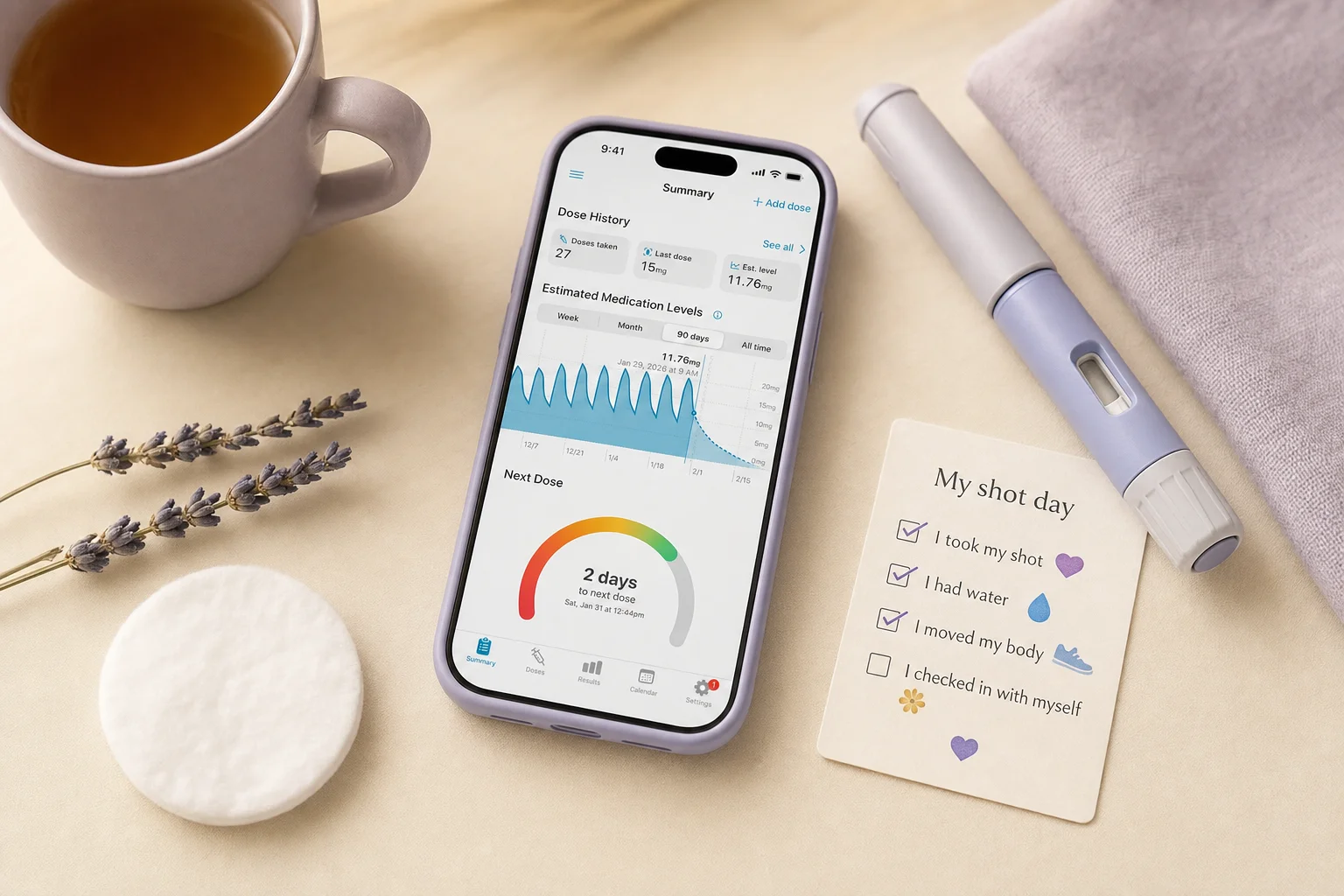
Shotsy can support a calmer injection routine with dose reminders, countdown widgets that show exactly when your next shot is due, and injection site rotation tracking so you never have to guess where to inject. Pain level sliders and injection notes keep a record of each dose without overthinking. The Journey feature can also help by visualizing how far you have come, turning shot-day stress into a reminder that the routine is working.
Conclusion
GLP‑1 injection anxiety is common, and it can improve with routine, preparation, breathing, and support. Start with a repeatable process, follow the instructions for your exact device, choose healthy skin in an approved injection area, and keep notes that help you learn without catastrophizing. Shotsy does not provide medical advice, diagnosis, or treatment, and readers should consult their healthcare provider before making medical decisions about medication use, injection technique, anxiety, or shot timing.
This post is intended for informational purposes only and is not a substitute for professional medical advice. Always consult your physician before making any changes to your medication or health routine.