





Introduction
GLP‑1 pens can look simple from the outside, but the details matter. Semaglutide and tirzepatide medications, including Ozempic, Wegovy, Mounjaro, and Zepbound, may come in different device styles, and those devices do not all work the same way. Some are single-dose autoinjectors. Some are multi-dose dial pens. Some require steps that another pen does not require.
That difference is the reason many injection mistakes are not really carelessness. They are device confusion. A person may switch from one medication to another, change dose strength, receive a different pen design, or follow a habit from an older device that does not apply anymore. The safest habit is to read the instructions for the exact pen in your hand and ask a pharmacist or prescriber when anything seems unclear.
Pen designs can require different routines
Single-dose autoinjectors and multi-dose dial pens are built around different workflows. A single-dose autoinjector is typically designed to deliver one preset dose, then be discarded according to the instructions. A multi-dose dial pen may hold several doses and require the user to attach a needle, select a dose, and confirm that the dose has been delivered.
This difference affects almost every part of the routine. The way you prepare the pen, place it against the skin, start the injection, hold it in place, and confirm completion may vary. Even two pens used for GLP‑1 medications can have different cues. One device might use a visible dose counter, another might rely on clicks, and another might have a window or plunger movement. Do not assume the pen you used last month works like the pen you received today.
The first click may not mean the injection is finished
Clicks can be helpful, but they can also be misunderstood. On some devices, a click may signal that the injection has started. Another click or visible indicator may signal that the injection is complete. If someone hears the first click and lifts the pen too early, they may not receive the full dose.
The solution is not to memorize generic rules from the internet. It is to follow the specific instructions for your device, including any directions about how long to hold the pen against the skin after activation. If you are not sure whether a click means start, progress, or completion, ask your pharmacist to walk you through the device. It is much better to ask before injection day than to guess after the pen is already against your skin.
Priming matters only when the instructions require it
Priming is another area where people get conflicting advice. Some multi-dose dial pens may require a check or priming step before use, depending on the device instructions. Some single-dose autoinjectors do not use that kind of routine. Treating every pen the same can create problems in both directions: skipping a required step on one device, or trying to perform an unnecessary step on another.
If your instructions include priming, follow them exactly. If they do not, do not invent a priming step based on a different medication or a social media video. The word “pen” can make devices sound interchangeable, but the mechanism inside may be different. When in doubt, bring the device, the box, and the instruction sheet to your pharmacist and ask for a demonstration.
Dose counters and leftover liquid can be confusing
Multi-dose pens can create questions about dose counters, dose windows, and leftover liquid. A person may wonder whether there is enough medication remaining, whether the counter returned to the expected position, or why liquid appears to remain after the final planned dose. Single-dose devices can also raise questions if someone sees fluid on the skin or in part of the device after use.
Do not try to estimate a dose by appearance alone. Follow the device instructions for dose selection, injection completion, and disposal. If you think the dose did not go in, if the counter behaved unexpectedly, or if there appears to be more or less liquid than you expected, contact your pharmacist or prescriber before taking any extra medication. Taking an additional dose without guidance can be risky, and skipping doses without guidance can also disrupt your plan.
Storage changes can affect injection day
Storage instructions also belong to the device routine. GLP‑1 medications can have specific handling requirements, and the details may vary by product. In general, avoid using medication that was frozen unless your pharmacist or prescriber confirms it is still appropriate. Also pay attention to the instructions for refrigeration, room-temperature time, light exposure, and disposal.
Comfort can be affected by temperature too. Cold medication can sting more for some people, so your instructions may allow the pen to sit at room temperature before use. Only do this in the way your medication instructions allow. Do not warm a pen with heat, hot water, or a microwave. A calm routine starts with the medication being stored and prepared correctly, not rushed at the last minute.
Skin prep and site choice still affect pen performance
Even when the pen is used correctly, the injection site can change the experience. Approved GLP‑1 injection sites include the abdomen at least 2 inches from the navel, the front or outer thigh, and the back or outer upper arm. Avoid injecting into bruised, tender, scarred, thickened, hard, lumpy, irritated, or infected skin.
If your instructions call for alcohol, let the skin dry before injecting. Wet alcohol can sting, which can make the injection feel sharper than it otherwise would. Also avoid rushing the device away from the skin because of discomfort. Follow the required hold time and completion cues for your exact pen.
Track each dose with Shotsy
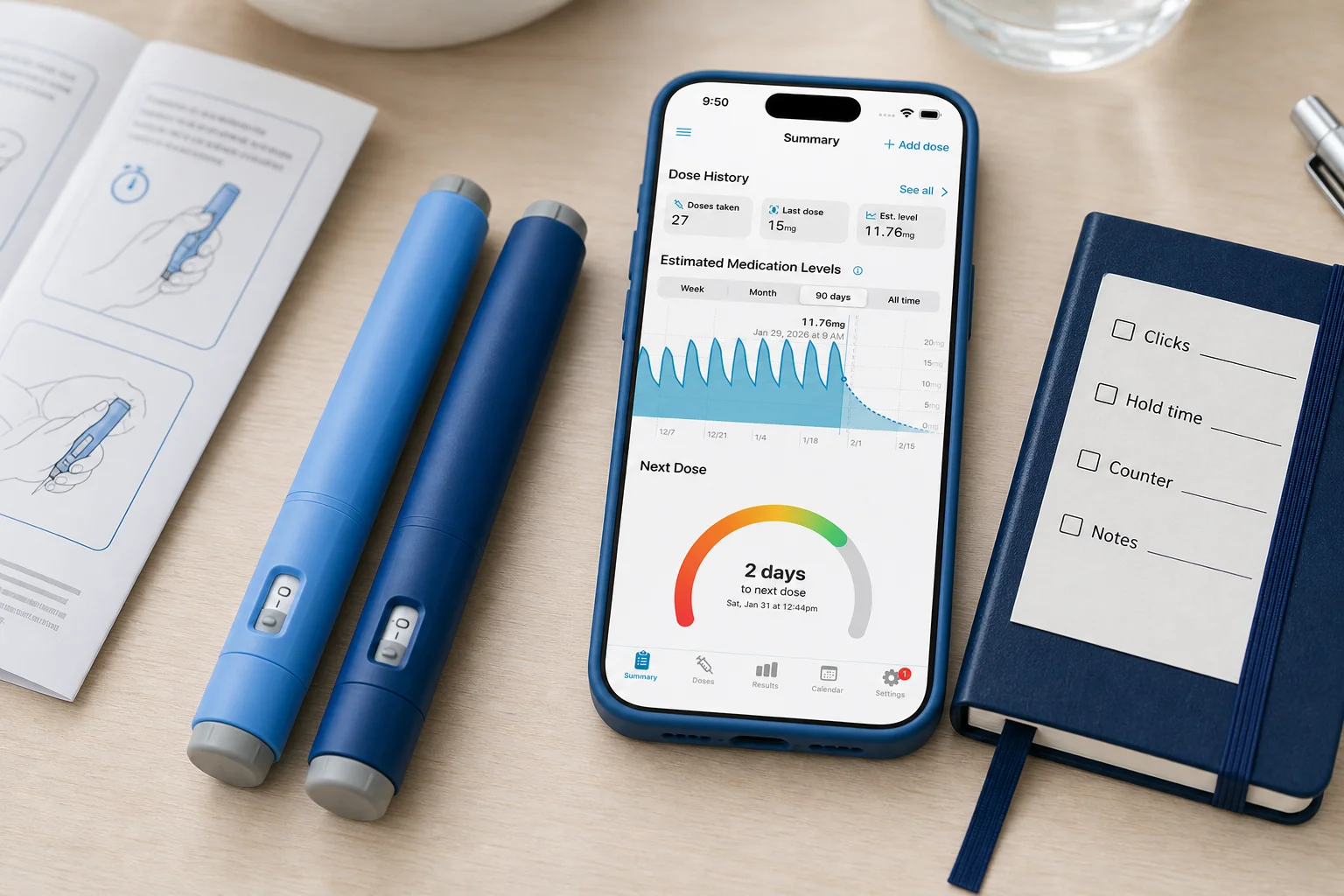
Shotsy can help you build a consistent record of each injection, including dose, injection site, pain level, and injection notes where you can record device details or technique observations. Injection site rotation tracking can show whether one area is being used too often. If you need to review your history with a clinician, PDF export can turn your logs into a clear summary.
Conclusion
Most GLP‑1 pen mistakes come from treating different devices as if they are the same. Read the instructions for the exact pen you are using, watch for the correct completion cues, follow priming directions only when required, and ask a pharmacist or prescriber before guessing about leftover liquid or missed doses. Shotsy does not provide medical advice, diagnosis, or treatment, and readers should consult their healthcare provider before making medical decisions about medication use, injection technique, storage, or dosing.
This post is intended for informational purposes only and is not a substitute for professional medical advice. Always consult your physician before making any changes to your medication or health routine.