





Introduction
Injectable GLP-1 products are given under the skin, but their devices are not interchangeable. Depending on the medicine and presentation, you may receive a single-dose auto-injector, a prefilled syringe, a multi-dose pen that uses a disposable needle, or a vial and syringe. Get training from a healthcare professional and follow the Instructions for Use packaged with your exact product. The checklist below covers shared safety principles; it does not replace device-specific instructions.
Before you begin: gather your supplies
Gather the medicine and only the supplies listed in its Instructions for Use. These may include a compatible new pen needle or syringe, an alcohol swab or soap and water, gauze or cotton, and an FDA-cleared sharps container. Never improvise a device or transfer medicine between containers unless the product instructions specifically require it.
Before injecting, confirm the product, prescribed dose, expiration date, and storage history. Inspect the liquid exactly as the label describes: some approved solutions are clear and colorless, while others may be clear and slightly yellow. Do not use a product that is frozen, damaged, expired, or outside its labeled appearance. Ask a pharmacist if you are uncertain.
Choosing your injection site
GLP‑1 injections are subcutaneous, meaning the needle goes into the fatty tissue just beneath the skin. Three body areas are approved for self-injection:
- Abdomen: Use the area specified in your product instructions and avoid skin that is tender, bruised, red, hard, scarred, or otherwise damaged.
- Thigh: Use the location shown in the product diagram and rotate locations.
- Upper arm: Some labels specify that another person should inject this area. Check the instructions rather than trying to reach it yourself.
Current semaglutide and tirzepatide labels direct patients to rotate injection sites with each dose. You may be able to use the same general body area while choosing a different spot, depending on the product instructions.
Step-by-step injection process
Follow these steps for a safe, comfortable injection:
Step 1: Wash your hands. Use soap and water for at least 20 seconds. Dry them thoroughly with a clean towel.
Step 2: Prepare the device exactly as shown. Some presentations require attaching a new compatible needle, some have a concealed needle, and some require drawing a dose from a vial. Do not apply instructions from one brand or presentation to another.
Step 3: Perform a flow check only if instructed. Multi-dose pens may require a flow check at specific times; single-dose devices generally use a different process. Follow the supplied Instructions for Use.
Step 4: Confirm the prescribed dose. If the device has a dose selector, use the displayed dose—not the number of clicks—as the reference. Fixed-dose devices do not require dose selection.
Step 5: Clean the injection site. Wipe the chosen area with an alcohol swab in a circular motion. Let it air dry completely; injecting into wet skin can sting.
Step 6: Position the device as instructed. Whether to pinch the skin, how to hold the device, and how the needle enters depend on the presentation. Use the product diagram and the technique demonstrated by your healthcare professional.
Step 7: Complete the injection using the device indicator. Hold the device in place for the exact time or until the visual or audible completion signal described in its instructions. Removing it early can result in an incomplete dose.
Step 8: Dispose of the sharp immediately. Place the used needle, syringe, or single-dose pen in a sharps container as directed. If your multi-dose pen uses a removable needle, follow its recapping and removal instructions carefully and store the pen without the needle attached. Follow local disposal rules.
Making it less painful
Injection discomfort varies by person, site, product, and technique. These steps may help:
- Follow labeled temperature instructions: Do not warm, microwave, or otherwise heat the medicine. If your product may be left out briefly before use, stay within its labeled storage limits.
- Let alcohol dry completely: Injecting while the swab is still wet causes a burning sensation.
- Use the demonstrated technique: Do not change the angle, pressure, or injection time based on another device’s instructions.
- Relax and avoid damaged skin: Choose an approved site without tenderness, bruising, redness, hardness, or scarring.
Common mistakes to avoid
Even experienced users occasionally slip into habits that can cause problems:
- Reusing needles or devices: Never share a pen, even if the needle is changed, and use a new needle whenever the product requires a removable needle.
- Mixing device instructions: A fixed-dose pen, multi-dose pen, prefilled syringe, and vial do not use the same preparation steps.
- Skipping site rotation: Keeping a record of where you inject each week prevents repetition and tissue damage.
- Releasing the button too early: This can result in an incomplete dose. Hold for the full recommended time.
Log your injection with Shotsy
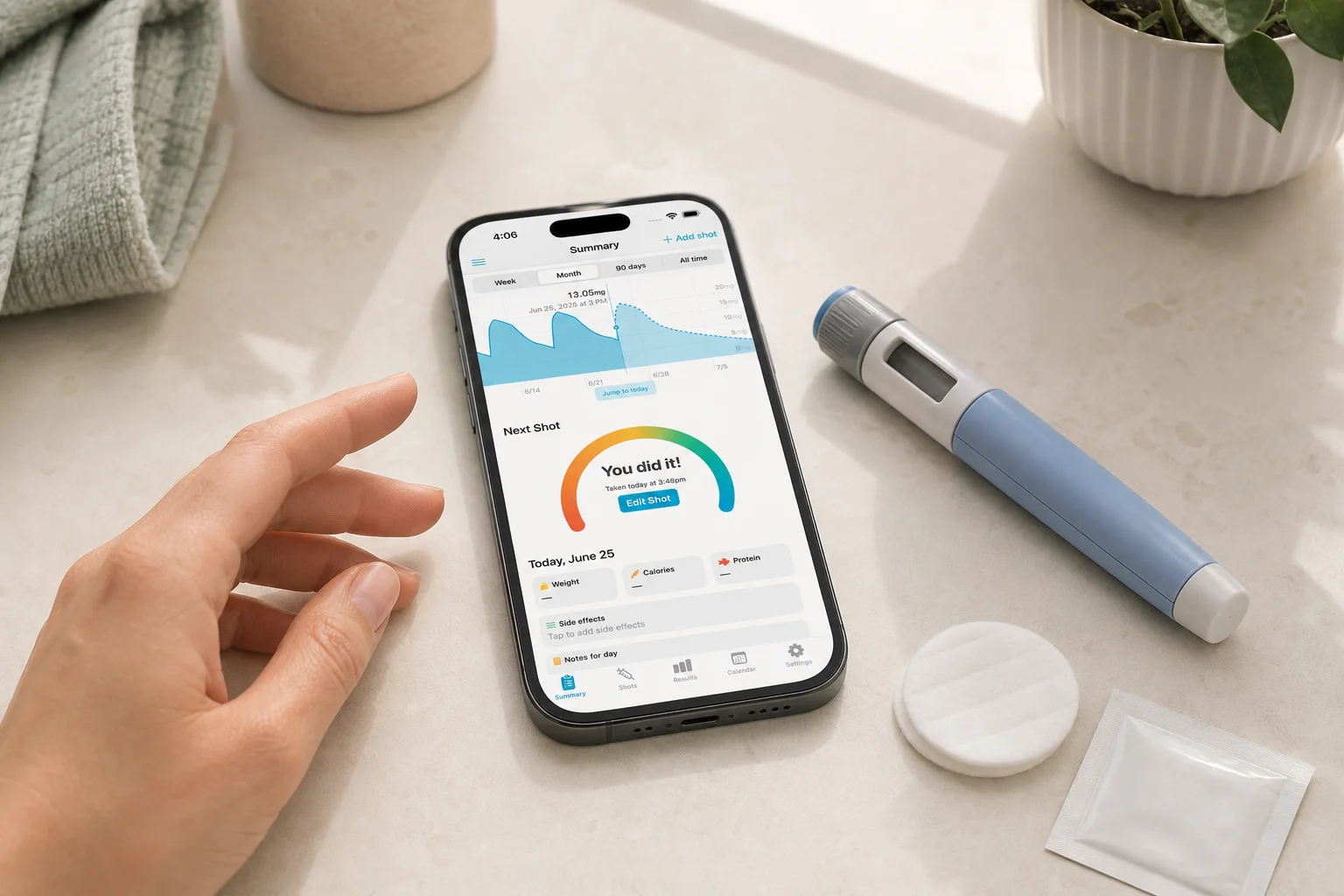
Shotsy lets you log each injection with the exact site, pain level, and any notes about your experience. The injection site rotation feature tracks 12 distinct sites across your abdomen, thighs, and upper arms, and recommends the next site based on where you last injected. Over time, your injection log reveals patterns, like which sites are most comfortable or whether pain correlates with medication temperature, giving you useful data to refine your routine.
Conclusion
Self-injection can become familiar with training, but safe technique starts with recognizing that GLP-1 devices differ. Follow the Instructions for Use for the exact product and presentation, rotate approved injection sites, dispose of sharps promptly, and ask a pharmacist or prescriber about any uncertain step.
This post is intended for informational purposes only and is not a substitute for professional medical advice. Always consult your physician before making any changes to your medication or health routine.