





Introduction
If you injected a GLP‑1 shot too close to your belly button, do not repeat the dose based on location alone. The distance cannot tell you how much medicine entered your body. Check your device instructions and contact your pharmacist or prescriber if you are unsure what happened with semaglutide (Ozempic, Wegovy) or tirzepatide (Mounjaro, Zepbound).
Check the instructions for your pen or syringe
Several manufacturer leaflets specify a 2-inch distance from the navel, but the wording differs by device:
- Wegovy: U.S. instructions for the single-dose pen, FlexTouch pen, and prefilled syringe specify keeping abdominal injections 2 inches from the belly button. 1
- Mounjaro and Zepbound KwikPens: Both instruct you to keep abdominal injections at least 2 inches from the belly button. 2 3
- Ozempic: Its prefilled syringe instructions state at least 2 inches. The multidose pen instructions show approved sites without that same written distance. 4
- Mounjaro and Zepbound single-dose pens: Their leaflets show injection areas without the same written 2-inch instruction used for KwikPen. Follow your device diagram and training. 5 6
These differences are a reason to check the carton, not to aim near the navel. Ask your pharmacist to show you an appropriate abdominal site if the diagram is unclear.
Write down where and how you injected
Note your estimated distance from the belly button and whether you injected beside it or into the navel itself. Include the time, product, prescribed dose, and device type. Describe any pain, bleeding, or leakage without trying to calculate a delivered dose.
Check your observations against the device’s completion steps. Tell your pharmacist what you heard or saw, such as a click, a dose counter at 0, or a visible plunger. These signs cannot tell you how much medicine reached the right tissue if you injected in the wrong place or saw a leak. Our leakage guide explains the checks for each pen.
Ask for advice before taking another dose
Taking another full or partial dose could add to medicine you already received. Ask your pharmacist or prescriber what to do about this injection and the next scheduled one. Do not try to correct the location by injecting again at a different site.
Make the next site easier to identify
Before preparing the next injection, locate the approved area on your device diagram. Select a spot you can reach without changing your grip during the injection.
Use a different spot from the last dose. You can keep using an approved body region while rotating within it. For example, record the side and location instead of just “abdomen.” Build a rotation plan you can check before each shot.
Get help for concerning symptoms
Seek prompt medical assessment for spreading redness, increasing warmth or pain, pus, or fever. These can accompany a skin infection. Get help for worsening symptoms even if you think the injection location caused them. 7
Breathing difficulty, swelling of your face or throat, or fainting needs emergency help. Stop the medication pending medical advice if you have signs of a serious allergic reaction. 4
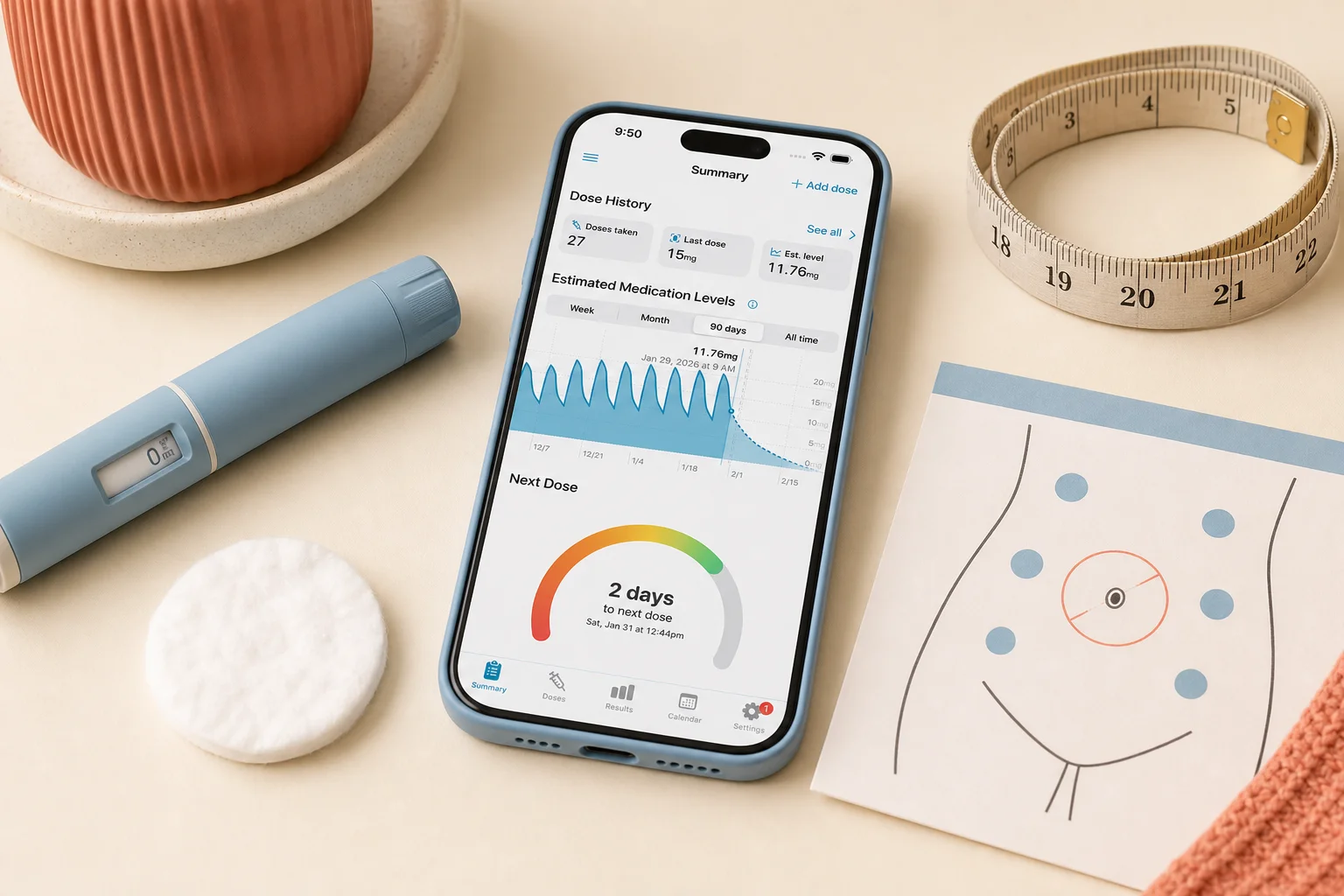
Keep site notes in Shotsy
Log where you injected and what you noticed in Shotsy. Share the record if your pharmacist or prescriber needs more detail; the app cannot determine whether a dose went into the intended tissue.
Conclusion
If you injected near your belly button, note where you injected and any symptoms. Ask your pharmacist or prescriber for advice before taking more medicine. Confirm your device’s site instructions before the next injection.
This post is intended for informational purposes only and is not a substitute for professional medical advice. Always consult your physician before making any changes to your medication or health routine.