





Introduction
One of the most common questions people ask after starting a GLP‑1 medication is whether they can still have a drink. There is no absolute medical contraindication between alcohol and semaglutide (Ozempic, Wegovy) or tirzepatide (Mounjaro, Zepbound), and the FDA prescribing information does not require complete abstinence. However, these medications change how your body processes food and alcohol in ways that make moderation more important than ever. This article covers the real risks, what the research says about reduced cravings, and practical guidelines for drinking safely on treatment.
How GLP‑1 medications change your relationship with alcohol
GLP‑1 receptor agonists slow gastric emptying, reduce appetite, and act on reward pathways in the brain. All three mechanisms affect how alcohol feels in your body:
- Delayed absorption: Because food and liquids stay in your stomach longer, alcohol may be absorbed more slowly than usual, delaying the onset of intoxication and increasing the risk of drinking more than intended.
- Lower tolerance: Many patients report feeling intoxicated from smaller amounts than before treatment. Rapid weight loss and reduced food intake both lower the buffering effect that would normally slow alcohol absorption.
- Amplified GI side effects: Nausea affects over 40 percent of semaglutide users at higher doses. Alcohol independently irritates the stomach lining and can trigger or worsen nausea, vomiting, reflux, and dehydration.
The risks worth understanding
While casual, moderate drinking is generally considered safe for most GLP‑1 users, several specific risks deserve attention:
- Hypoglycemia: This is the most clinically established concern for people with type 2 diabetes who also take insulin or a sulfonylurea. The liver prioritizes metabolizing alcohol over maintaining blood glucose, which means glucose can drop dangerously hours after drinking, including during sleep.
- Pancreatitis: Both heavy alcohol use and GLP‑1 medications carry independent warnings for pancreatitis. Combining them increases cumulative risk, particularly for people with a history of pancreatic inflammation.
- Dehydration: GLP‑1 medications can cause dehydration through reduced fluid intake and GI side effects. Alcohol compounds this, raising the risk of kidney-related complications.
- Calorie and decision impact: Alcohol contains calories that do not trigger satiety, and it lowers inhibitions around food choices, both of which can slow weight loss progress.
The reduced cravings effect
Many patients report that their desire to drink simply fades after starting a GLP‑1. This is consistent with emerging research. A 2023 study published in Scientific Reports analyzed over 68,250 Reddit posts related to GLP‑1 medications and recruited 153 participants with obesity. Among alcohol-related posts, 71 percent described reduced cravings, decreased desire to drink, or other negative effects on alcohol consumption. Participants taking semaglutide or tirzepatide reported significantly lower alcohol intake, fewer drinks per episode, and lower binge drinking odds compared to before starting medication. GLP‑1 receptors exist in areas of the brain involved in reward and addictive behaviors, which may explain why many patients naturally drink less during treatment.
Practical guidelines if you choose to drink
- Limit to one drink per occasion, consumed with food, and no more than two to three drinks per week.
- Never drink on an empty stomach, especially on GLP‑1 medications that already slow digestion.
- Alternate every alcoholic drink with a full glass of water to counteract dehydration.
- Choose lower-calorie options like a spirit with soda water, dry wine, or light beer over sugary cocktails.
- Avoid alcohol during dose escalation when your body is still adjusting and GI side effects are at their peak.
- Space alcohol and your injection by at least 24 hours when possible to minimize overlapping GI stress.
Track your patterns with Shotsy
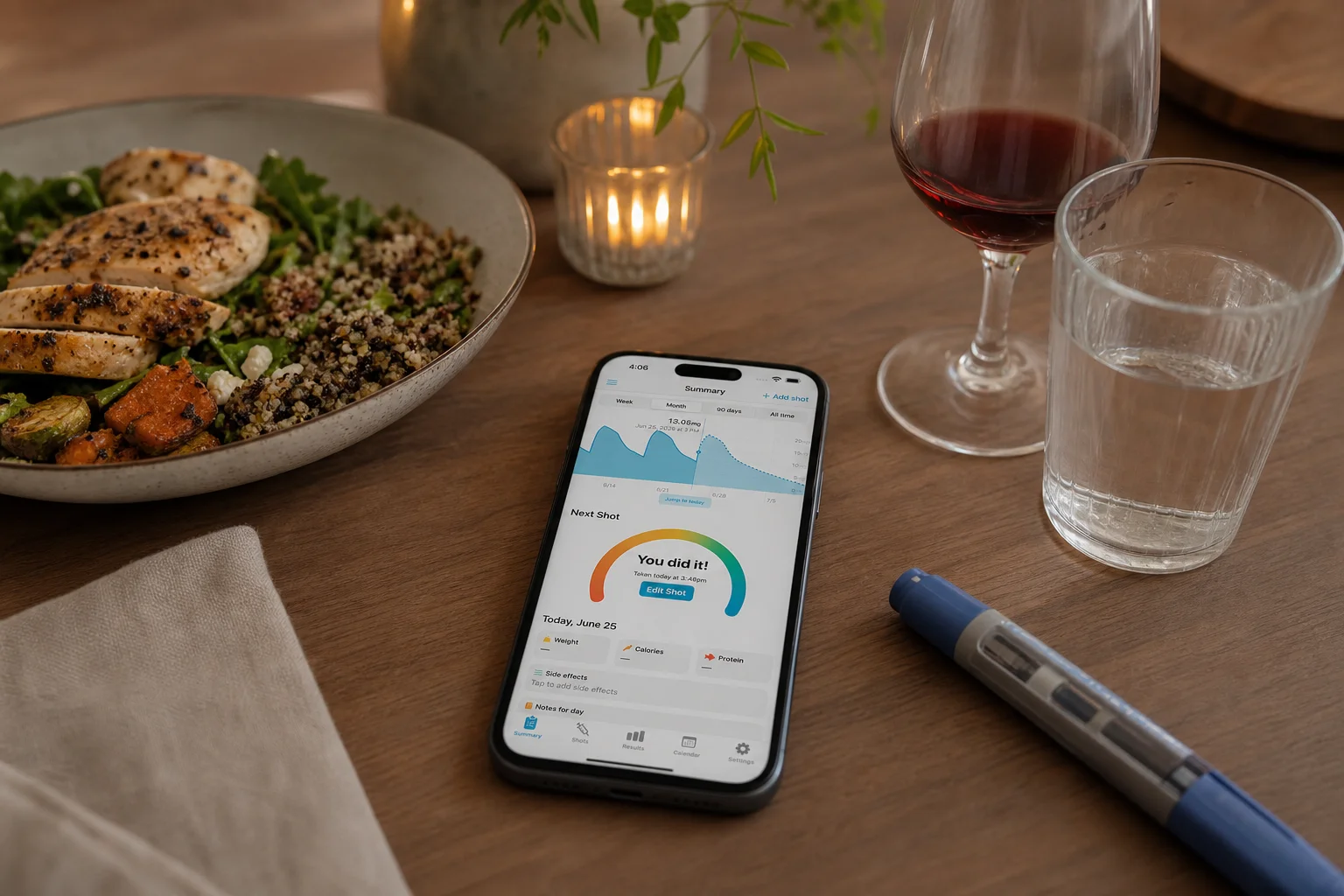
Use Shotsy’s side effect sliders and daily notes to log how you feel after drinking. Over a few weeks, patterns emerge that can reveal whether alcohol on certain days correlates with worse nausea or GI symptoms, helping you and your provider make informed decisions.
Conclusion
Alcohol is not off-limits on GLP‑1 medications, but the combination requires more caution than most people realize. Delayed absorption, amplified side effects, and hypoglycemia risk for some patients make moderation essential. Many users find that their cravings naturally decrease, which can be a welcome benefit of treatment.
This post is intended for informational purposes only and is not a substitute for professional medical advice. Always consult your physician before making any changes to your medication or health routine.