





Introduction
GLP‑1 medications like semaglutide and tirzepatide can restore fertility in women who previously struggled to conceive, primarily by reversing anovulation caused by polycystic ovary syndrome (PCOS) and insulin resistance. The so-called “Ozempic babies” phenomenon is not a mystery or a side effect of the drug itself. It is the predictable result of significant weight loss improving hormonal balance and ovulatory function. If you are a woman of reproductive age taking a GLP‑1 medication, understanding how these drugs interact with fertility, contraception, and pregnancy planning is essential.
How GLP‑1 medications restore ovulation
The connection between GLP‑1 medications and improved fertility runs through several well-established mechanisms:
- Weight loss and hormonal rebalancing: Losing just 5 to 10 percent of body weight can restart regular ovulation in women with PCOS. Since semaglutide produces average weight loss of 15 to 20 percent and tirzepatide 20 to 25 percent, many women on these medications cross the threshold for restored ovulatory function within months.
- Improved insulin sensitivity: Insulin resistance is a core driver of PCOS. GLP‑1 receptor agonists directly improve insulin signaling, reducing excess androgen production and allowing follicles to mature normally.
- Reduced systemic inflammation: Chronic low-grade inflammation disrupts ovarian function. Weight loss and the anti-inflammatory effects of GLP‑1 medications work together to create a more favorable reproductive environment.
Women who had been told they would need assisted reproduction are finding themselves pregnant naturally after starting GLP‑1 therapy. This is not a fluke. It is restored physiology working as it should.
The “Ozempic babies” phenomenon explained
Media coverage of unexpected pregnancies on GLP‑1 medications has created confusion about whether these drugs directly cause pregnancy. The reality is more straightforward:
- Restored fertility, not enhanced fertility: GLP‑1 medications do not make women more fertile than their biological baseline. They remove the metabolic barriers, primarily obesity and insulin resistance, that were suppressing normal reproductive function.
- Contraception gaps: Many women with longstanding infertility stop using contraception, assuming they cannot conceive. When GLP‑1-driven weight loss restores ovulation, pregnancy happens because contraception was not in place.
- Timeline surprise: Ovulation can return before patients reach their goal weight. Some women report becoming pregnant within the first three to six months of treatment, before they expected fertility to change.
If you are not actively planning a pregnancy, using reliable contraception while on a GLP‑1 medication is essential, regardless of your prior fertility history.
Contraception considerations during treatment
Tirzepatide (Mounjaro, Zepbound) has a specific interaction with oral contraceptives that requires attention:
- Reduced absorption during dose escalation: Tirzepatide slows gastric emptying significantly during the first weeks at each new dose level. This can reduce the absorption and effectiveness of oral contraceptive pills during dose escalation phases.
- Prescribing guidance: The FDA labeling for tirzepatide recommends that patients using oral hormonal contraceptives either switch to a non-oral method (IUD, implant, injection, patch, or ring) or add a barrier method during dose increases and for four weeks after reaching a stable dose.
- Semaglutide: Current evidence does not show a clinically significant reduction in oral contraceptive efficacy with semaglutide, though the slowed gastric emptying is theoretically relevant. Discuss with your prescriber if you have concerns.
The safest approach for women who need reliable contraception while on a GLP‑1 medication is a long-acting reversible method that does not depend on GI absorption.
When to stop before trying to conceive
Both major GLP‑1 medications require a washout period before attempting pregnancy:
- Semaglutide (Ozempic, Wegovy): Discontinue at least two months before planned conception. Semaglutide has a half-life of approximately one week, and the two-month window ensures the drug is cleared from your system through five or more half-lives.
- Tirzepatide (Mounjaro, Zepbound): Discontinue at least one month before planned conception. Tirzepatide has a shorter half-life of approximately five days, requiring less washout time.
These recommendations come from the manufacturer prescribing information and are based on animal reproductive toxicity data. The washout period is not optional for planned pregnancies.
What the safety data actually shows
A 2026 Harvard study analyzing 3,572 pregnancies with early first-trimester GLP‑1 exposure (before women knew they were pregnant and could discontinue) found no statistically significant increase in major adverse outcomes including birth defects, miscarriage, or preterm birth compared to unexposed pregnancies. This is reassuring for women who conceive accidentally while still taking their medication, but it does not change the guidance to stop before planned conception.
Additional context on the safety data:
- Animal studies: High-dose animal studies showed reproductive toxicity, which is why the washout recommendation exists. However, animal doses are typically many times higher than human therapeutic doses.
- Registry data: Post-marketing pregnancy registries are ongoing but have not yet identified a clear safety signal in humans at standard doses.
- Inadvertent exposure: The Harvard data specifically addresses the common scenario where a woman becomes pregnant during treatment and discontinues once pregnancy is confirmed, usually at 4 to 8 weeks gestation.
Planning your timeline
For women who want to use GLP‑1 medications for weight loss before conceiving, the general approach is:
- Achieve a stable weight: Work with your prescriber to reach a weight that optimizes your fertility and pregnancy health. This does not have to be your ultimate goal weight.
- Transition to maintenance: Many prescribers keep patients at their maintenance dose for several months to confirm weight stability before discontinuing.
- Stop medication with proper washout: Two months for semaglutide, one month for tirzepatide.
- Begin prenatal preparation: Start prenatal vitamins if you have not already, optimize nutrition, and address any remaining metabolic concerns.
- Attempt conception: Ovulation may already be regular from the metabolic improvements achieved during treatment, or it may take a cycle or two to stabilize after stopping.
Work closely with both your prescriber and your OB-GYN or reproductive endocrinologist during this process.
Track your journey with Shotsy
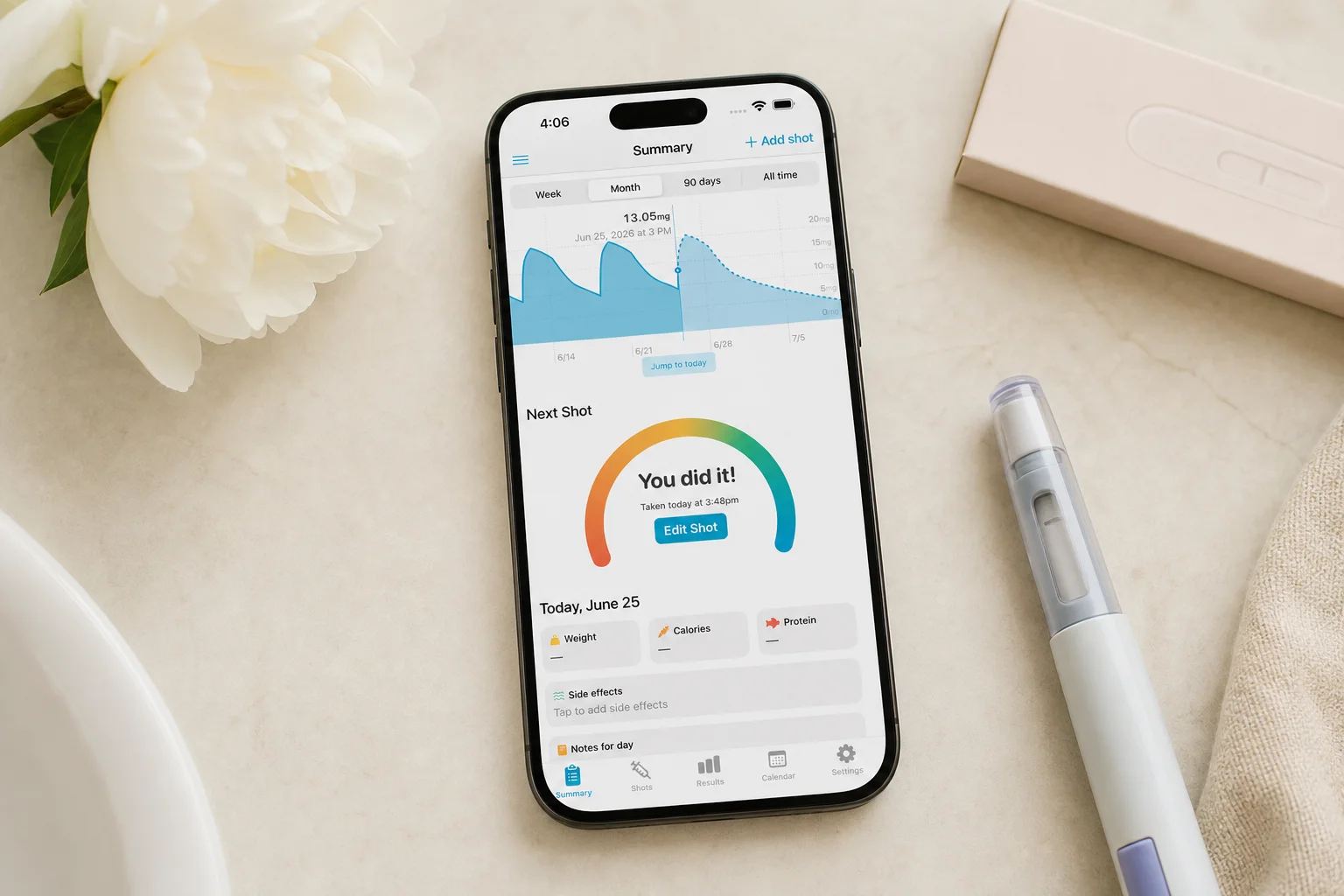
Shotsy’s dose calendar and reminders help you track exactly when you stopped your medication, making it easy to confirm your washout period is complete. Use daily notes to log menstrual cycle changes, ovulation signs, and any symptoms throughout the process, then share a PDF export with your provider at each visit.
Conclusion
GLP‑1 medications can restore fertility that was suppressed by metabolic dysfunction, and this effect can happen faster than many women expect. If you are of reproductive age, use reliable contraception (preferably non-oral methods during tirzepatide dose escalation), plan your washout period before attempting conception, and work with your healthcare team to time the transition. The safety data on inadvertent early exposure is reassuring, but intentional planning remains the best approach.
This post is intended for informational purposes only and is not a substitute for professional medical advice. Always consult your physician before making any changes to your medication or health routine.