





Introduction
Exercise becomes more important, not less, when you are taking a GLP‑1 medication like semaglutide or tirzepatide. Many patients decrease their physical activity after starting treatment because the medication drives weight loss without requiring exercise, but this creates a serious problem: up to 40 percent of the weight lost on GLP‑1 medications without resistance training can come from lean muscle mass rather than fat. Prioritizing the right types of exercise at the right times protects your metabolism, preserves muscle, and improves long-term outcomes after treatment ends.
Why exercise matters more on GLP‑1 medications
The appetite suppression from GLP‑1 medications creates a significant caloric deficit, often 500 to 1,000 calories per day below your prior intake. Without adequate protein and exercise stimulus, your body treats muscle as expendable fuel:
- Muscle loss accelerates weight regain: Losing lean mass lowers your resting metabolic rate, meaning you burn fewer calories at rest. When treatment ends or you reach maintenance, this metabolic slowdown makes regain more likely.
- Body composition matters more than scale weight: Two patients can lose the same amount of weight, but the one who preserved muscle will look leaner, feel stronger, have better metabolic health markers, and maintain their results more easily.
- GLP‑1 medications do not protect muscle: Unlike some older weight loss medications, GLP‑1 receptor agonists have no muscle-sparing mechanism. The only interventions that preserve lean mass during rapid weight loss are resistance training and adequate protein intake.
The clinical evidence is clear: patients who combine GLP‑1 therapy with structured exercise lose more fat, retain more muscle, and maintain their results longer than those who rely on medication alone.
Resistance training: the highest priority
If you can only do one type of exercise while on a GLP‑1 medication, make it resistance training. The current evidence supports two to three sessions per week targeting all major muscle groups:
- Compound movements first: Squats, deadlifts, rows, presses, and pull-ups (or assisted variations) recruit the most muscle per exercise. These should form the core of your program.
- Progressive overload: Gradually increase weight, reps, or sets over time. Your muscles need a reason to stay. Simply going through the motions at the same light weight indefinitely does not provide sufficient stimulus.
- Full range of motion: Partial reps with heavier weight are less effective for muscle preservation than full-range movements with appropriate load.
- Recovery between sessions: Allow 48 hours between training the same muscle group. With reduced calorie intake, recovery takes slightly longer than it would at maintenance calories.
You do not need a gym membership. Bodyweight exercises, resistance bands, or a basic set of dumbbells at home can provide adequate stimulus, especially for beginners. The key is consistency and progressive challenge.
Cardiovascular exercise: supporting health and recovery
Alongside resistance training, cardiovascular exercise supports heart health, mood, and overall metabolic function. Current guidelines recommend 150 to 300 minutes per week of moderate-intensity activity or 75 to 150 minutes of vigorous activity:
- Moderate intensity examples: Brisk walking, cycling at conversational pace, swimming laps at a steady speed, hiking, or dancing. You should be able to talk but not sing.
- Vigorous intensity examples: Running, cycling hard, HIIT intervals, rowing at high output, or stair climbing. Conversation is difficult at this effort level.
- Start where you are: If you are currently sedentary, begin with 10 to 15 minute walks and build gradually. The jump from zero to 150 minutes does not need to happen in week one.
Walking deserves special mention as the most accessible and sustainable form of cardio for GLP‑1 patients. A daily 30-minute walk requires no equipment, has negligible injury risk, aids digestion, and can be maintained long-term without burnout.
Timing exercise around injections
For some patients, the timing of exercise relative to their injection day matters:
- Injection day and day after: Many patients experience peak nausea and fatigue in the 24 to 48 hours after their injection. If this describes you, schedule lighter activity or rest days here.
- Days 3 through 5 post-injection: Most patients feel their best during mid-week relative to their injection. This is often the ideal window for harder resistance training sessions or longer cardio efforts.
- Days 6 to 7 post-injection: As the medication’s effect wanes toward the end of the week, some patients notice increased appetite. Exercise during this window can help manage hunger and maintain routine.
This is highly individual. Some patients feel no difference in exercise tolerance across their injection cycle, while others notice a distinct pattern. Tracking your side effects and workout days reveals your personal rhythm.
Exercise intensity and reduced calorie intake
Being in a significant caloric deficit changes how your body responds to exercise:
- Lower top-end performance: Do not expect to set personal records while eating 500 or more calories below maintenance. Your energy ceiling is temporarily lower, and that is normal.
- Extended warm-ups help: With less glycogen available, your muscles take longer to reach working temperature. Add five minutes to your warm-up routine.
- Watch for dizziness: Reduced food intake combined with intense exercise can cause lightheadedness. Stay hydrated, eat adequate protein before training, and stop if you feel faint.
- Prioritize protein timing: Eating 20 to 40 grams of protein within two hours of resistance training supports muscle protein synthesis. On a GLP‑1 medication where appetite is suppressed, planning this protein window in advance helps ensure you hit the target.
Building a weekly structure
A practical weekly framework for GLP‑1 patients who want to protect muscle and support cardiovascular health:
- Three days: Resistance training sessions (full body or upper/lower split), 30 to 45 minutes each.
- Two to three days: Moderate cardio such as walking, cycling, or swimming, 30 to 45 minutes each.
- One to two days: Rest or very light activity like stretching or yoga.
This schedule fits within the evidence-based guidelines while remaining achievable for people managing side effects and reduced energy from their medication. Adjust based on your injection cycle, energy levels, and personal preferences.
Common mistakes to avoid
- Excessive cardio without resistance training: Running five days a week with no strength work accelerates muscle loss on a GLP‑1 medication. Prioritize resistance training first, then add cardio.
- Waiting until you reach your goal weight: Muscle lost during the weight loss phase is much harder to regain than it is to preserve. Start resistance training now, not after you reach your target.
- Ignoring recovery: Under-eating and over-exercising leads to fatigue, injury, and muscle breakdown rather than preservation. More is not always better when you are in a caloric deficit.
- All-or-nothing thinking: Missing a workout does not erase your progress. Consistency over months matters far more than perfection in any single week.
Track your patterns with Shotsy
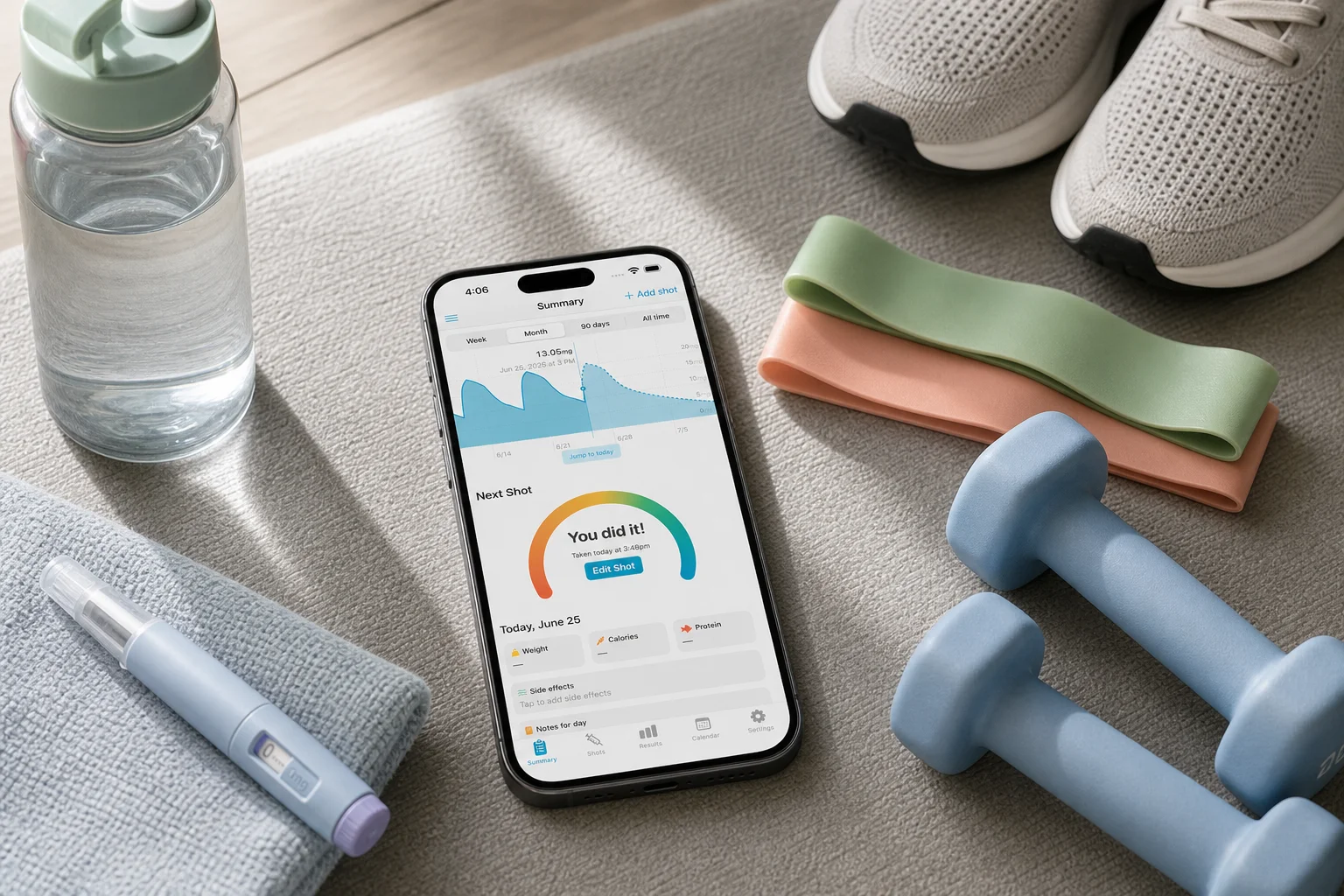
Track your weight alongside your dose history in Shotsy to see how exercise impacts your trajectory. Use daily notes to log workout days and types, then compare your side effect patterns on active versus rest days in the calendar view. Many users discover that moderate exercise on injection day actually reduces nausea rather than worsening it.
Conclusion
Exercise is not optional when taking a GLP‑1 medication if your goal is lasting body composition improvement rather than temporary scale movement. Resistance training two to three times per week is the single most important intervention for preserving lean mass, followed by regular cardiovascular activity for overall health. Time your harder sessions for when you feel best in your injection cycle, prioritize protein around training, and build habits that will sustain your results long after your weight loss phase ends.
This post is intended for informational purposes only and is not a substitute for professional medical advice. Always consult your physician before making any changes to your medication or health routine.