





Introduction
GLP‑1 medications are proving to be one of the most effective non-surgical treatments for obstructive sleep apnea (OSA). The landmark SURMOUNT-OSA trial found that tirzepatide reduced the apnea-hypopnea index (AHI), the standard measure of sleep apnea severity, by approximately 50 to 60 percent at 52 weeks (Malhotra et al., New England Journal of Medicine, 2024). Some participants improved enough to discontinue CPAP therapy entirely. For the estimated 936 million adults worldwide affected by OSA (Benjafield et al., The Lancet Respiratory Medicine, 2019), this represents a meaningful new treatment pathway, though not a replacement for established therapies in all cases.
What is obstructive sleep apnea
Obstructive sleep apnea occurs when the muscles in the throat relax during sleep and block the airway, causing repeated pauses in breathing. Each pause, called an apnea or hypopnea, lasts at least 10 seconds and can occur dozens or even hundreds of times per night. The apnea-hypopnea index (AHI) counts the number of these events per hour of sleep:
- Mild OSA: 5 to 14 events per hour
- Moderate OSA: 15 to 29 events per hour
- Severe OSA: 30 or more events per hour
OSA fragments sleep architecture, reduces blood oxygen levels, and triggers a stress response each time the body wakes enough to reopen the airway. Over time, untreated OSA increases the risk of hypertension, heart disease, stroke, type 2 diabetes, and cognitive decline. Excess weight is the strongest modifiable risk factor, fat deposits around the upper airway narrow the breathing passage, and abdominal fat reduces lung volume.
The SURMOUNT-OSA results
The SURMOUNT-OSA trial enrolled adults with moderate-to-severe obstructive sleep apnea and a body mass index of 30 or higher. Participants received tirzepatide (Mounjaro/Zepbound) at escalating doses up to 15 mg weekly for 52 weeks.
The results were striking:
- AHI reduction: Participants on tirzepatide saw their AHI decrease by roughly 50 to 60 percent compared to baseline. In the cohort not using CPAP at baseline, the mean AHI dropped by approximately 27 events per hour.
- Weight loss: Participants lost an average of 18 to 20 percent of their body weight, which was the primary driver of apnea improvement.
- CPAP discontinuation: A subset of patients who had been using CPAP improved enough that their sleep specialist determined they could safely stop. This is a significant quality-of-life outcome, as CPAP adherence is a persistent challenge, studies estimate that 30 to 50 percent of patients prescribed CPAP do not use it consistently.
- Symptom improvements: Participants reported reductions in daytime sleepiness, improved oxygen saturation during sleep, and better overall sleep quality on validated questionnaires.
While semaglutide has not been studied in a dedicated OSA trial of this scale, the weight loss it produces likely offers similar benefits, since the primary mechanism is fat reduction around the airway and abdomen.
Why weight loss improves sleep apnea
The relationship between weight and sleep apnea is well established. A 10 percent reduction in body weight is associated with a roughly 26 percent reduction in AHI (Peppard et al., JAMA, 2000). The mechanisms are straightforward:
- Less fat around the airway: Pharyngeal fat deposits narrow the upper airway. As weight decreases, these deposits shrink, creating more space for airflow during sleep.
- Reduced abdominal pressure: Visceral fat pushes the diaphragm upward, reducing lung volume and making the airway more collapsible. Losing abdominal fat restores lung mechanics.
- Lower systemic inflammation: Obesity-driven inflammation contributes to airway swelling. Weight loss reduces inflammatory markers, which may further improve airway patency.
GLP‑1 medications produce the kind of significant, sustained weight loss (15 to 25 percent of body weight in clinical trials) that was previously achievable only through bariatric surgery. This degree of weight loss can shift patients from severe to mild OSA, or from mild OSA to below the diagnostic threshold entirely.
Sleep quality changes during treatment
While the long-term trajectory is typically positive for sleep, the short-term experience can be more variable. Patients report a range of sleep-related changes during GLP‑1 treatment:
Improvements many patients notice:
- Less snoring, often reported by partners before patients notice it themselves
- Fewer nighttime awakenings
- Feeling more rested in the morning
- Reduced daytime sleepiness
Disruptions some patients experience:
- Insomnia or difficulty falling asleep, particularly during dose escalation
- Vivid dreams or nightmares, which some attribute to changes in sleep architecture as apnea resolves
- Nighttime nausea or acid reflux that disrupts sleep, especially if eating too close to bedtime
- Changes in sleep schedule as energy levels shift with weight loss
These disruptions are generally temporary and often resolve within a few weeks at a stable dose. If sleep problems persist, they are worth discussing with your provider, as dose timing, evening eating habits, or concurrent medications may be contributing.
What this means for your CPAP
If you are currently using CPAP, do not stop on your own because you have lost weight or feel better. CPAP discontinuation should be guided by a sleep specialist based on objective data, typically a follow-up sleep study or home sleep test that shows your AHI has dropped below the treatment threshold.
That said, losing weight on a GLP‑1 medication is a legitimate reason to ask your sleep specialist for a reevaluation. If your AHI has improved significantly, you may be able to lower your CPAP pressure, switch to a less cumbersome device, or in some cases discontinue therapy. This is an evolving conversation between you and your sleep medicine provider, informed by data.
Track sleep alongside your GLP‑1 journey with Shotsy
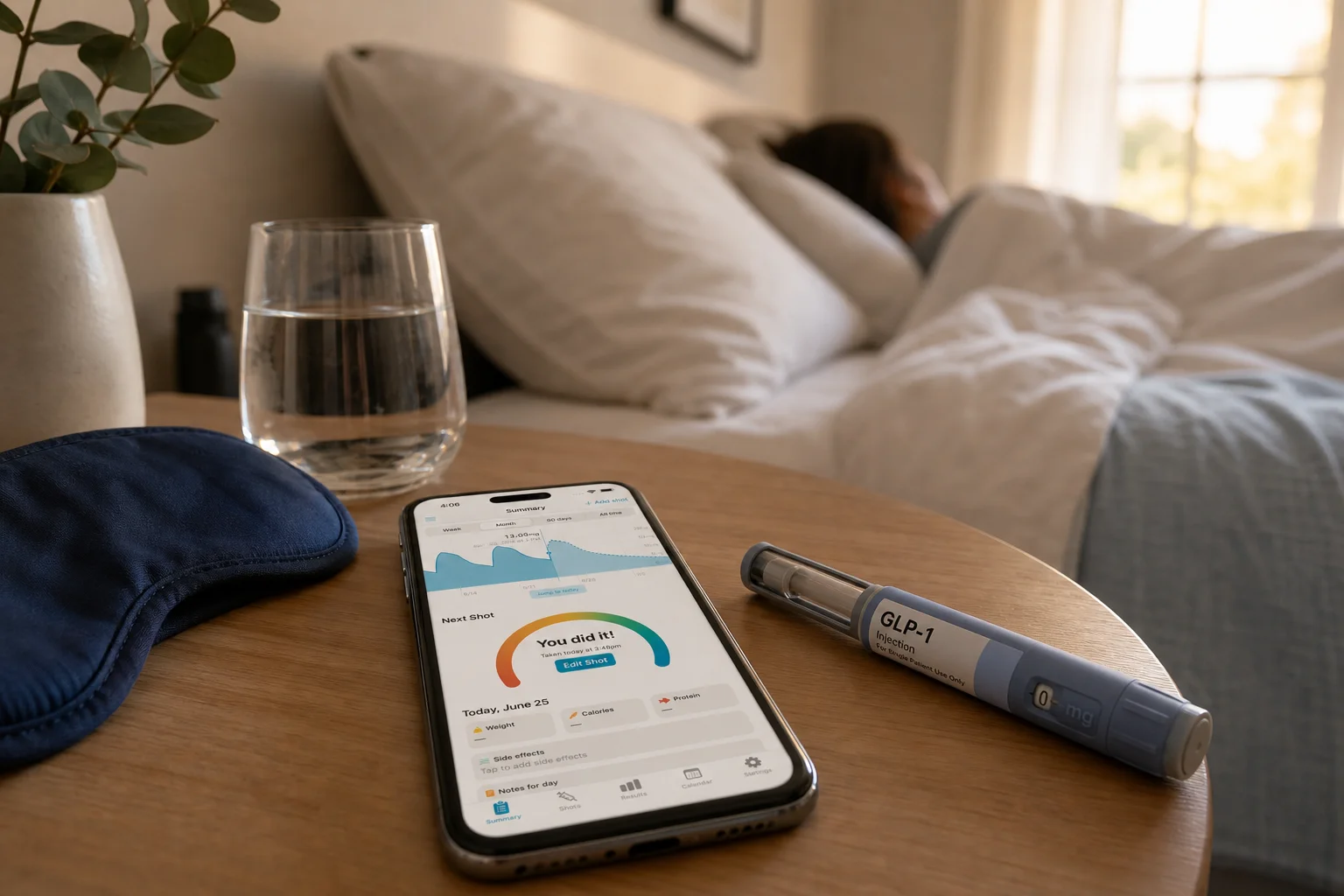
Use Shotsy’s daily notes to log sleep quality, CPAP usage, and any nighttime symptoms like reflux or insomnia. Tracking sleep data alongside your weight loss trajectory and dose changes creates a record that gives your sleep specialist the context they need to make informed decisions about adjusting your therapy.
Conclusion
GLP‑1 medications, particularly tirzepatide, have emerged as a powerful tool for improving obstructive sleep apnea, with the SURMOUNT-OSA trial demonstrating AHI reductions of 50 to 60 percent at one year. The primary mechanism is significant weight loss that reduces fat around the airway and abdomen. Some patients improve enough to discontinue CPAP, though this decision should always be guided by a sleep specialist using objective testing. If you are managing both a GLP‑1 medication and sleep apnea, track your sleep quality, weight, and treatment changes together so that your providers have the full picture.
This post is intended for informational purposes only and is not a substitute for professional medical advice. Always consult your physician before making any changes to your medication or health routine.