





Introduction
In major obesity trials, adults without diabetes lost an average of about 15% of their starting weight with semaglutide 2.4 mg and up to 21% with tirzepatide 15 mg over 68 to 72 weeks. These are group averages from specific trials, not a personal target. Semaglutide (Ozempic, Wegovy) and tirzepatide (Mounjaro, Zepbound) have different approved uses, doses, and available forms, such as injections or tablets. 1 2
Weight-loss results from obesity trials
The trials below studied injections in adults with obesity, or overweight and a weight-related condition, without diabetes. Participants received lifestyle support alongside medication or placebo. Percentages describe loss from starting body weight.
| Trial | Treatment and participants | Average weight loss |
|---|---|---|
| STEP 1, 2021 | 1,961 adults; semaglutide 2.4 mg once a week or placebo for 68 weeks | 14.9% with semaglutide versus 2.4% with placebo. 1 |
| SURMOUNT-1, 2022 | 2,539 adults; tirzepatide 5, 10, or 15 mg once a week or placebo for 72 weeks | 15.0% at 5 mg, 19.5% at 10 mg, and 20.9% at 15 mg, compared with 3.1% with placebo. 2 |
| SURMOUNT-5, 2025 | 751 adults; highest dose each participant could tolerate: tirzepatide 10 or 15 mg, or semaglutide 1.7 or 2.4 mg once a week for 72 weeks | 20.2% with tirzepatide versus 13.7% with semaglutide. 3 |
STEP 1 and SURMOUNT-1 were separate placebo-controlled trials. SURMOUNT-5 compared the two medicines head to head. Its results support a comparison under those study conditions, not a promise that switching medicines will produce a particular result. 3
Why published percentages can differ
Researchers can analyze the same trial in different ways. One analysis estimates outcomes regardless of whether participants stopped treatment; another estimates outcomes if participants remained on their assigned treatment. Those methods can produce different averages. The SURMOUNT-1 figure of 20.9% at 15 mg includes outcomes whether or not participants stayed on their assigned treatment. 2
Study participants can vary as well. 4 5
Use percentages to understand your own change
Calculate percentage weight loss by dividing the weight you lost by your starting weight, then multiplying by 100. For example, losing 22 pounds from a starting weight of 220 pounds equals 10%. Record your dose and time on treatment alongside your weight. Comparing your first month with results after 68 weeks of treatment leaves out most of the treatment period. Review your trend over several weeks, and discuss a persistent plateau with your prescriber.
Maintain strength as you lose weight
Ask your care team about a protein and strength-training plan to help protect muscle as you lose weight. Let them know if you feel weaker or struggle to eat enough, so they can review your plan. 6
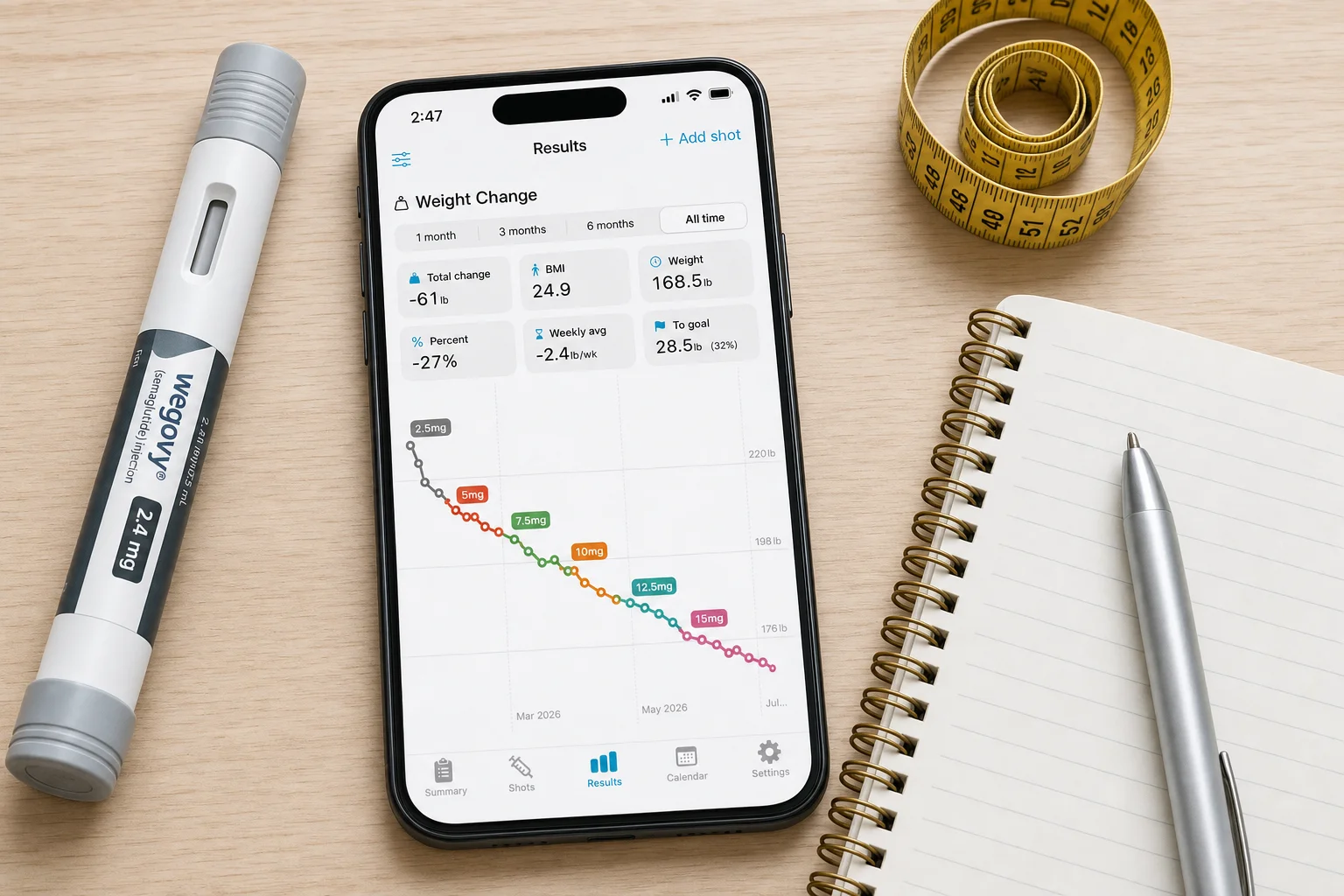
Track your weight with Shotsy
Shotsy keeps weight entries and dose history together. Bring that record to appointments so you and your prescriber can discuss your response over time.
Conclusion
If you’re considering a GLP‑1, trial results can give you an idea of the weight loss that may be possible, though your results may differ. Talk with your prescriber about a realistic weight-loss goal, possible side effects, and how to maintain your nutrition and strength during treatment. Together, you can decide whether treatment fits your health needs and how you’ll measure progress over time.
This post is intended for informational purposes only and is not a substitute for professional medical advice. Always consult your physician before making any changes to your medication or health routine.