Zepbound-Grundlagen: was Sie beim Tracken wissen sollten
Zepbound (Tirzepatid) ist ein einmal wöchentlich injizierbares Medikament von Eli Lilly, 2023 von der FDA für das langfristige Gewichtsmanagement bei Erwachsenen mit Adipositas oder mit Übergewicht und einer gewichtsbedingten Begleiterkrankung zugelassen, und seit kurzem auch für mittelschwere bis schwere obstruktive Schlafapnoe bei Erwachsenen mit Adipositas. Es aktiviert sowohl GIP- als auch GLP-1-Rezeptoren, was die Verdauung verlangsamt, den Appetit reduziert und die Insulinantwort verbessert. Dasselbe Molekül wird als Mounjaro für Typ-2-Diabetes verkauft.
Die klinischen Ergebnisse für Tirzepatid sind beachtlich. In 72-wöchigen klinischen Studien zum Gewichtsmanagement verloren Erwachsene je nach Dosis im Durchschnitt zwischen etwa 16% und 22% ihres Körpergewichts. Die häufigsten Nebenwirkungen betreffen die Verdauung: Übelkeit, Durchfall, verminderter Appetit, Erbrechen, Verstopfung, Verdauungsbeschwerden und Bauchschmerzen.
Zepbound-Dosisplan
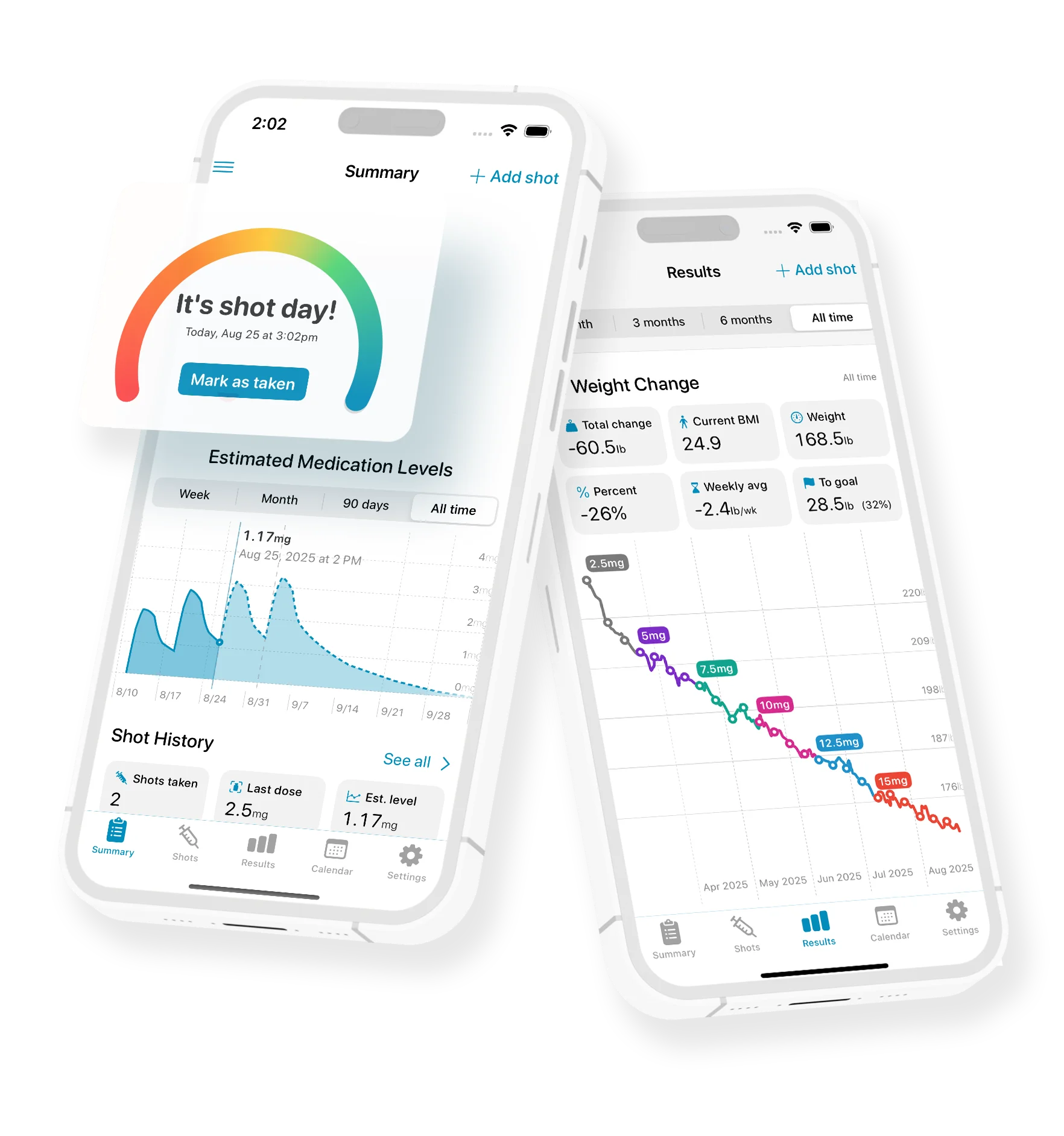
Zepbound beginnt niedrig und wird schrittweise gesteigert. Laut FDA-Fachinformation beginnt die Behandlung mit 2,5 mg einmal wöchentlich für vier Wochen und steigt dann auf 5 mg, mit weiteren Erhöhungen um jeweils 2,5 mg nach mindestens vier Wochen auf der aktuellen Dosis, bis maximal 15 mg. Erhaltungsdosen sind 5 mg, 10 mg oder 15 mg. Shotsy verfolgt Ihre Dosis auf jeder Stufe und stellt Ihren Fortschritt nach Dosierung dar.
| Dosis |
Phase |
Typische Dauer |
| 2.5 mg |
Startdosis |
Woche 1 bis 4 |
| 5 mg |
Erste Erhaltungsoption |
Mindestens 4 Wochen |
| 7.5 mg |
Zwischenstufe |
Mindestens 4 Wochen |
| 10 mg |
Erhaltungsoption |
Mindestens 4 Wochen |
| 12.5 mg |
Zwischenstufe |
Mindestens 4 Wochen |
| 15 mg |
Maximaldosis |
Fortlaufend |
Ihren Zeitplan legt Ihr Arzt fest. Diese Tabelle fasst die FDA-Fachinformation nur zur Aufklärung zusammen und ist keine medizinische Beratung.